


 |
Wall Street braces for US midterms as inflation and market volatility complicate the outlook
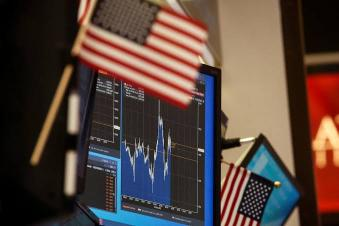
Wall Street is heading into next week's US midterm elections amid growing uncertainty over the economic outlook, with persistent inflation, elevated Treasury yields and a sharp selloff in technology stocks threatening to disrupt the market's traditional post-election recovery.
The November 3 vote will determine control of Congress for the remaining two years of President Donald Trump's term, potentially reshaping expectations for government spending, financial regulation and corporate taxation.
The elections come at a particularly sensitive moment for investors, following the Federal Reserve's decision to leave interest rates unchanged and disappointing earnings from several major technology companies.
Inflation becomes a political and financial challenge
The US economy expanded at an annualized rate of 3.4% in the third quarter, exceeding expectations and demonstrating resilience despite elevated borrowing costs.
However, annual consumer inflation accelerated to 3.7% in September, while higher energy prices continued to squeeze household budgets.
Consumer confidence has deteriorated sharply, with the University of Michigan's sentiment index approaching historic lows despite relatively strong economic growth.
The contrast between economic expansion and declining purchasing power has made affordability a central issue in the elections.
For financial markets, the concern extends beyond voter sentiment. Persistent inflation could force the Federal Reserve to maintain restrictive monetary policy for longer, increasing pressure on equities and government bonds.
Congressional control could reshape market expectations
Republicans currently control both chambers of Congress, allowing the Trump administration greater legislative flexibility.
A Democratic victory in the House of Representatives would introduce divided government, potentially complicating efforts to pass major tax and spending legislation.
It could also strengthen congressional scrutiny of banks, cryptocurrency exchanges and technology companies, particularly over artificial intelligence regulation and data-center expansion.
Democratic control of both chambers would give the opposition broader oversight powers and greater influence over fiscal legislation, although presidential veto authority would continue to constrain major policy changes.
Continued Republican control, meanwhile, could preserve the administration's legislative agenda, including its approach to taxation, deregulation and federal spending.
However, investors would still face uncertainty over tariffs, government borrowing and the inflationary consequences of fiscal policy.
Technology selloff adds another risk
The elections coincide with renewed concerns over the sustainability of the artificial intelligence investment boom.
Shares of Alphabet, Amazon and Intel have come under heavy pressure following disappointing earnings or forecasts, with investors increasingly questioning the financial returns on enormous AI infrastructure investments.
The selloff has exposed Wall Street's dependence on a relatively small group of technology companies that have driven much of the market's gains.
Higher Treasury yields present an additional challenge, particularly for growth stocks whose valuations depend heavily on expectations of future profits.
Could the midterms trigger a stock market rally?
Historically, US equities have often struggled in the months preceding midterm elections before recovering once political uncertainty begins to fade.
Goldman Sachs research indicates that the S&P 500 has recorded a median return of approximately 0% between August 1 and Election Day during midterm years since 1974.
Other historical analyses suggest that the months following the elections have generally produced stronger returns, with average gains exceeding 10% over certain post-election periods.
However, those patterns offer no guarantee of a similar outcome in 2026, particularly given current inflation pressures and elevated market valuations.
The Federal Reserve remains the bigger question
Beyond the election results, investors will closely monitor the October employment report, scheduled for November 6.
The Federal Reserve maintained its benchmark interest rate at 3.75%–4.00% on Wednesday, while acknowledging that inflation remains elevated.
Markets are pricing an approximately 80% probability of another quarter-point increase in December.
A stronger-than-expected employment report could reinforce expectations of further tightening, pushing Treasury yields higher and weighing on equities.
Conversely, weaker labor market figures could ease interest rate concerns, although a substantial slowdown would raise fresh questions about economic growth.
For Wall Street, the midterms may remove one source of uncertainty, but the direction of stocks through the end of 2026 will also depend on whether inflation moderates, corporate earnings stabilize and the Federal Reserve can contain price pressures without undermining economic growth.
Thanks for your feedback.
Bitcoin falls below $78,000 as Binance security breach triggers cryptocurrency selloff

Bitcoin remained under heavy selling pressure on Friday, October 30, as a major security breach at Binance unsettled cryptocurrency markets, triggering widespread liquidations and renewed concerns over the safety of assets held on centralized exchanges.
MoreUS dollar weakens as technology selloff drives Treasury yields lower

The US dollar declined against major currencies on Friday, October 30, extending its retreat as a sharp selloff in technology stocks encouraged investors to buy Treasury bonds, pushing yields lower and reducing the greenback's interest rate advantage.
MoreOil prices jump more than 2% as Strait of Hormuz attacks revive supply fears

Oil prices climbed sharply on Friday, October 30, as fresh attacks on commercial tankers near the Strait of Hormuz renewed concerns over Middle Eastern supply disruptions, overshadowing diplomatic efforts to end the regional conflict.
More