


 |
US dollar slides to one-month low as Democratic election sweep pressures Treasury yields
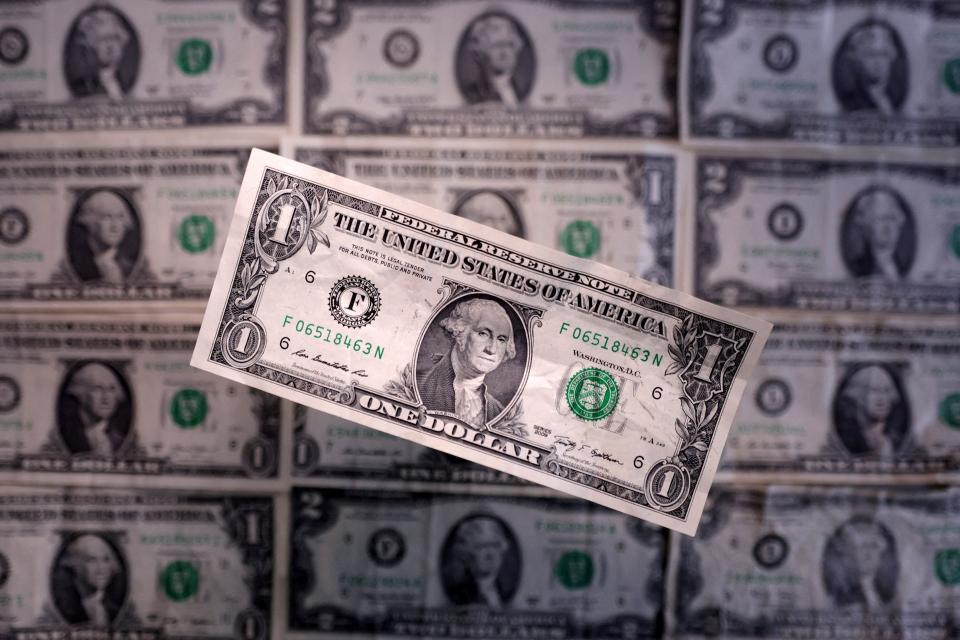
The US dollar weakened sharply on Wednesday, November 4, falling to its lowest level in more than a month after Democrats secured control of both chambers of Congress in the midterm elections, prompting investors to reassess US economic growth and interest rate expectations.
The greenback came under pressure as Treasury yields declined, while the euro, sterling and Swiss franc advanced amid expectations of tighter congressional scrutiny of artificial intelligence investment.
Price overview
During Wednesday's European trading session, the US Dollar Index fell approximately 0.6% to 101.27 points, after touching a session low near 101.25.
EUR/USD climbed 0.6% to $1.1258, while GBP/USD advanced toward $1.3490, gaining approximately 0.55%.
USD/JPY traded near 157.92 yen, reflecting renewed demand for the Japanese currency.
Democratic victories reshape market expectations
Democrats won majorities in both the Senate and House of Representatives, raising expectations of greater oversight of technology companies and restrictions on government spending.
Investors are particularly concerned that tighter regulation of AI infrastructure could slow investment in data centers, an important contributor to recent US economic growth.
Treasury yields retreat
The benchmark 10-year Treasury yield declined nearly five basis points to 4.915%, reducing the dollar's interest rate advantage.
Markets also moderated expectations for further monetary tightening as investors considered whether political gridlock could constrain fiscal expansion.
Fed policy remains in focus
Persistent inflation continues to complicate the Federal Reserve's outlook, despite Wednesday's decline in yields.
Friday's US employment report will provide fresh evidence on labor market conditions ahead of December's policy meeting.
Market outlook
The Dollar Index faces immediate support near 101.25, followed by 101.00, while resistance stands around 101.75.
Further declines in Treasury yields could extend the dollar's losses, although stronger employment figures may encourage a recovery in the currency.
Thanks for your feedback.
Gold tops $4,000 as silver surges following Democratic sweep of US Congress

Gold and silver rallied sharply on Wednesday, November 4, as the dollar and Treasury yields declined following Democratic victories in the US midterm elections, encouraging investors to return to precious metals after last month's heavy selloff.
MoreDemocrats sweep US midterms as Wall Street confronts new risks to AI, taxes and fiscal policy

Democrats captured both chambers of the US Congress in Tuesday's midterm elections, delivering a major political setback to President Donald Trump and triggering a selloff in global equities as investors reassessed the outlook for technology regulation, government spending and economic policy.
MoreApple beats earnings expectations, but rising memory costs threaten profit margins
Apple reported stronger-than-expected quarterly earnings on Monday, November 2, supported by record iPhone sales and continued growth in its services business. However, a warning about rising memory-chip prices and shrinking profit margins overshadowed the results, sending the company's shares lower as investors questioned whether higher costs could undermine profitability heading into 2027. The results highlight an increasingly difficult environment for consumer electronics manufacturers, as the rapid expansion of artificial intelligence infrastructure absorbs semiconductor production capacity and drives up component prices. Record revenue driven by iPhone demand Apple reported revenue of $114.5 billion for its fiscal fourth quarter, up 12% from $102.5 billion a year earlier and exceeding analysts' expectations of approximately $113.4 billion. Net income rose to $30.71 billion from $27.47 billion, while earnings per share increased to $2.10 from $1.85, surpassing forecasts of $1.99. iPhone revenue climbed 17.5% to approximately $57.6 billion, supported by strong demand for premium models and higher selling prices. Mac revenue increased nearly 24%, although iPad sales declined 10.4% and revenue from wearables, home products and accessories fell 7.9%. Apple's services business generated a record $31.6 billion, reinforcing its importance as a source of recurring revenue. Memory costs squeeze margins Despite the strong results, Apple forecast a gross profit margin of 45%–46% for the December quarter, below analysts' expectations of approximately 46.3% and the 47.9% recorded in September. The September figure also benefited from tariff refunds that added approximately one percentage point to margins and $0.05 to earnings per share. Chief Executive John Ternus, who succeeded Tim Cook in September, described the current memory-pricing environment as unprecedented and warned that costs could continue increasing into next year. Apple has partially protected itself through inventory purchased at lower prices, but those supplies will gradually be replaced by more expensive components. The company has already increased prices across parts of its iPhone, Mac and iPad lineups, helping offset some of the pressure. However, further increases could become more difficult as consumers face persistent cost-of-living pressures. AI investment creates new challenges The surge in demand for memory chips reflects a broader shift in semiconductor manufacturing toward high-performance components used in AI servers. Technology companies are investing heavily in data centers, increasing competition for manufacturing capacity that also supplies smartphones, personal computers and other consumer devices. For Apple, the problem extends beyond component prices. The rollout of its AI-powered Siri will increase cloud infrastructure expenses, while accounting rules require the company to recognize some revenue from AI-enabled devices over their useful lives rather than immediately upon sale. These factors are expected to weigh on profitability even as demand for Apple's products remains relatively strong. Holiday-quarter outlook disappoints investors Apple expects revenue to grow between 7% and 10% during the December quarter, exceeding analysts' expectations of approximately 6.1% growth. However, services revenue growth is projected to slow to 8%–9%, compared with 9.8% in September. The company also faces supply constraints affecting its new foldable iPhone Duo, which has experienced strong initial demand but remains difficult to obtain. Apple shares fell approximately 4% in Tuesday's premarket trading, putting more than $170 billion of market capitalization at risk. The decline reflects concerns about valuation as much as operating performance, with Apple trading at nearly 35 times expected earnings over the next 12 months. Outlook for 2027 Apple enters 2027 with strong consumer demand, substantial cash generation and an expanding services business, but its ability to protect margins will depend increasingly on semiconductor prices and supply availability. Higher product prices could sustain revenue growth, although they may also discourage upgrades if household spending weakens. For investors, the immediate question is whether Apple's pricing power can continue offsetting rising costs without damaging demand, particularly as the AI investment boom places growing pressure on the wider electronics supply chain.
More