


 |
Boeing shares plunge 9% as production delays threaten recovery despite record $745 billion backlog
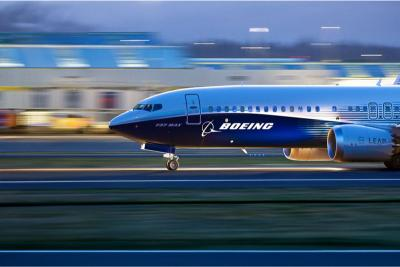
Boeing shares plunged around 9% on Tuesday, October 27, after the American aerospace giant warned that production of its bestselling 737 MAX aircraft would increase more slowly than expected, raising fresh doubts about the pace of its financial recovery.
The selloff came despite improving earnings, positive cash flow and a record order backlog, highlighting a growing disconnect between Boeing's enormous commercial opportunities and its ability to turn them into profits.
737 MAX production delays disappoint investors
Boeing CEO Kelly Ortberg said the company does not expect to increase monthly 737 MAX production to 52 aircraft until the second half of 2027, considerably later than investors had anticipated.
The company is still working to stabilize production at 47 aircraft per month, with wing manufacturing and fuselage supply constraints slowing its expansion plans.
Boeing also expects to miss its previous target of delivering approximately 500 737 aircraft this year.
The announcement sent shares tumbling toward $171, their lowest level in roughly 18 months.
For investors, the production delays represent a significant setback because higher aircraft deliveries are essential to improving profitability and generating cash.
Record orders, but profitability remains elusive
Boeing reported third-quarter revenue of $24.19 billion, up 4% from a year earlier, while its net loss narrowed dramatically to $116 million from approximately $5.3 billion.
However, its adjusted loss of 34 cents per share exceeded analysts' expectations of a 21-cent loss.
The commercial aircraft division remained the company's principal weakness, recording an operating loss of $697 million on revenue of $10.7 billion.
Higher manufacturing costs, supply-chain difficulties and less profitable aircraft deliveries continued to weigh on margins.
Meanwhile, Boeing's order backlog reached a record $745 billion, including more than 6,300 commercial aircraft.
The enormous backlog demonstrates that demand is not the company's main problem. Its challenge is producing aircraft efficiently enough to convert those orders into revenue and cash.
Cash flow recovery pushed further into the future
Boeing generated approximately $464 million in free cash flow during the quarter, marking another step toward financial stabilization.
Nevertheless, management indicated that reaching $10 billion in annual free cash flow would take until 2029, disappointing investors hoping for a faster recovery.
The company also faces pressure to rebuild its balance sheet after years of production disruptions, safety problems and substantial financial losses.
Can Boeing regain investor confidence?
There have been important improvements. US regulators recently certified the 737 MAX 7 and MAX 10, while Boeing's defense business benefited from stronger earnings and new military contracts.
Yet Tuesday's market reaction suggests investors are increasingly unwilling to reward operational progress without clearer evidence of sustainable profitability.
Boeing's recovery now depends less on securing additional aircraft orders and more on delivering the thousands it has already sold, without compromising safety or allowing production costs to undermine its margins.
Thanks for your feedback.
Bitcoin slips below $80,000 as cryptocurrencies weaken ahead of Fed decision

Bitcoin declined on Tuesday, October 27, slipping below the $80,000 threshold as investors reduced their exposure to cryptocurrencies ahead of the Federal Reserve's monetary policy decision.
MoreUS dollar climbs as investors brace for hawkish Federal Reserve decision

The US dollar strengthened on Tuesday, October 27, approaching a two-week high as investors prepared for the Federal Reserve's monetary policy decision, with persistent inflation and elevated energy prices reinforcing expectations of further interest rate increases.
MoreOil prices decline as Iran peace hopes ease supply fears ahead of Fed decision

Oil prices fell on Tuesday, October 27, extending their retreat from recent highs as renewed diplomatic efforts involving Iran encouraged profit-taking, although continuing threats to Saudi Arabian energy infrastructure limited the decline.
More