


 |
|
The USDCHF shows more negative signals - Analysis-16-04-2026
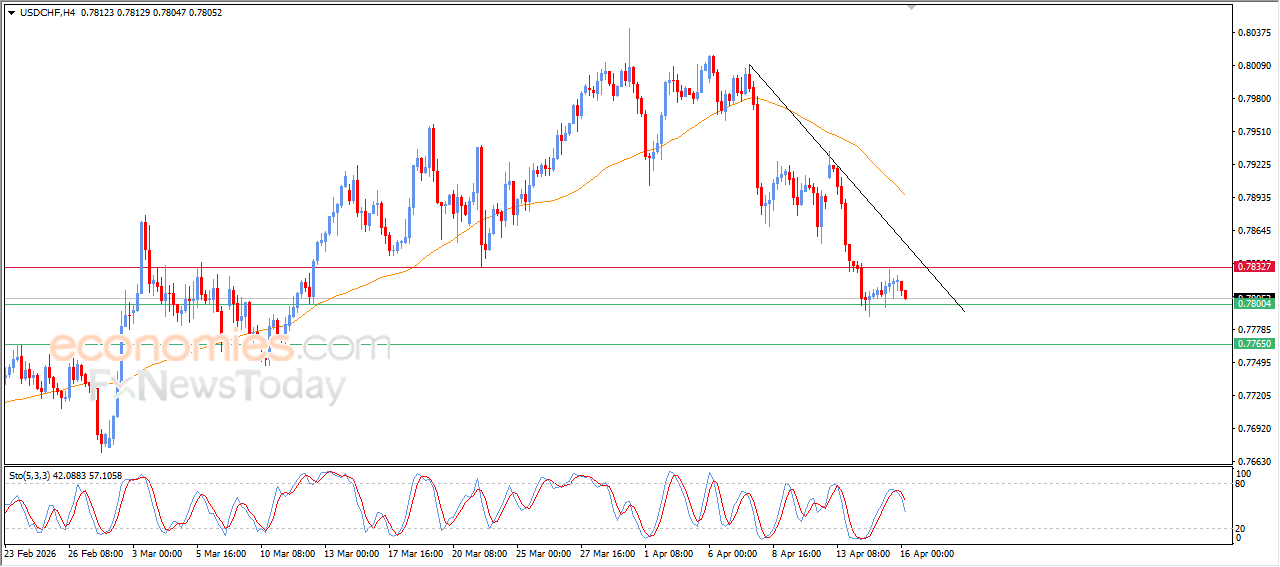
The USDCHF pair declined during its recent intraday trading, amid the dominance of a short-term corrective downward wave. The price is moving along a steep bearish trendline, reflecting the strength of this bearish momentum, especially as it continues to trade below EMA50, which reinforces the stability and dominance of the main bullish trend on short-term basis, especially with negative signals emergence from relative strength indicators after reaching overbought levels compared to price movement, increasing the selling pressure surrounding the pair.
NZDUSD breaks a key resistance - Analysis-16-04-2026
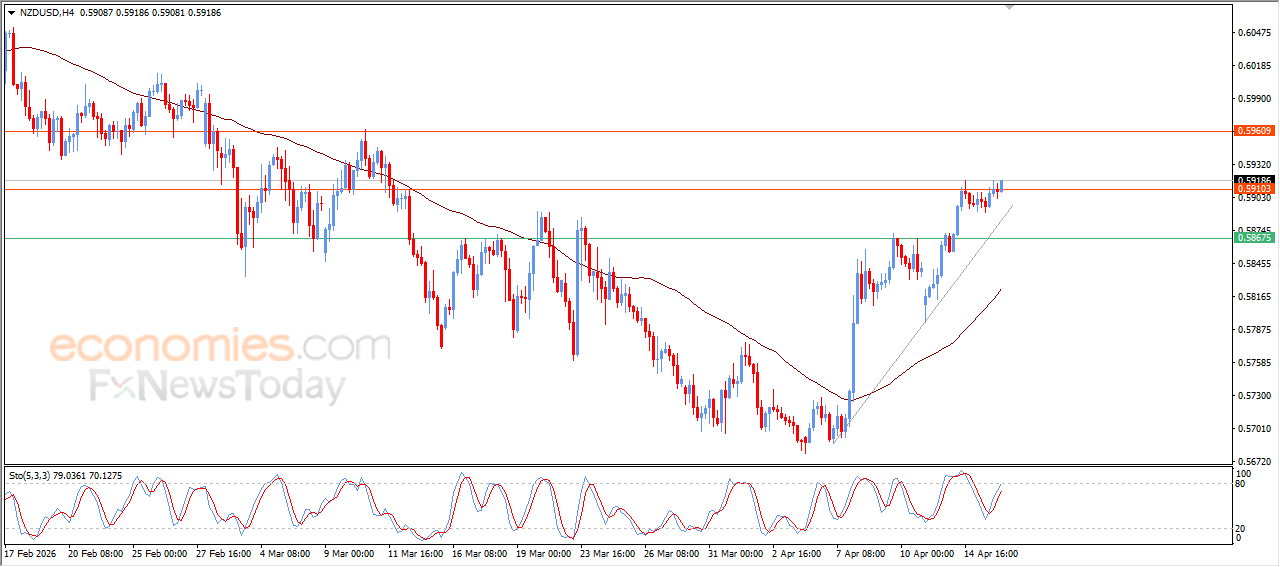
The NZDUSD pair rose during its recent intraday trading, surpassing the important resistance level at 0.5910, signaling strong intent to breach this level and potentially start a new strong bullish wave. This comes amid the dominance of a short-term corrective bullish trend, with continued dynamic support as the price trades above EMA50, alongside ongoing positive signals from relative strength indicators.
MoreThe AUDUSD reaches our price target - Analysis-16-04-2026
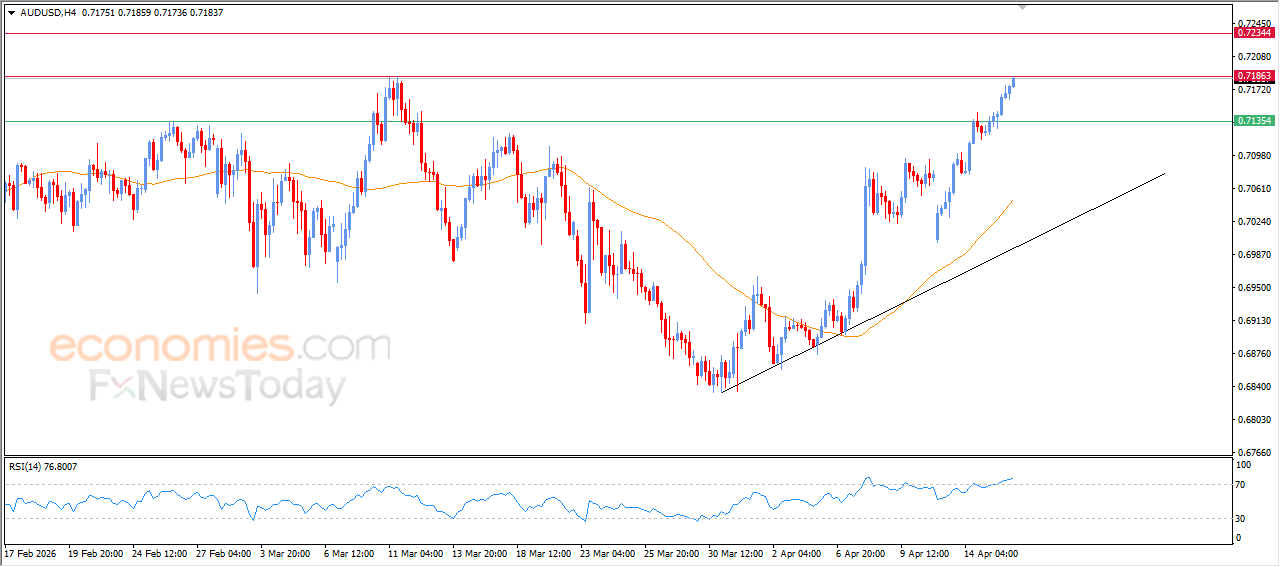
The AUDUSD pair extended its gains during recent intraday trading, as the pair moves to test the key resistance level at 0.7185, which was our previous price target. This rise is supported by continued trading above EMA50, which enhances the stability and dominance of the main short-term upward trend. In the background, positive signals continue to emerge from relative strength indicators, despite reaching heavily overbought levels.
MoreThe USDCAD price dominated by a corrective downward trend - Analysis-16-04-2026
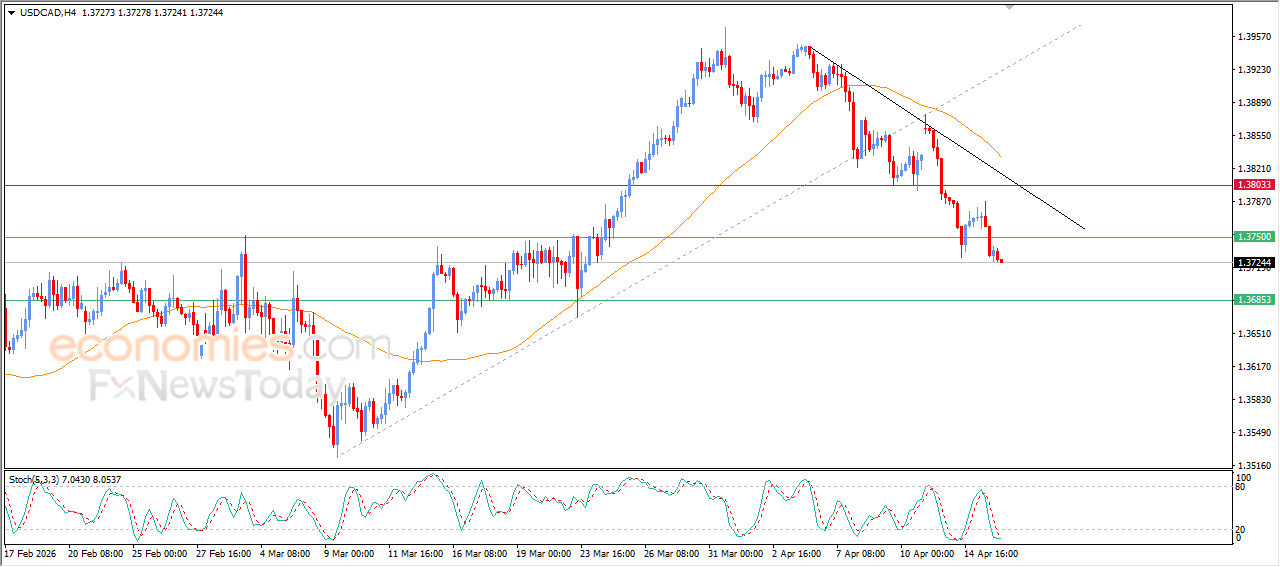
The USDCAD pair declined during its recent intraday trading, under the dominance of a short-term corrective bearish trend, while moving along a trendline that supports this path. Negative pressure continues as the price trades below EMA50, increasing the overall bearish pressure. However, on the other hand, a positive crossover is beginning to appear on relative strength indicators after reaching deeply oversold levels, which may limit further losses as the pair needs to relieve some of this oversold condition.
More