


 |
|
The USDCHF price advances after testing an uptrend line- Analysis-24-03-2026
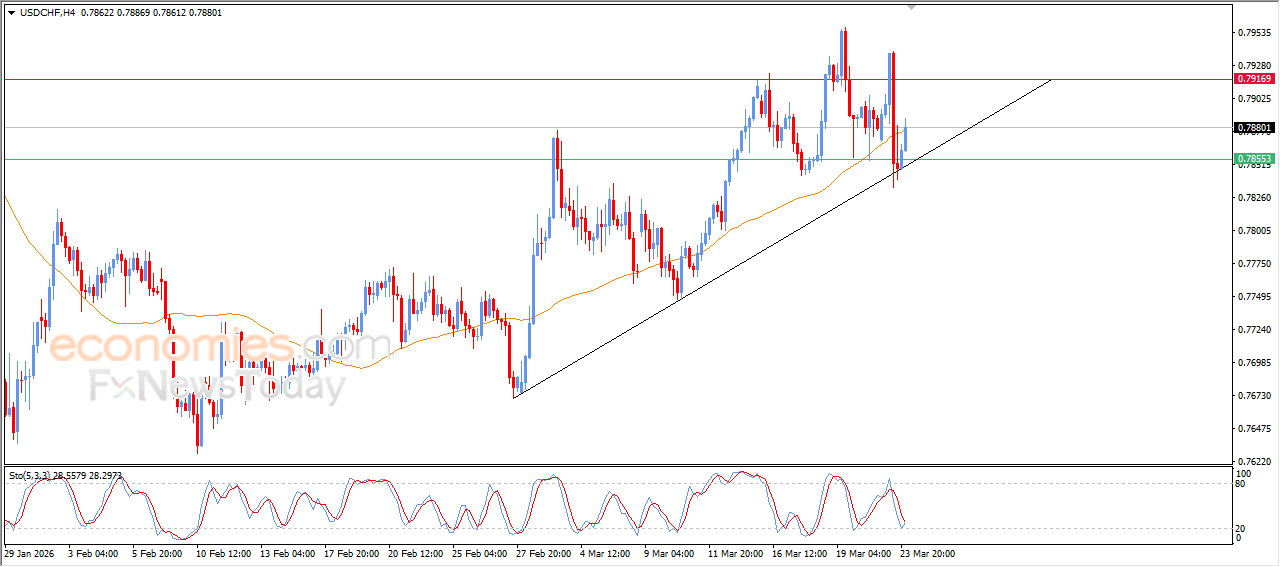
The USDCHF pair rose during recent intraday trading after finding support at a short-term ascending trendline, which provided positive momentum. This was reinforced by the emergence of a bullish crossover on the relative strength indicators, following its movement into heavily oversold areas. The pair is attempting to recover fully by overcoming the negative pressure from EMA50.
Accordingly, our expectations lean toward a rise in USDCHF in upcoming intraday trading, if the support level at 0.7855 holds, targeting the first resistance level at 0.7920.
NZDUSD price declines after failing to break a bearish line -Analysis-24-03-2026
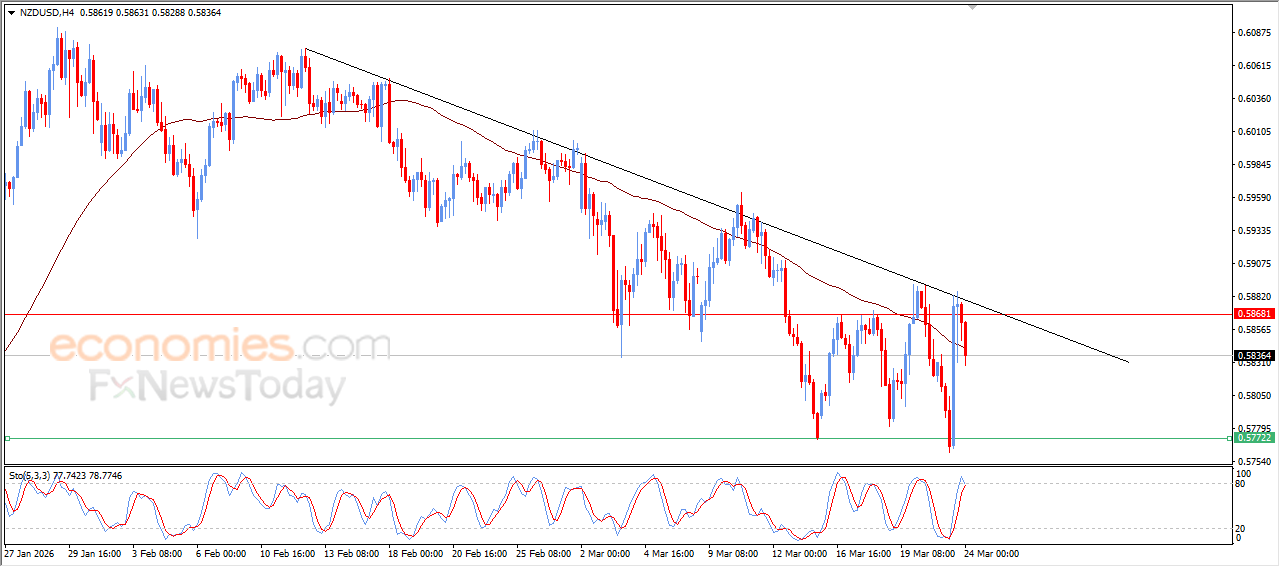
The NZDUSD pair declined during recent intraday trading after testing a key short-term downward trendline, which exposed it to negative pressure and pushed it lower. The pair also broke below EMA50, reducing the chances of continuing the strong gains seen in the previous session.
This comes alongside the emergence of a negative crossover of the relative strength indicators, after reaching heavily overbought levels, which further increases the bearish pressure surrounding the pair.
The AUDUSD price is under negative pressure - Analysis-24-03-2026
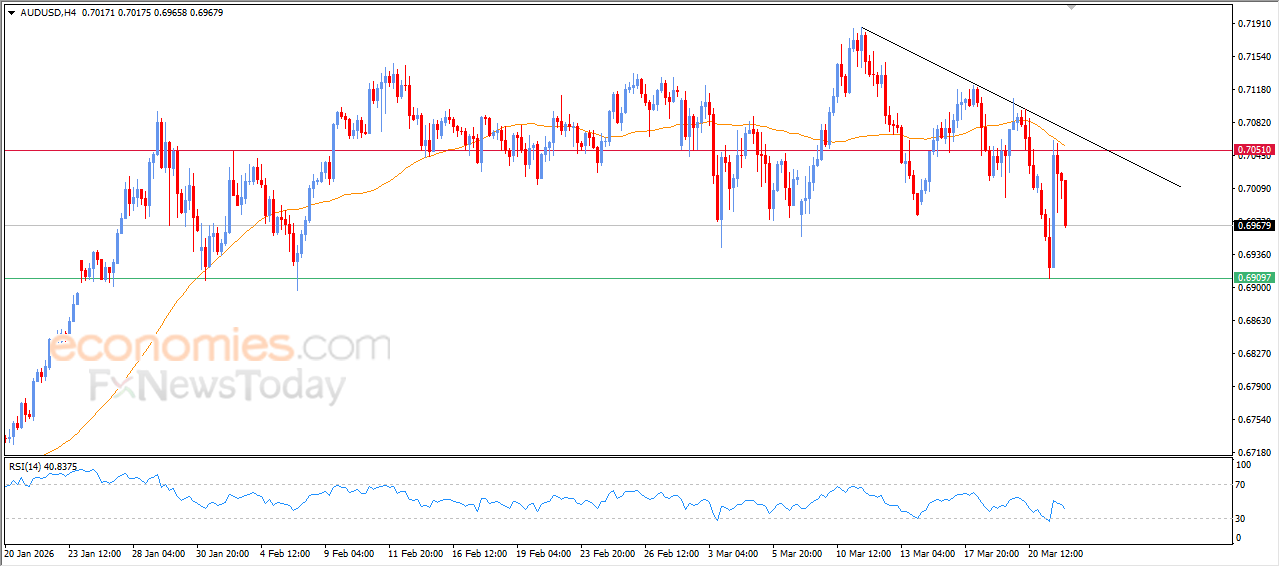
The AUDUSD pair declined during recent intraday trading after previously facing resistance of EMA50, which forced it to reverse lower. This comes amid the dominance of a short-term bearish corrective wave, with price movements aligned along a downward trendline supporting this direction.
We also observe increasing negative signals from the relative strength indicators, after the pair managed to relieve its oversold conditions, opening the way for further losses in the near term.
The USDCAD breaks key resistance - Analysis-24-03-2026
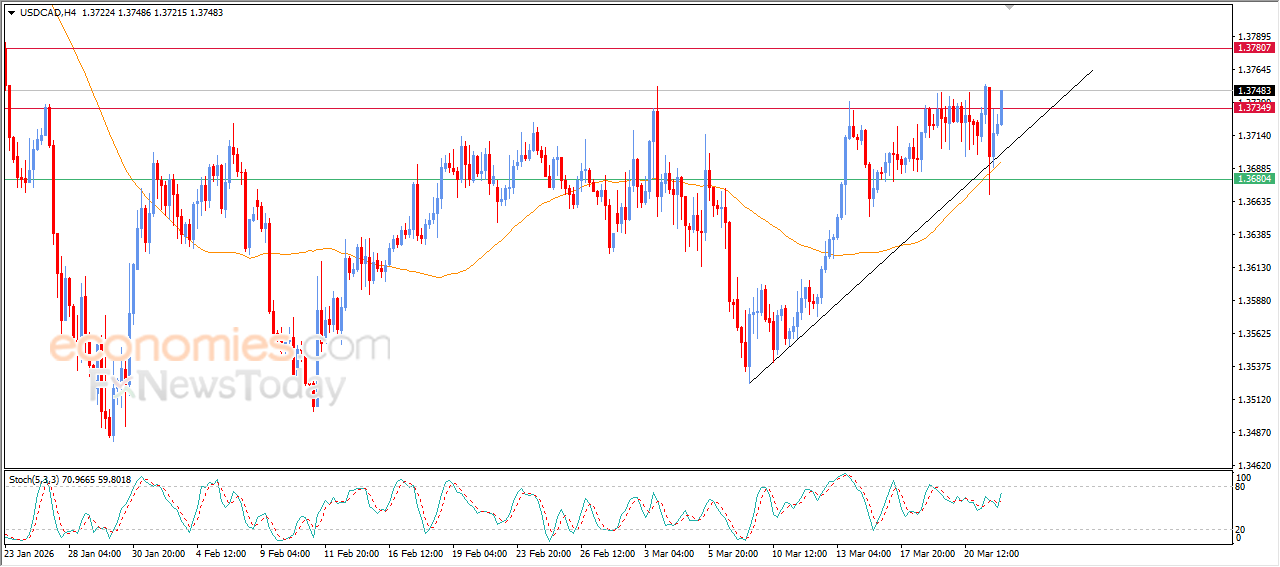
The USDCAD pair extended its gains during recent intraday trading, successfully breaking above the key resistance level at 1.3735, benefited from its previous stability at EMA50’s support, which provided positive momentum, further strengthened by trading along a short-term ascending trendline.
Additionally, positive signals are emerging from the relative strength indicators reinforce the likelihood of further gains in the near term.