


 |
|
The USDCHF attempts to recover some losses - Analysis-15-04-2026
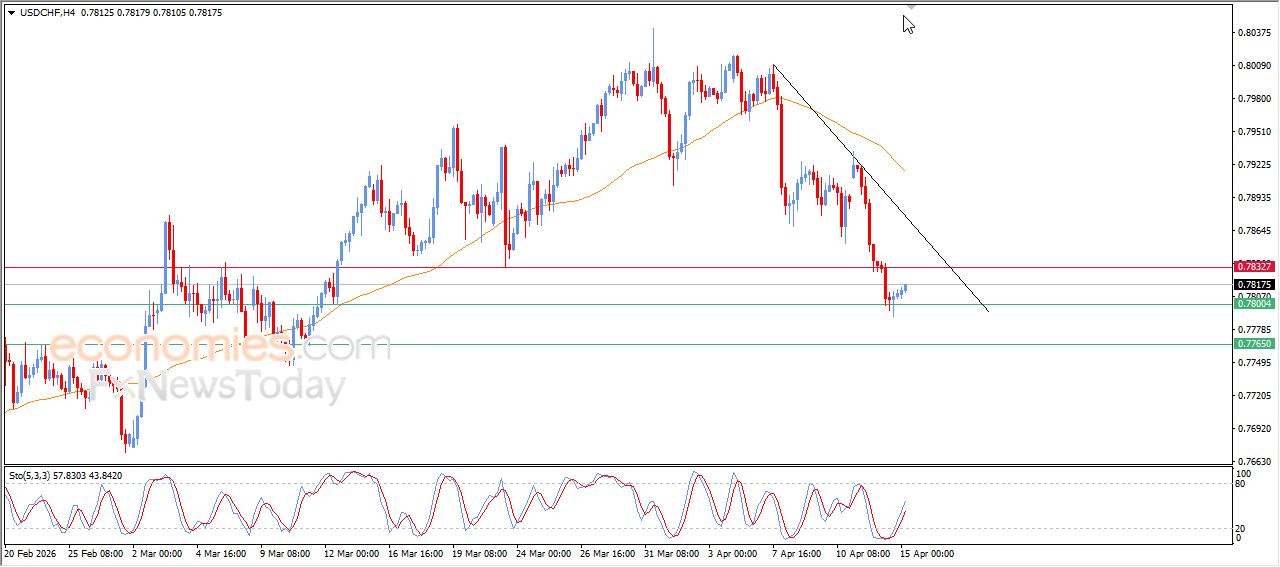
The USDCHF pair rose in its latest intraday trading after stabilizing of the 0.7800 support level, which had been a price target in our previous analysis. The pair is using this support to recover previous losses, and it managed to offload its oversold conditions on the relative strength indicators, amid the dominance of the bearish corrective trend on short-term basis, with its trading alongside steep supportive bearish trend line for this path.
NZDUSD pauses to catch its breath - Analysis-15-04-2026
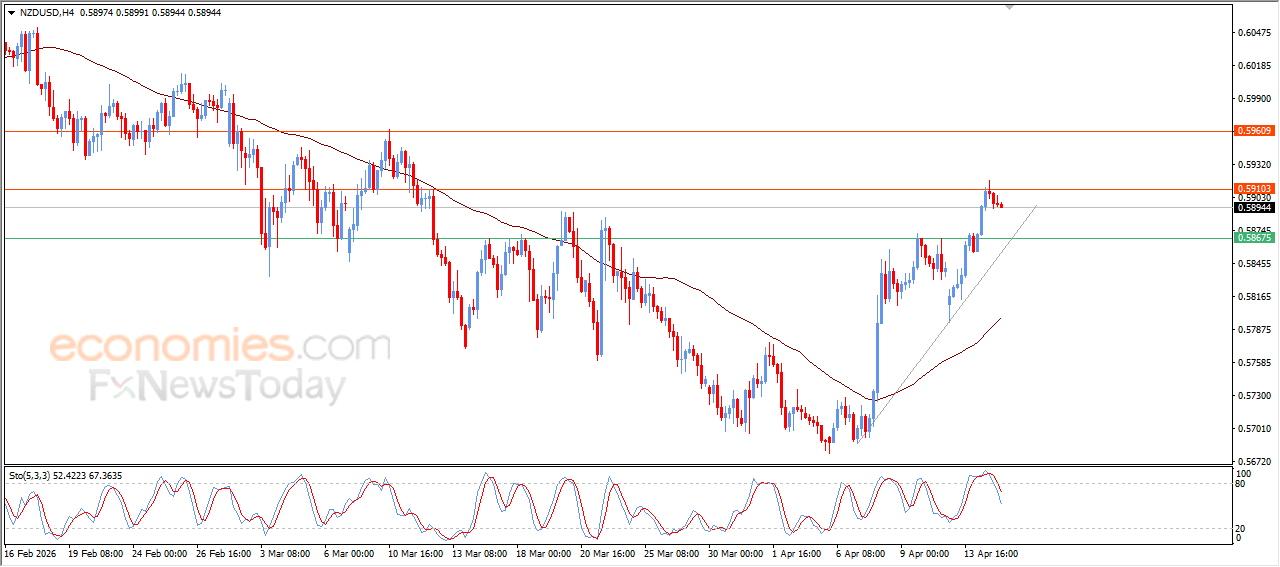
The NZDUSD pair declined during its latest intraday trading after reaching our target at the 0.5910 resistance level. The pair entered a natural profit-taking phase following its previous gains, while attempting to regain positive momentum that could help it break above this resistance.
MoreThe AUDUSD reaches our second target in the same day - Analysis-15-04-2026
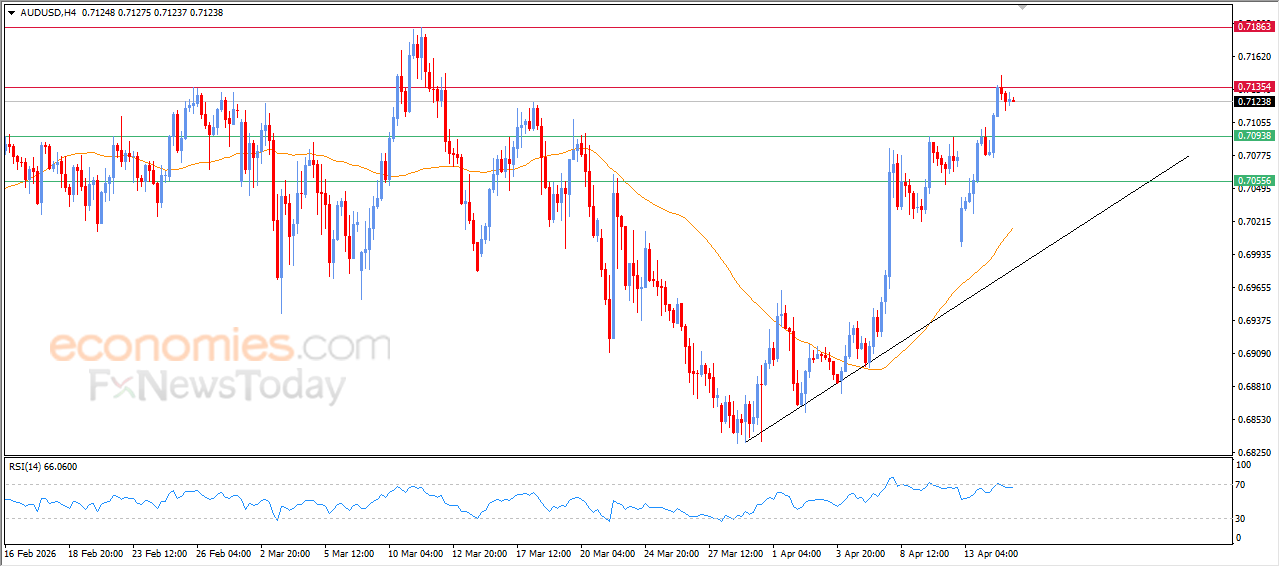
The AUDUSD pair edged slightly lower during its latest intraday trading after holding at the current resistance level of 0.7135, which represented our second price target in yesterday’s session. The pair is undergoing a natural profit-taking phase following previous gains, while also attempting to relieve its overbought condition on the relative strength indicators, especially with the emergence of negative signals. This may help it rebuild positive momentum to resume its upward movement in the near term, amid a dominant short-term bullish trend.
MoreThe USDCAD price rises after reaching our target - Analysis-15-04-2026
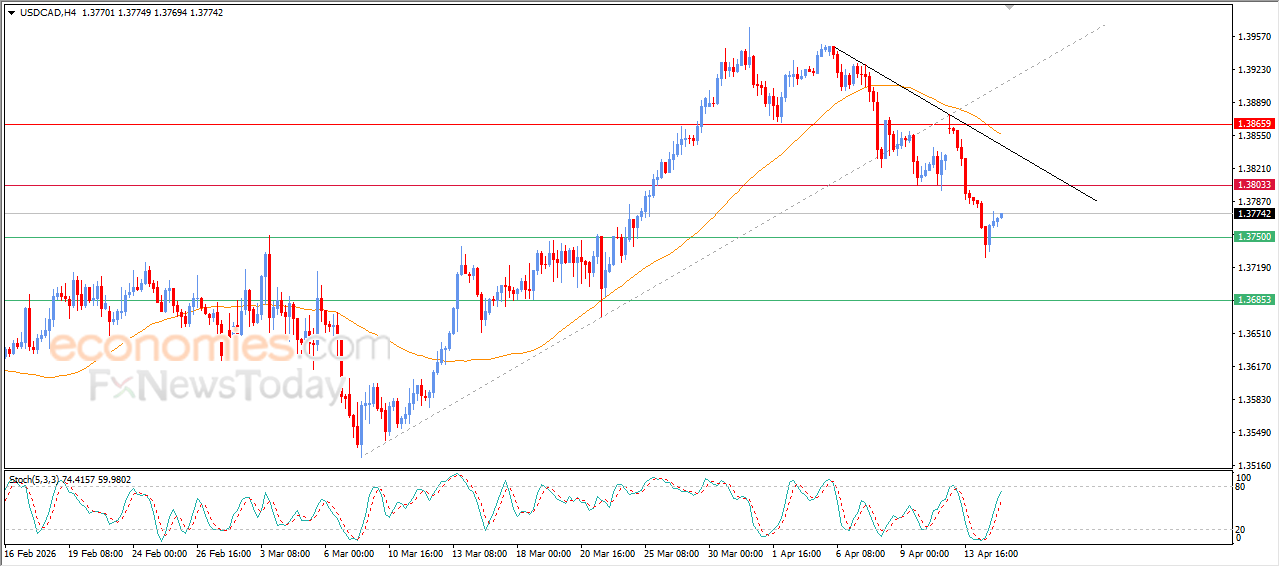
The USDCAD pair moved higher during its latest intraday trading after stabilizing above the 1.3750 support level, which had been a price target in our previous analysis. The pair benefited from this positive momentum to recover part of their earlier losses. It also managed to relieve its oversold condition on the relative strength indicators.
More