


 |
|
Brent Crude Oil Takes a Breather – Forecast for Today – 30-03-2026
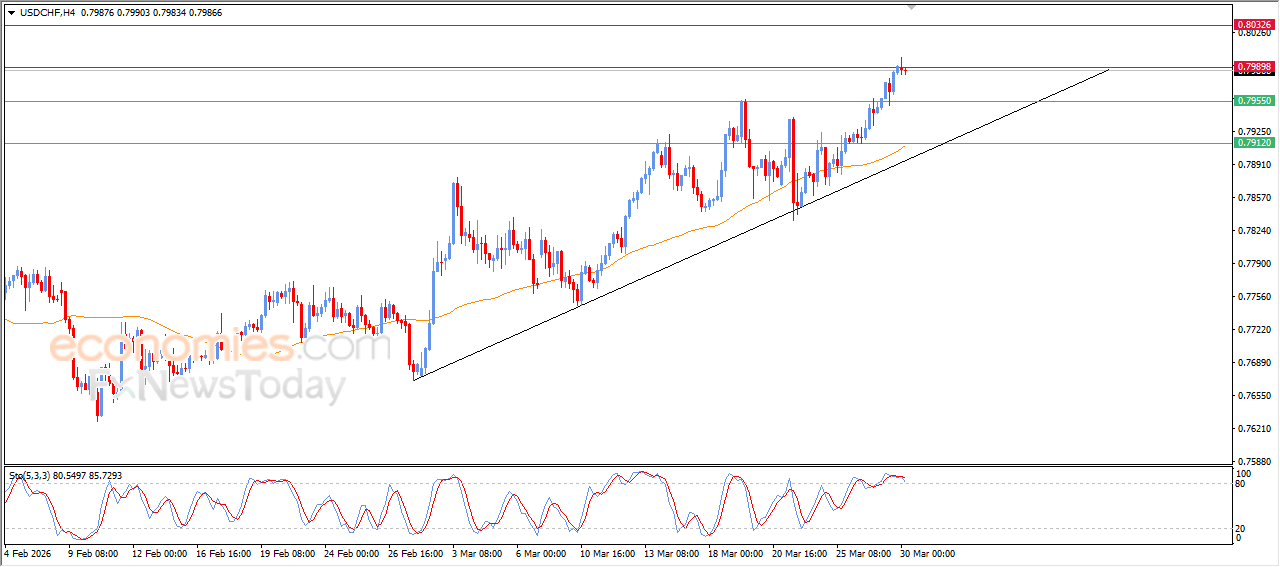
Brent crude oil (BRENT) prices slightly declined during recent intraday trading, taking profits from previous gains while attempting to build positive momentum that could support a resumption of strong upward movement. This comes amid ongoing dynamic support, as the price trades above its 50-period simple moving average, reinforcing the stability and dominance of the main short-term uptrend. Price movements are also aligned along a trendline supporting this bullish path.
NZDUSD price continues its decline -Analysis-30-03-2026
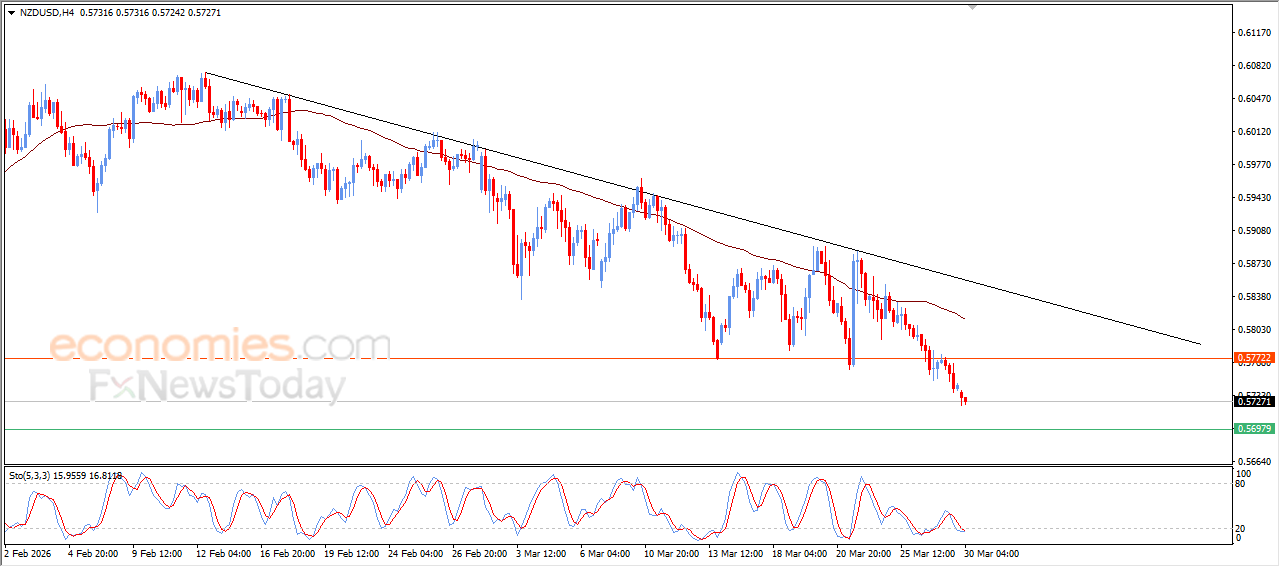
The NZDUSD pair continued to fall during its recent intraday trading, amid full dominance of the main short-term downtrend. Price movements remain aligned along a trendline supporting this bearish path, along with ongoing negative and dynamic pressure as the pair trades below EMA50. Intensifying the negative pressure, reinforcing bearish scenarios, supported by continued negative signals from the relative strength indicators, despite reaching deeply oversold levels.
The AUDUSD extends its losses - Analysis-30-03-2026
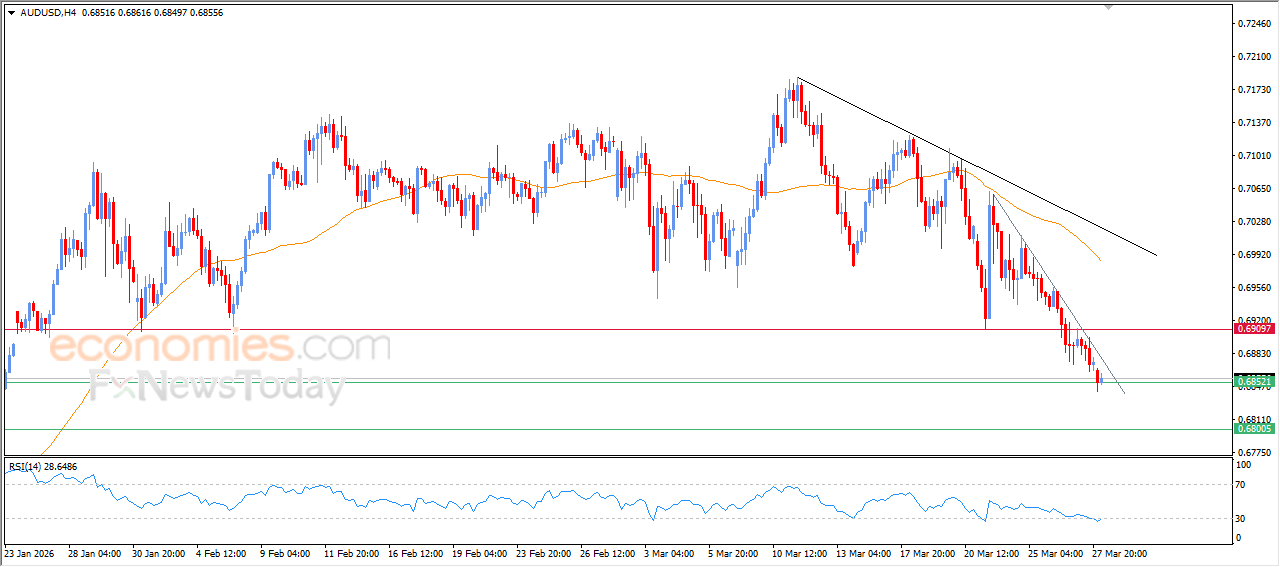
The AUDUSD pair continued its decline during recent intraday trading, stabilizing at the support level of 0.6850, a level that had previously been identified as a price target in our earlier analysis.
This comes amid the dominance of a short-term corrective downtrend, with price movements alongside steep primary and secondary trendlines, indicating the strength of this bearish path. The negative pressure reinforced by trading below EMA50, increasing the overall downside pressure.
The USDCAD price attempts to break our target - Analysis-30-03-2026
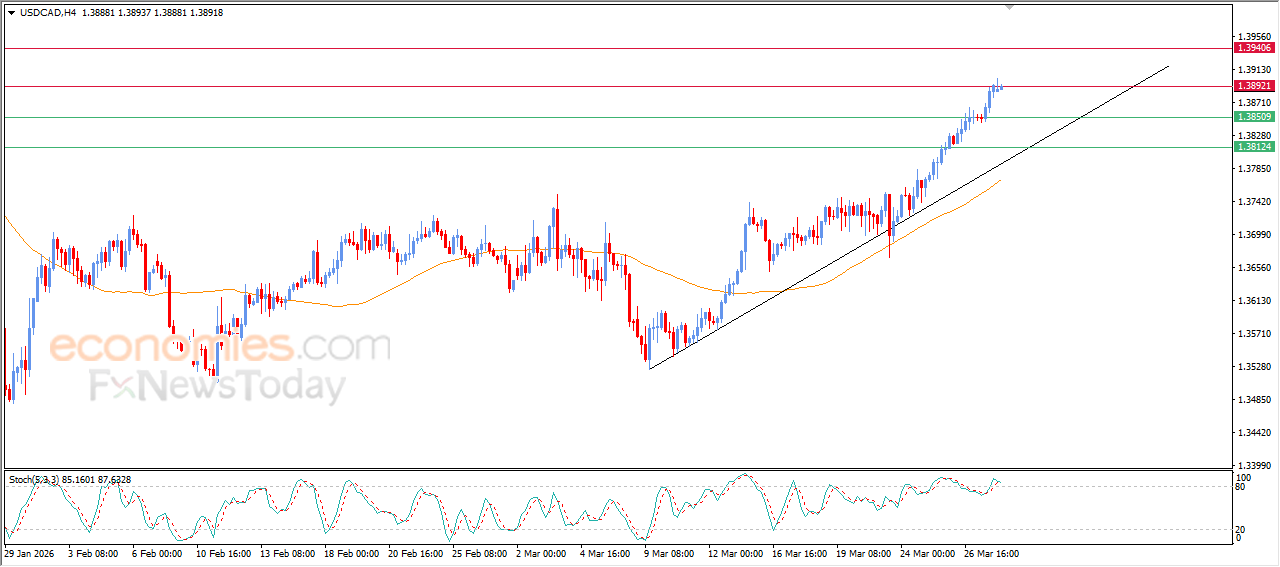
The USDCAD pair is maintaining its strong and consecutive gains in recent intraday trading, as it attempts to break above the current resistance level at 1.3890, a level previously identified as a price target in our earlier analysis.
This performance comes amid the dominance of the main short-term bullish trend, with price movements alongside a minor trendline supporting this bullish path. Additionally, positive pressure continues as the pair trades above EMA50.
On the other hand, we are beginning to observe a negative crossover on the relative strength indicators after it reached heavily overbought levels. This may limit the pair’s ability to extend gains in the near term, potentially leading to temporary pullbacks for profit-taking.