


 |
|
USDCAD Shows More Positive Signals – Analysis – 18-05-2026
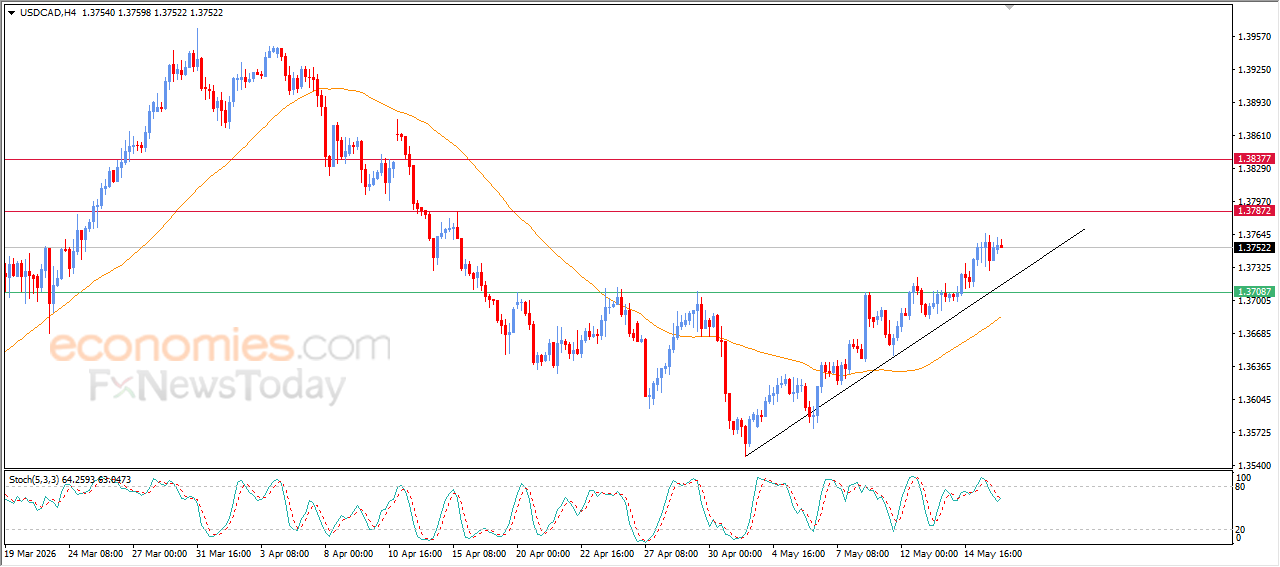
The USDCAD rose during its recent intraday trading, amid the dominance of a short-term bullish corrective wave. The pair continues to move alongside a supportive trendline, while maintaining positive and dynamic pressure through trading above EMA50, which enhances the chances of extending gains in the near term.
This positive outlook is supported by the emergence of a bullish crossover on the relative strength indicators after the pair successfully eased its previous overbought conditions, giving it more room to strengthen its upward momentum.
USDJPY Reaches Our Latest Price Target – Analysis – 18-05-2026
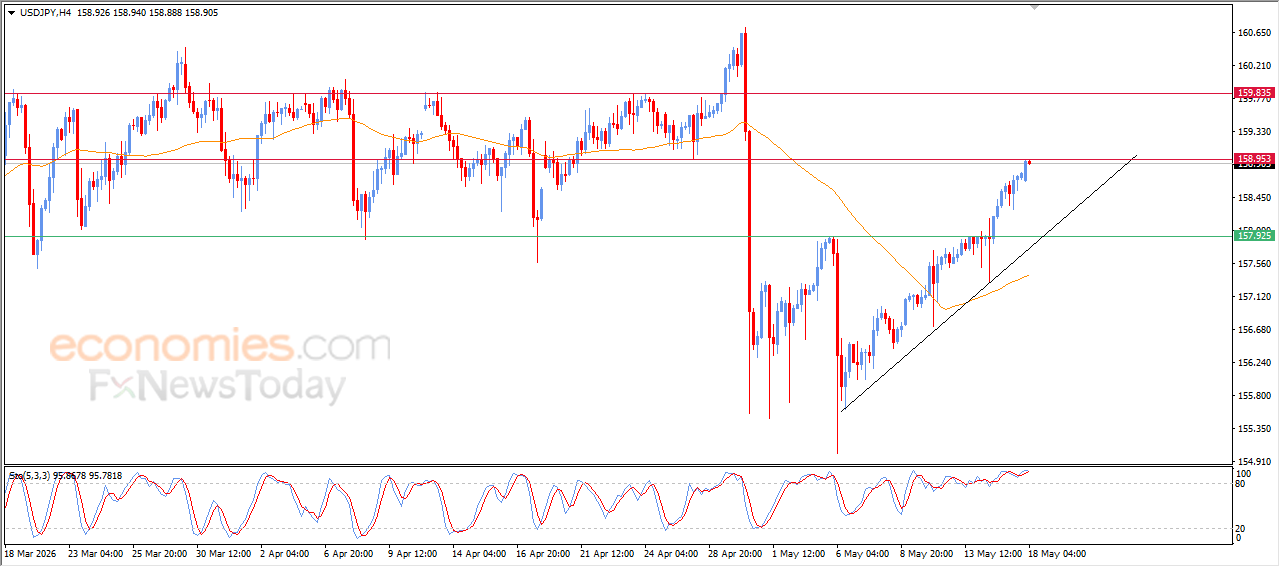
The USDJPY rose during its recent intraday trading, reaching158.95 resistance in preparation for testing it. Which represented a price target in our earlier analysis, amid the dominance of a short-term bullish corrective trend, with price action continuing alongside a supportive trendline.
In addition, positive and dynamic pressure remains in place as the pair continues to trade above EMA50. However, relative strength indicators have started to show a negative crossover after reaching heavily overbought levels, which may limit the pair’s upward momentum in the near term.
GBPUSD Breaks Our Price Target – Analysis – 18-05-2026
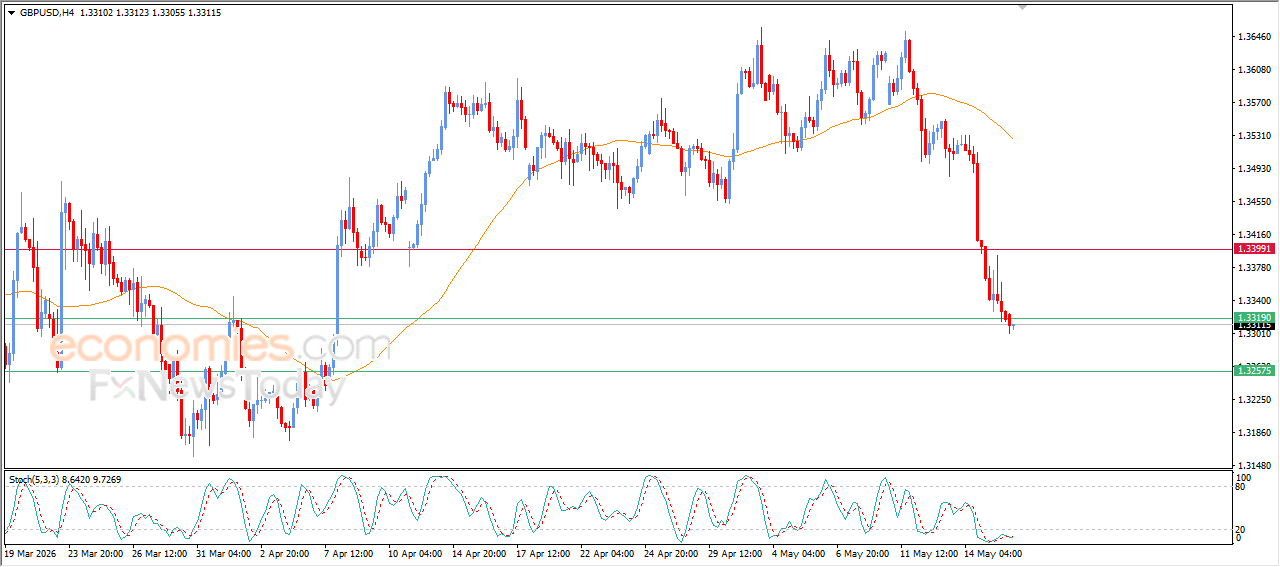
The GBPUSD continued to decline during its recent intraday trading, with the pair breaking below the 1.3320 support level, which was a price target in our earlier analysis. This comes amid the dominance of a steep short-term bearish corrective wave, alongside ongoing negative pressure caused by trading below EMA50.
In the background, relative strength indicators continue to send negative signals after the pair succeeded in easing part of its previous oversold conditions, increasing the negative pressure surrounding upcoming trading sessions
Bitcoin Price Deepens Its Losses – Analysis – 18-05-2026
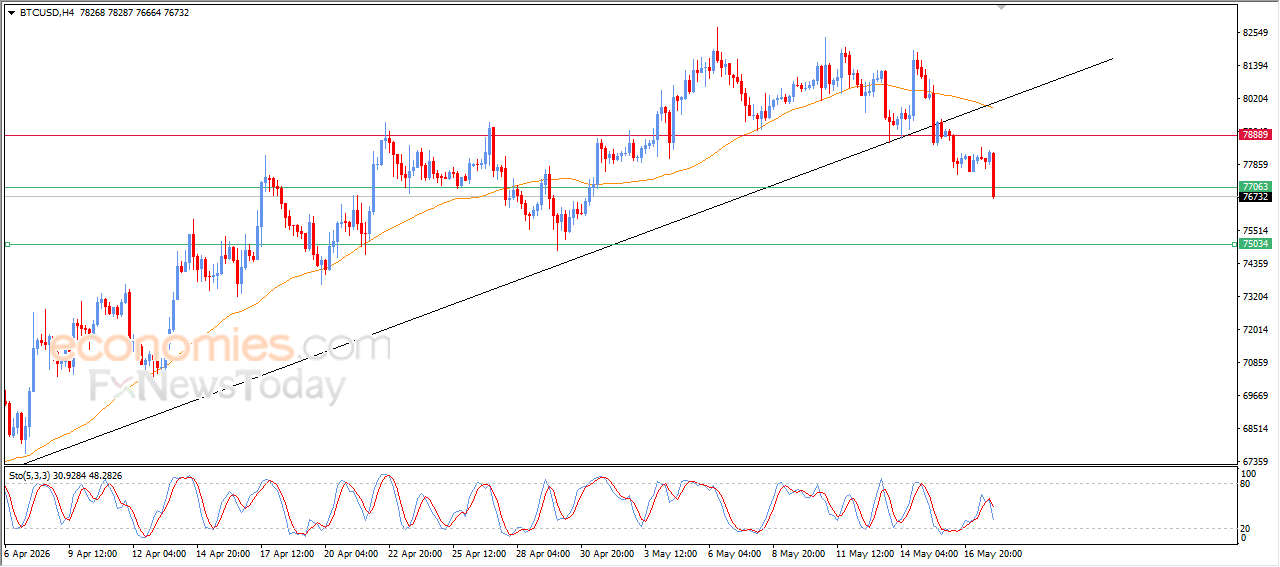
Bitcoin (BTCUSD) continued to slide lower during its recent intraday trading, to confirm breaking $77,000 support, which represented our previous downside target. This reflects the continued dominance of selling pressure over short-term price movements. The decline comes after breaking a major bullish trendline, which reinforced the control of the bearish corrective trend over intraday trading.
Negative pressure is increasing as the price continues to trade below EMA50, raising the likelihood of deeper losses in the coming period. In addition, relative strength indicators have started to send new negative signals after the price successfully eased its previous oversold conditions.