


 |
|
NZDUSD reaches our price target - Analysis-21-04-2026
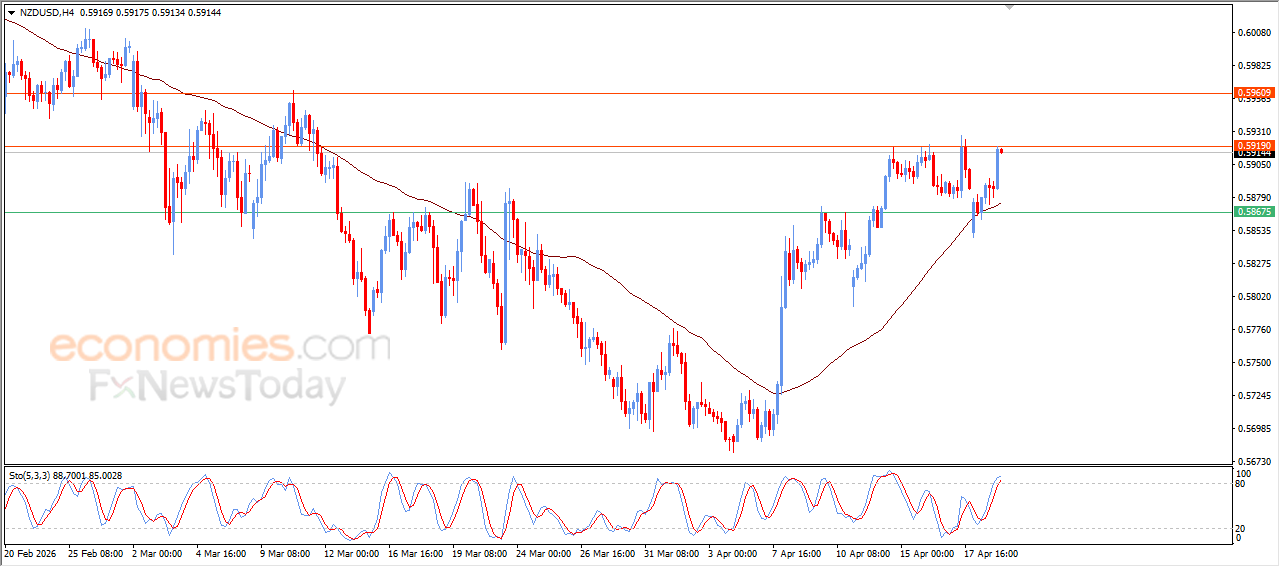
The NZDUSD pair surged during its recent intraday trading, supported by continued movement above EMA50, which provides a dynamic support base that strengthens the stability of the short-term bullish corrective trend. The pair is testing the key resistance level at 0.5920, which had previously been our price target.
This comes alongside positive signals from the relative strength indicators, despite reaching overbought territory, which reflects strong bullish momentum in the current move.
The AUDUSD prepares to test key resistance - Analysis-21-04-2026
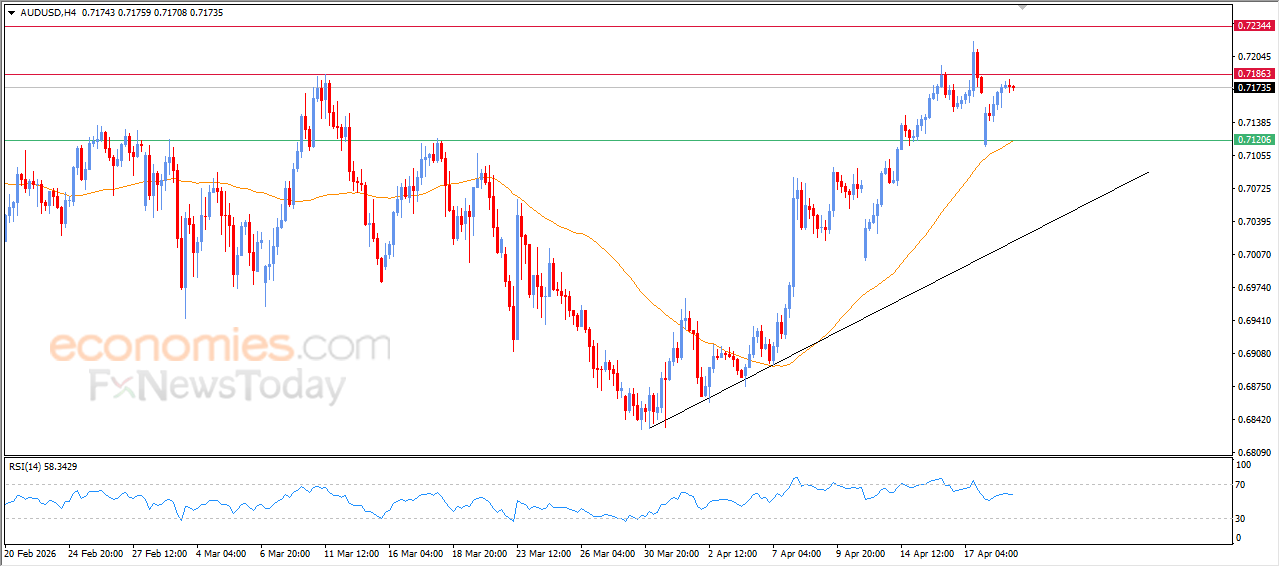
The AUDUSD pair declined slightly during its recent intraday trading, as the pair attempts to take profits from its previous gains. At the same time, it is trying to build positive momentum that could help it break the key resistance level at 0.7185.
MoreThe USDCAD price breaks our target - Analysis-21-04-2026
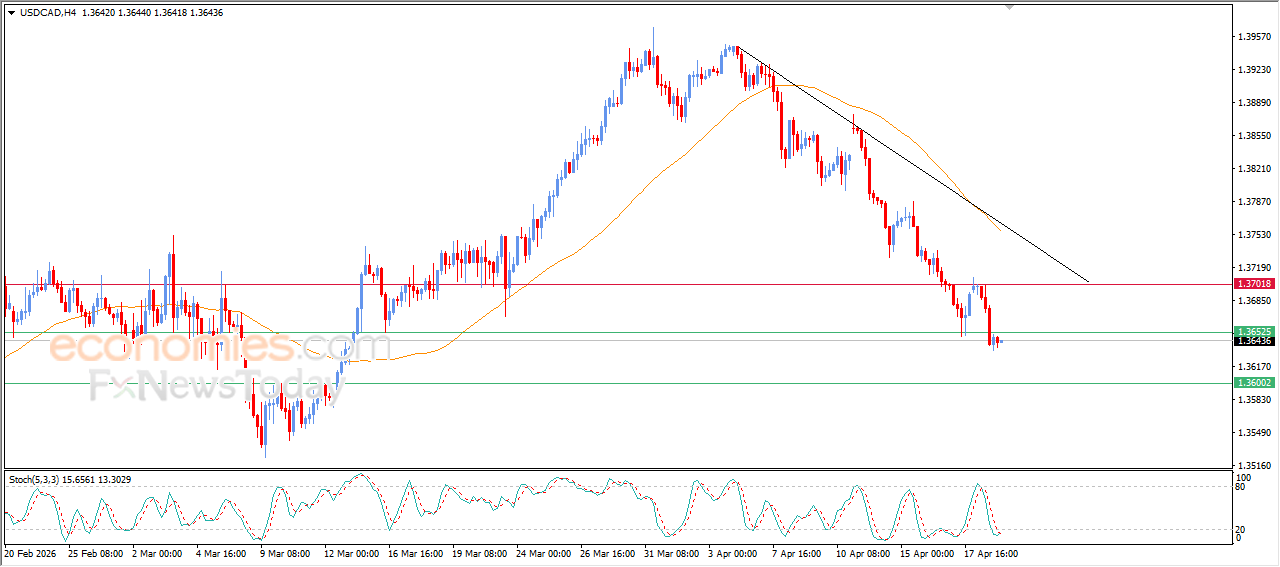
The USDCAD pair continues to stabilize within a series of consecutive losses during its recent intraday trading, as it breaks below the 1.3655 support level, which represented our previously targeted price in earlier analysis. This comes amid the dominance of a short-term bearish corrective trend, with the price moving along a supportive trendline for this bearish path.
MoreThe USDJPY price hits its simple moving average-Analysis-21-04-2026
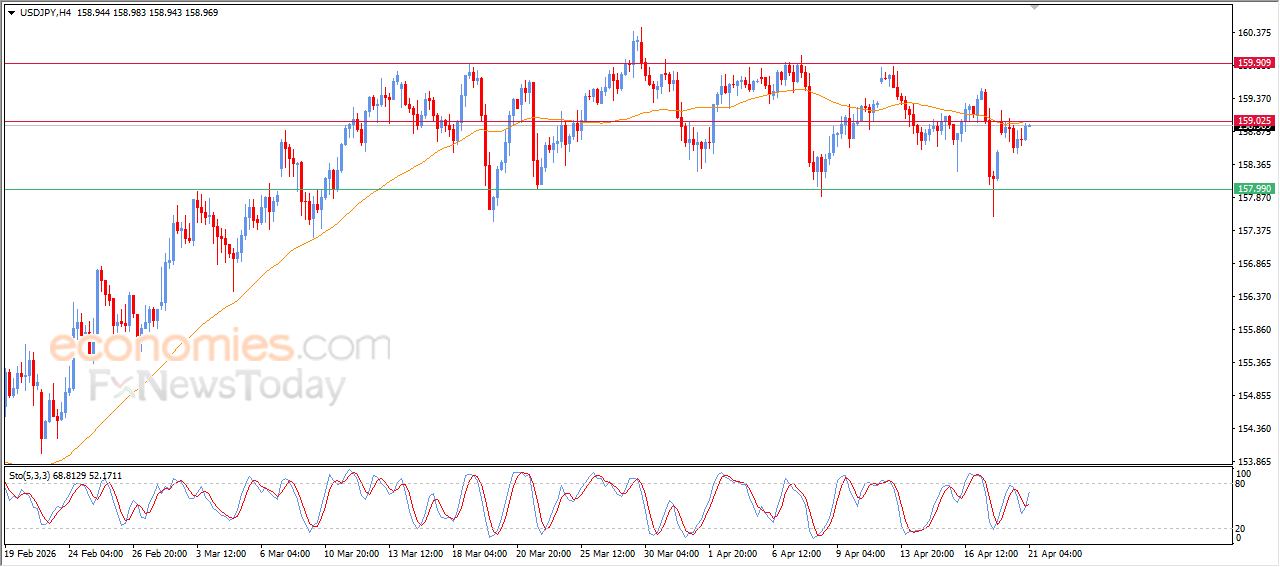
The USDJPY pair rose during its recent intraday trading, supported by continued positive signals from the relative strength indicators, reaching the EMA50 resistance to overcome the negative pressure that has recently dominated its movements.
More