


 |
|
NZDUSD price resumes its decline -Analysis-01-04-2026
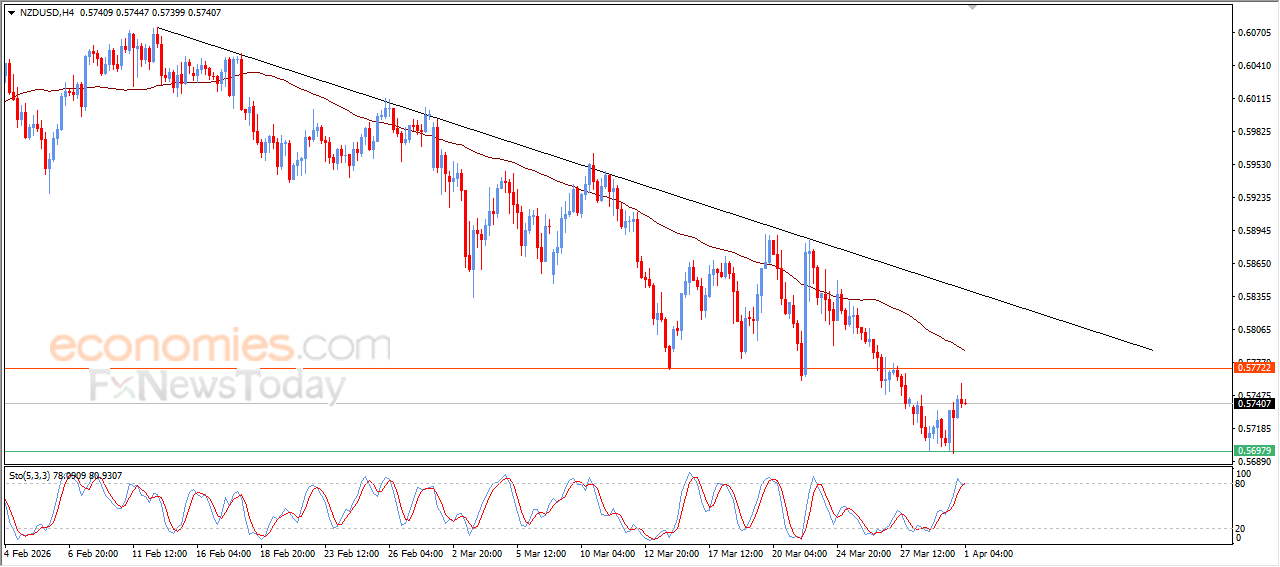
The NZDUSD pair declined during its recent intraday trading after attempting to correct the main short-term downtrend. This move pushed the relative strength indicators into heavily overbought territory, excessively compared to the pair’s movement, suggesting the beginning of a negative divergence, especially with the emergence of a bearish crossover. This increases the negative pressure surrounding the pair.
Additional negative pressure remains due to the trading below EMA50, reinforcing the bearish outlook and reducing the chances of recovery in the near term.
The AUDUSD extends cautious corrective gains - Analysis-01-04-2026
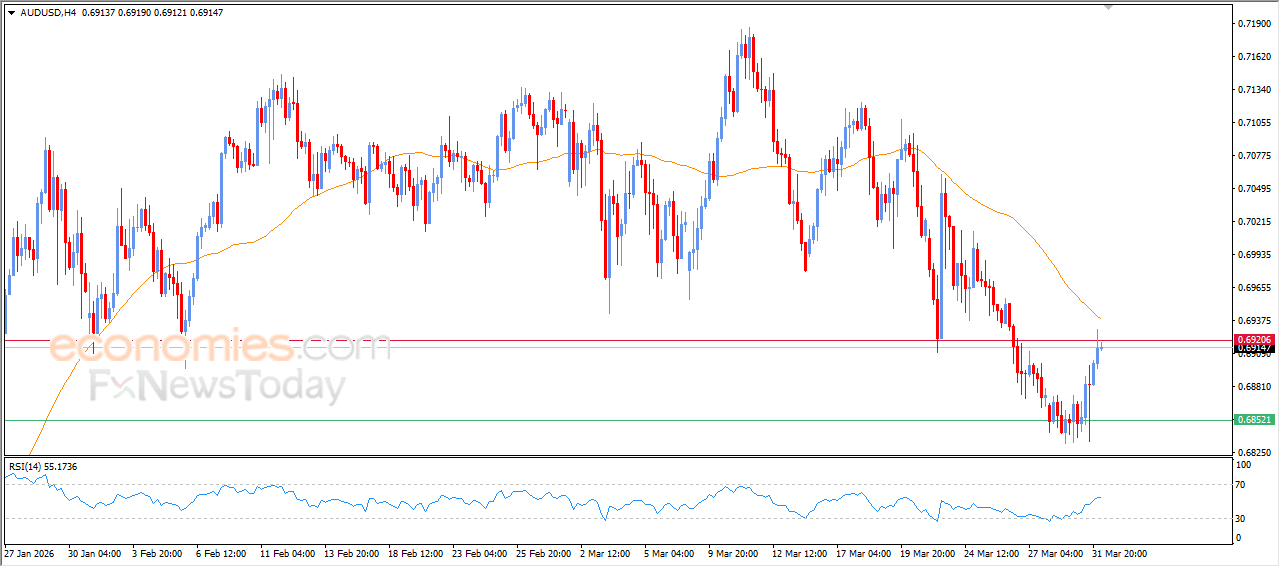
The AUDUSD pair strengthened its gains during recent intraday trading, supported by positive signals from the relative strength indicators, despite the indicator reaching heavily overbought levels. This suggests a potential quick weakening of the positive momentum.
This rise is seen as an attempt to correct the main short-term downtrend, while negative pressure persists due to trading below EMA50, which limits the chances of a sustainable recovery in the near term.
The USDCAD price seeks a higher low - Analysis-01-04-2026
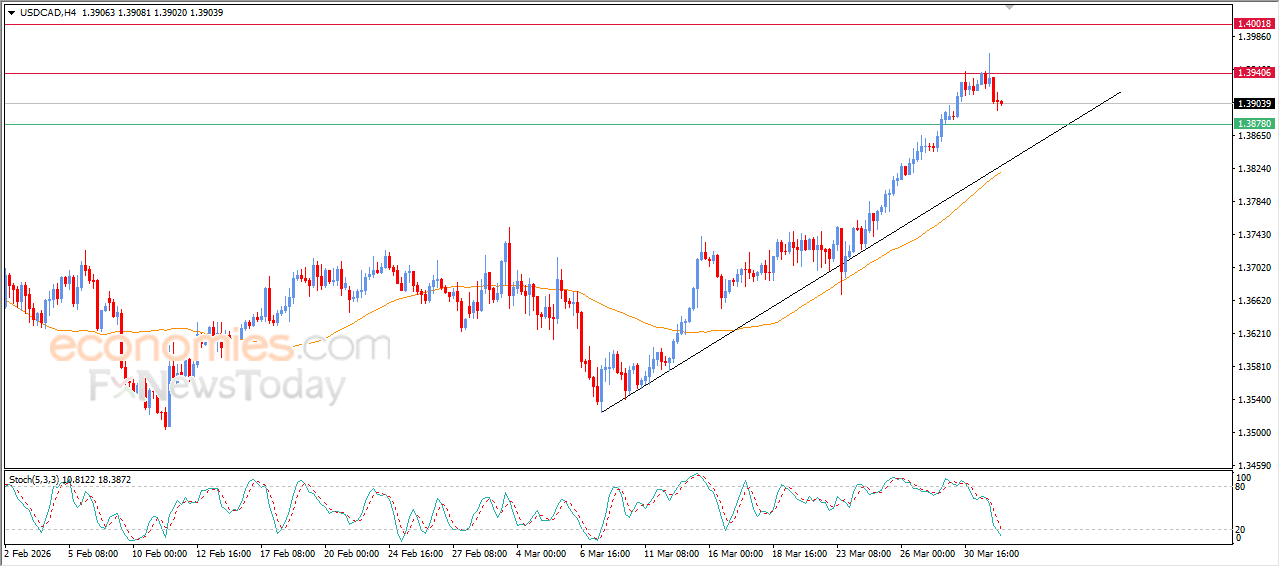
The USDCAD pair declined during its recent intraday trading due to the firmness of the 1.3940 resistance level. The pair is now attempting to form a higher low that could serve as a base to help it regain positive momentum and resume its recovery.
This comes amid continued positive pressure as the price trades above EMA50, which reinforces the stability and dominance of the main short-term bullish trend. In the background, we also notice that the relative strength indicators have reached deeply oversold levels, excessively compared to price movement, suggesting the potential formation of a positive divergence, which supports the chances of a bullish move.
The USDJPY breaks a bullish trendline -Analysis-01-04-2026
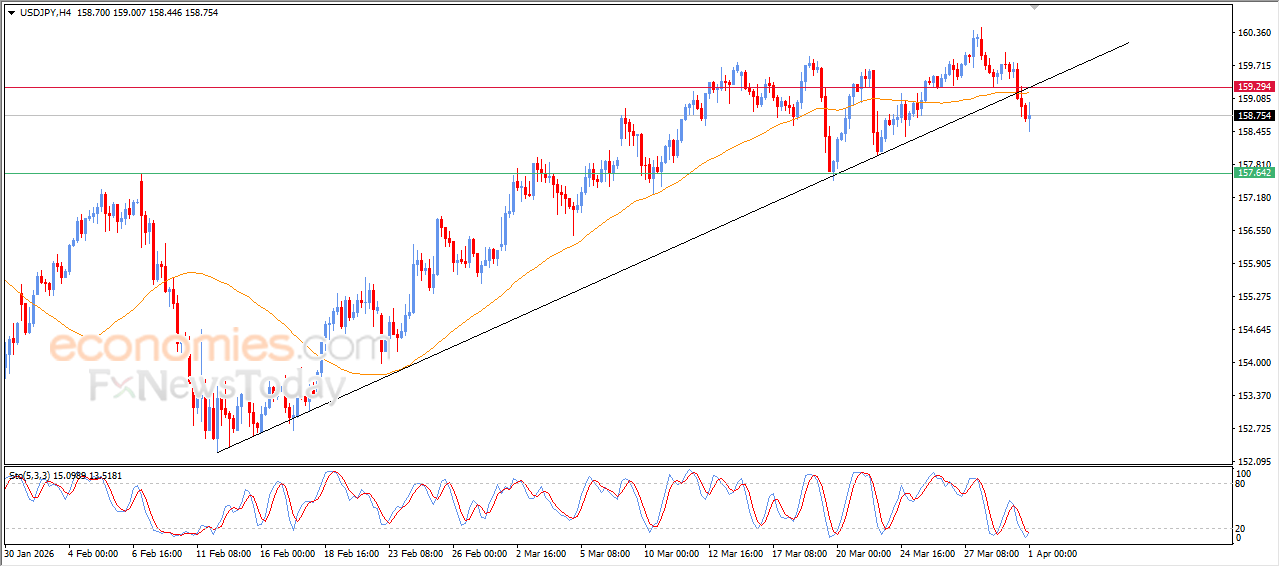
The USDJPY pair is recording consecutive losses during its recent intraday trading, confirming a break below a key short-term ascending trendline. This signals the continuation of the bearish corrective wave, especially with added negative pressure from trading below EMA50, which increases the downside pressure surrounding the pair.
On the other hand, we notice the beginning of a positive crossover of the relative strength indicators, after reaching deeply oversold levels. This helped limit recent losses and caused some price consolidation.