


 |
|
NZDUSD price attempts to ease overbought conditions - Analysis-14-04-2026
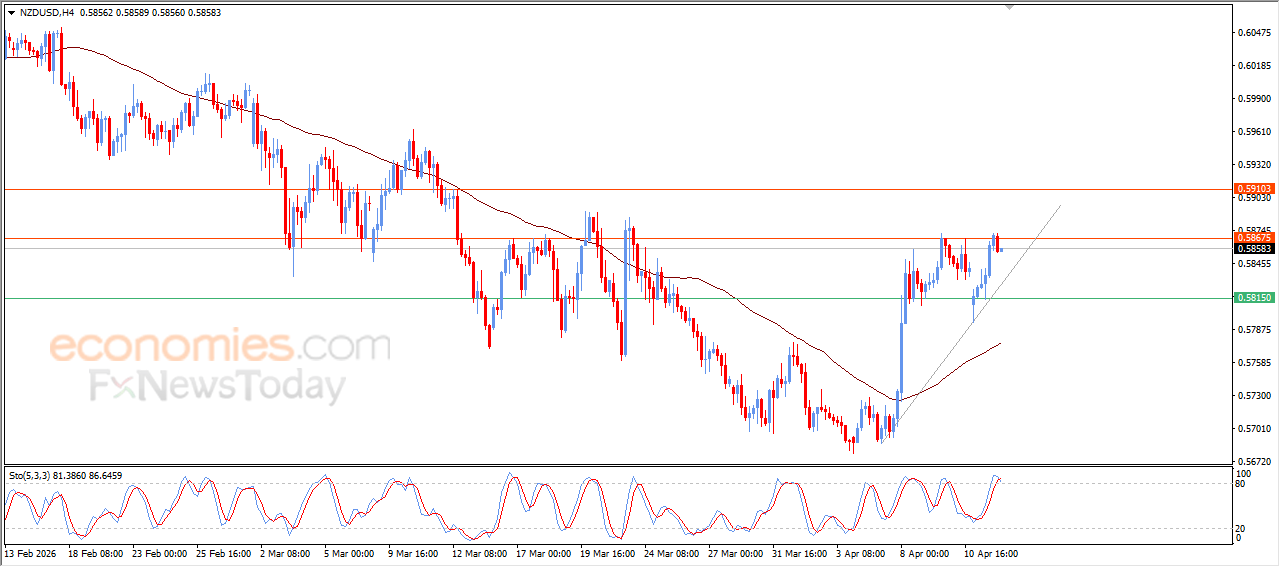
The NZDUSD pair declined during its latest intraday trading following the firm resistance at the key level of 0.5865, which had been a projected target in our previous analyses. This pullback reflects a phase of profit-taking after recent gains, as the pair also attempts to reduce its clearly overbought condition on relative strength indicators, especially with the emergence of negative signals.
At the same time, the pair continues to receive dynamic support from trading above the EMA50, reinforcing the dominance of a short-term corrective upward trend.
The AUDUSD declines after reaching our target - Analysis-14-04-2026
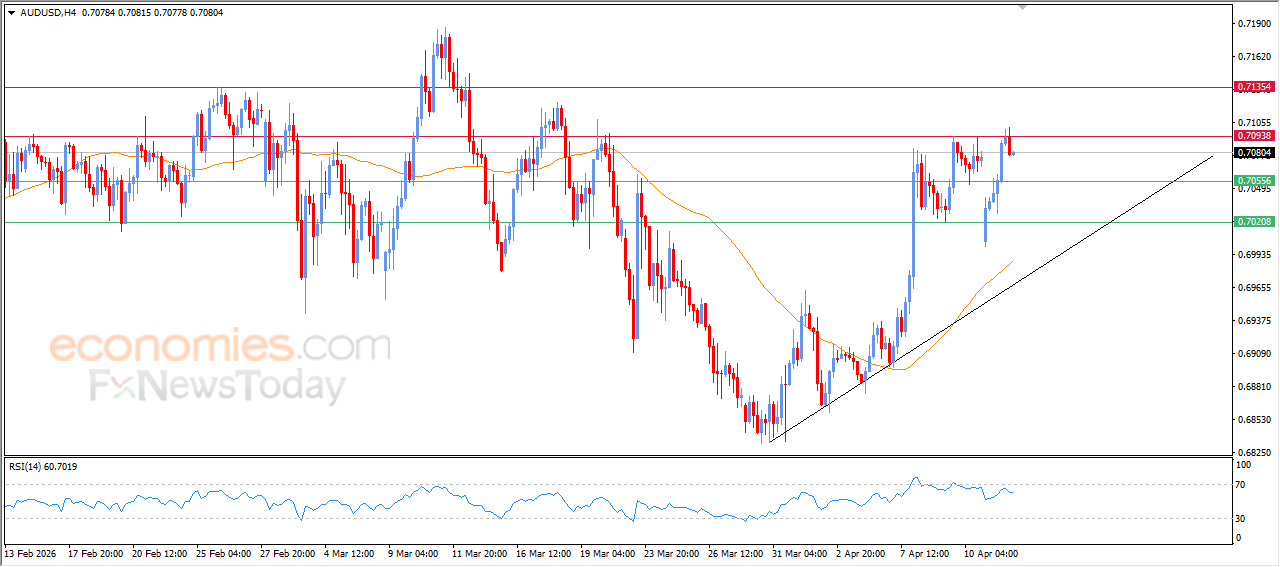
The AUDUSD pair declined during its latest intraday trading following the firm resistance at the key level of 0.7090, which had been a projected price target in our previous analyses. The pair is currently undergoing a profit-taking phase after its recent gains, while attempting to regain positive momentum that could help it breach this resistance, amid the dominance of the bullish corrective trend on short-term basis, with continued positive pressure as the price remains above EMA50, reinforcing the stability of this bullish path.
The USDCAD price declines within a bearish corrective channel - Analysis-14-04-2026
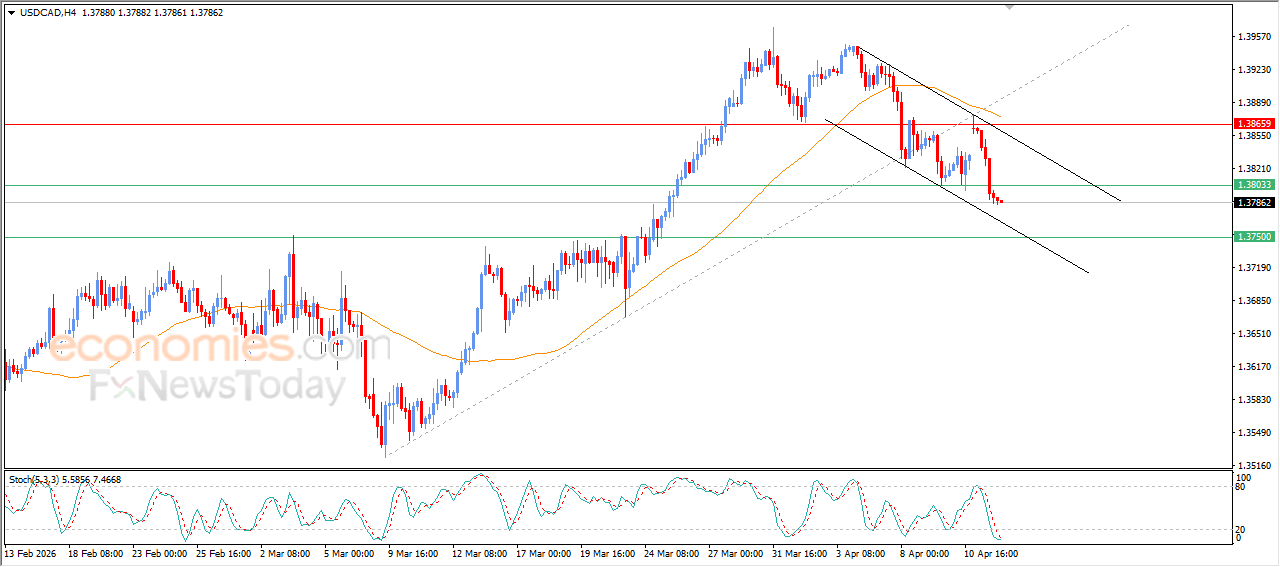
The USDCAD pair continued to move lower during its latest intraday trading, successfully breaking below the key support level at 1.3800, which had been a projected target in our previous analyses. This move comes amid the dominance of a short-term corrective bearish wave, with price action trading within a downward price channel.
Negative pressure persists as the pair continues to trade below EMA50, which increases the bearish momentum surrounding the pair.
The USDJPY price finds support at key level -Analysis-14-04-2026
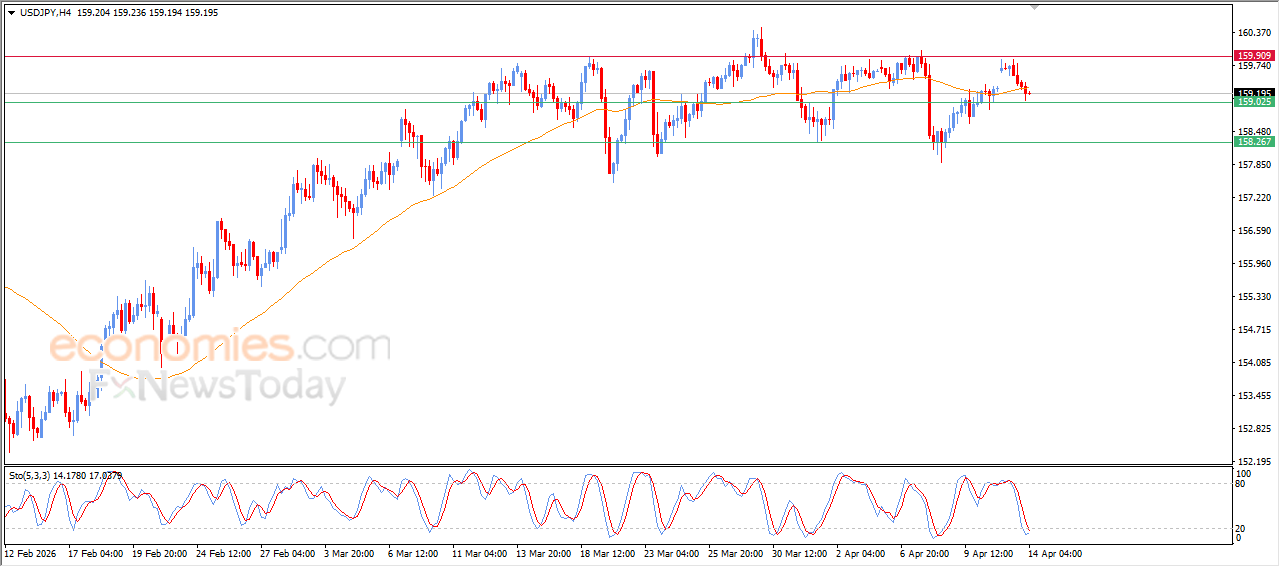
The USDJPY pair continued to decline during its latest intraday trading following the firm resistance at the key level of 159.90. The pair is now attempting to form a higher low that could serve as a base to regain positive momentum and resume its upward movement. With the recent drop, the pair has reached support at the EMA50, alongside the key support level at 159.00.
In the background, early signs of a bullish crossover are beginning to appear on relative strength indicators after reaching heavily oversold levels, excessively compared to price movement. This suggests the formation of a potential positive divergence, strengthening this area as a key support zone for the price.