


 |
|
NZDUSD Deepens Losses – Analysis – 05-06-2026
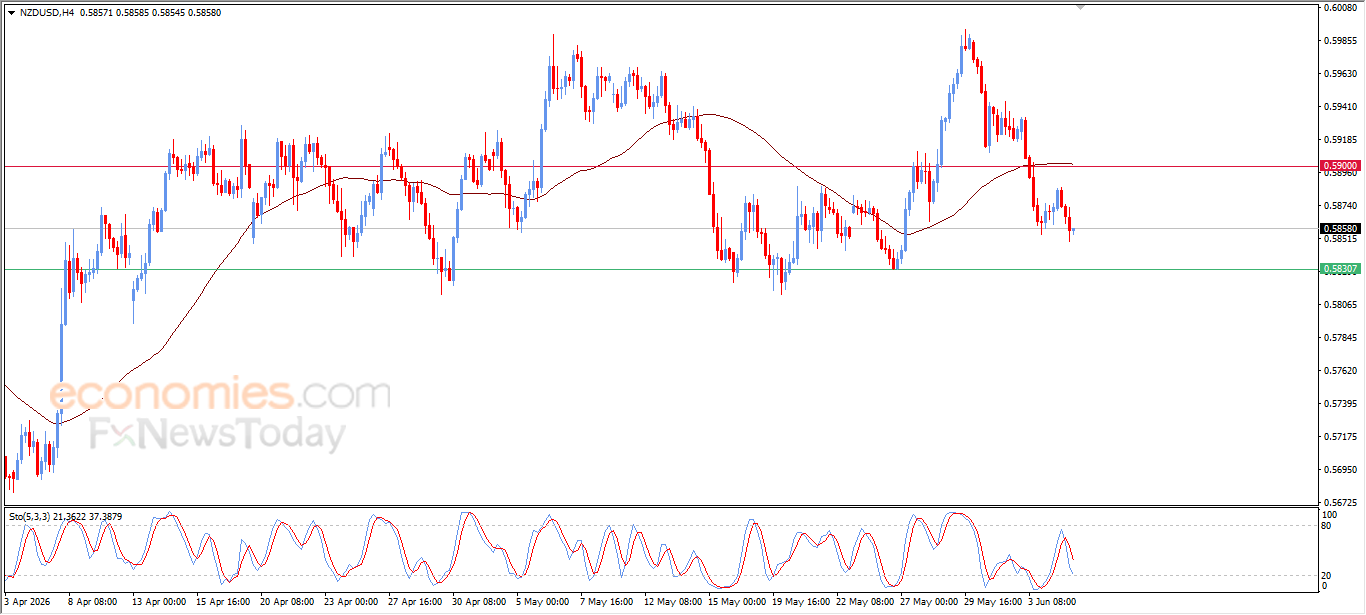
NZDUSD continued its decline in recent intraday trading, driven by a sharp short-term corrective downtrend. The pair remains under persistent bearish pressure as it trades below the EMA50, reinforcing negative momentum and limiting recovery attempts.
Additional downside pressure comes from the relative strength indicators, which are now showing renewed bearish signals after previously relieving oversold conditions. This opens the door for further losses in the near term.
AUDUSD Faces Increasing Bearish Pressure – Analysis – 05-06-2026
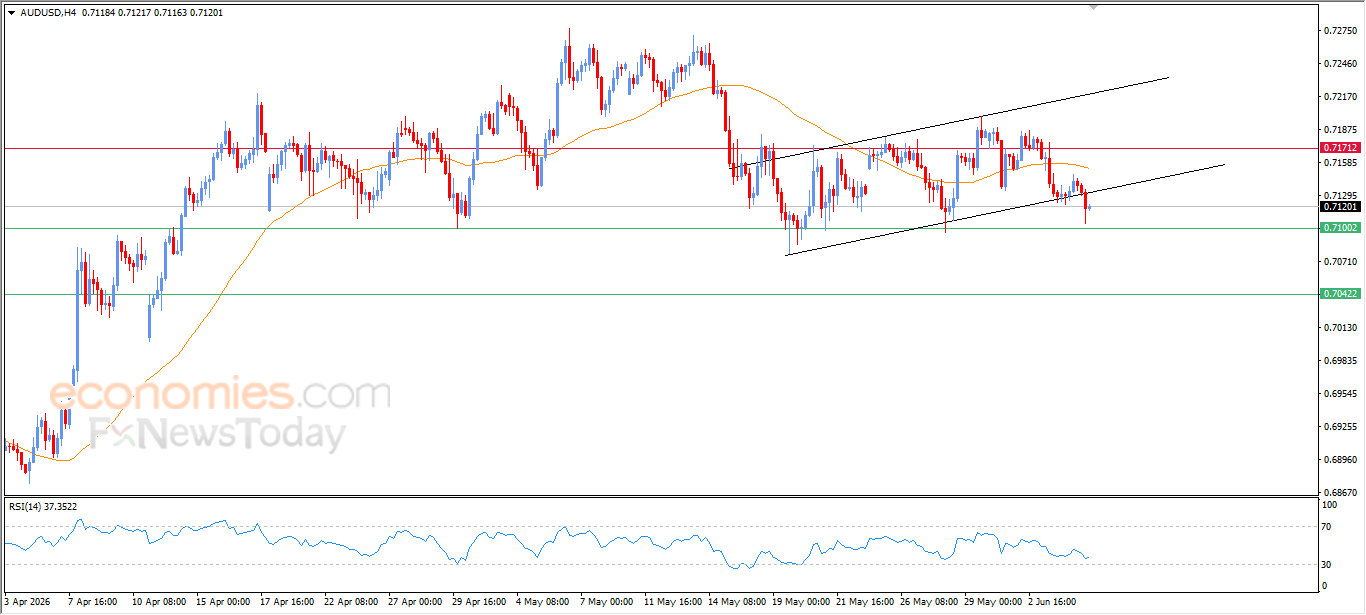
AUDUSD moved lower in recent intraday trading as bearish momentum continued to build, due to its trading below EMA50, which is limiting recovery attempts and reinforcing negative market sentiment.
Additional downside pressure comes from bearish signals on the relative strength indicators. The pair has also broken below a short-term ascending price channel, a technical development that strengthens the case for further weakness in the near term.
USDCAD Surrounded by Positive Momentum – Analysis – 05-06-2026
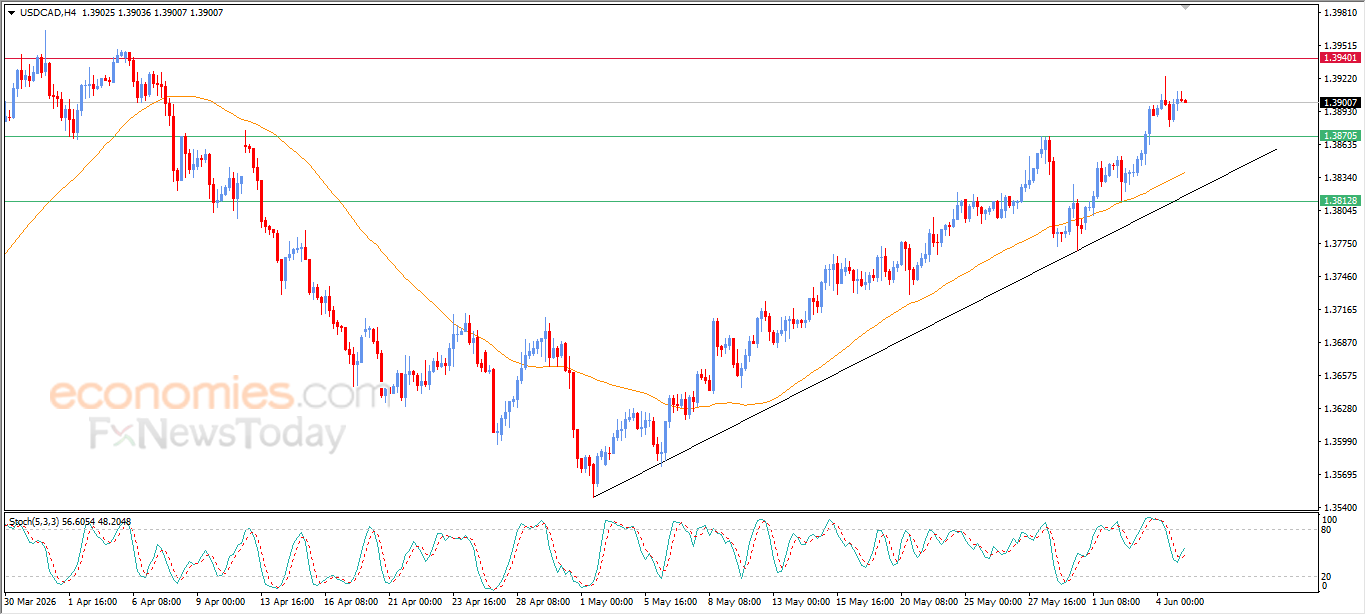
USDCAD continues to hold onto its recent gains as bullish momentum remains supported by trading below EMA50, reinforcing the stability and dominance of the main bullish trend on the short-term basis, especially with its trading alongside supportive trend line for this path, noting the beginning of forming positive divergence after reaching oversold territory. With positive signals emerging from them.
USDJPY Builds Positive Momentum – Analysis – 05-06-2026
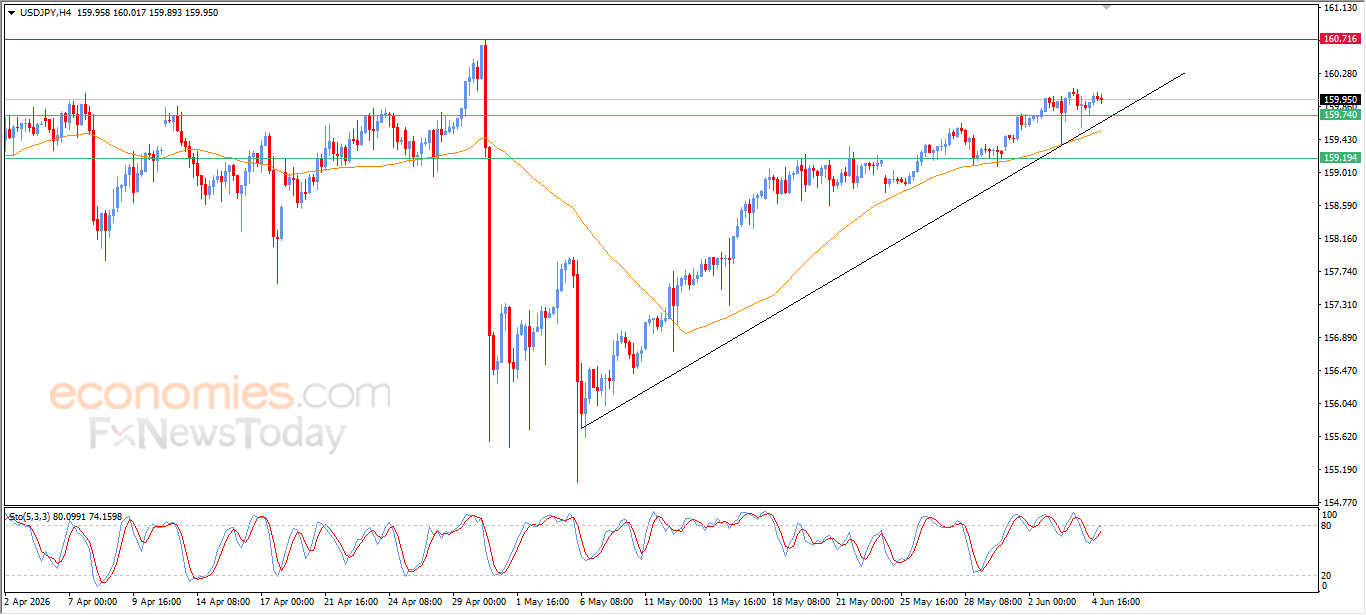
USDJPY fluctuated in recent intraday sessions while holding near a short-term ascending corrective trendline. The pair continues to receive support from trading above the EMA50, which provides a dynamic foundation for further recovery as long as current support levels remain intact.
Meanwhile, the relative strength indicators have started to generate fresh bullish signals after previous overbought conditions were eased. This development gives the pair more room to extend its gains and challenge higher resistance levels in the near term.