


 |
|
The euro and sterling rise into the same storm, but only one looks comfortable

The euro and British pound attempted to recover against the US dollar on Friday, yet the modest improvement in both currencies concealed a much more complicated shift taking place across European foreign-exchange markets. Investors are no longer deciding whether the European Central Bank and Bank of England will cut interest rates, but whether renewed energy inflation could eventually force either institution to tighten policy again, even as economic growth remains fragile.
The euro edged higher after falling to a nine-day low, while sterling also recovered modestly from its recent weakness. Neither move represented a decisive rejection of the stronger dollar, which remained supported by elevated US Treasury yields and demand for safer assets, but both currencies benefited from the growing belief that European interest rates may need to remain high for considerably longer than markets expected only a few weeks ago.
This creates an unusual currency environment. Higher interest-rate expectations would normally strengthen the euro and pound, yet the reason those expectations are rising is precisely what threatens both economies: oil prices have returned to around $100 a barrel, transportation costs are climbing and investors are once again discussing the possibility of stagflation.
The euro’s uncomfortable rate advantage
The European Central Bank kept its deposit rate unchanged at 2.25% on Thursday after raising it in June, but it left the door open to another increase as policymakers assess whether the latest energy shock will spread into wages, services and broader consumer prices. Traders are now assigning a very high probability to a quarter-point increase in September and are also pricing the possibility of another move before the end of the year.
Under normal circumstances, such a rapid repricing would provide significant support for the euro. Higher expected returns on euro-denominated bonds make the currency more attractive, while the prospect of tighter monetary policy can reduce the relative appeal of the dollar.
The problem is that the eurozone is not receiving this interest-rate support because its economy is accelerating. It is receiving it because imported energy is becoming more expensive again.
Europe remains particularly vulnerable to a sustained increase in oil and gas prices because it imports a large portion of its energy requirements. That means the same shock pushing the ECB toward higher rates is also weakening household purchasing power, raising manufacturing costs and threatening a region that was already struggling to generate convincing growth.
The latest ECB survey reflects this tension. Economists expect eurozone inflation to average 2.7% in 2026 before easing to 2.2% next year, while the growth forecast for this year has been reduced to only 0.6%. The euro is therefore being offered higher rates alongside weaker growth, a combination that can support a currency temporarily but rarely produces a comfortable long-term rally.
Sterling carries a different kind of strength
The pound faces many of the same pressures, but its position looks somewhat less fragile. British inflation is also expected to rise as expensive energy and disrupted shipping feed into transport, utility and business costs, while Bank of England officials have repeatedly warned that they remain prepared to raise rates if inflation expectations become more deeply embedded.
Markets currently see a meaningful possibility of one Bank of England increase before the end of the year, although economists remain more cautious and many expect the central bank to leave borrowing costs unchanged. Bank of England policymaker Catherine Mann has said she would support tighter policy if the inflation outlook deteriorates, while Governor Andrew Bailey has made clear that renewed rate cuts are not currently under discussion.
Sterling’s relative advantage is that investors have been more willing to believe the UK economy can absorb tighter policy without falling immediately into a deeper slowdown. The pound had already reached a 10-month high against the euro in June, and the euro has repeatedly struggled to establish a durable recovery against the British currency.
That does not make sterling immune to the energy shock. Britain imports fuel, remains exposed to global shipping costs and is already facing elevated inflation expectations. Yet the pound enters the current period with stronger market momentum and a clearer interest-rate premium than the euro, making it the more convincing of the two European currencies for now.
The dollar remains the real obstacle
The more important comparison today may not be between the euro and sterling at all, but between both currencies and the US dollar.
The dollar has gained close to 0.9% this week, its strongest weekly performance since May, as rising oil prices and higher Treasury yields revived expectations that the Federal Reserve could tighten policy again. The US 10-year yield recently climbed to an 18-month high, while the 30-year yield approached levels not seen in nearly two decades.
This places the euro and pound in a difficult position. Both may benefit from higher domestic interest-rate expectations, but the dollar is receiving the same support while also benefiting from its role as the market’s preferred refuge during periods of geopolitical stress.
The United States is also less vulnerable than Europe to imported energy inflation because it is a major oil and gas producer. Higher crude prices still hurt American consumers and can push inflation upward, but Europe experiences the shock more directly through its trade balance, industrial costs and dependence on external supplies.
As long as oil remains close to $100 and US yields stay elevated, recoveries in both EUR/USD and GBP/USD may struggle to develop into sustained advances.
The most revealing exchange rate may be EUR/GBP
Investors often analyse the euro and sterling primarily against the dollar, but the euro-pound exchange rate may provide the cleaner verdict on their relative strength.
Both Europe and Britain are facing the same broad global shock, including higher fuel prices, more expensive shipping and the possibility of tighter monetary policy. Comparing them directly removes much of the dollar’s safe-haven influence and reveals which regional economy investors believe is better equipped to manage the pressure.
Sterling has generally held the upper hand in that contest. If the pound continues outperforming the euro while both currencies struggle against the dollar, the message would be that investors are not rejecting Europe as a whole, but are distinguishing between two different levels of vulnerability.
A sustained euro recovery against sterling would require more than the promise of ECB rate increases. It would probably need evidence that eurozone activity is stabilising, energy prices are no longer worsening the region’s trade position and the ECB can control inflation without placing an already weak economy under excessive pressure.
What investors should watch next
The immediate direction of both currencies will depend on three developments: whether oil remains above $100, whether European bond yields continue rising and whether upcoming business-activity data confirms that economic growth is holding up.
For the euro, the key test is whether higher rate expectations can outweigh Europe’s exposure to the energy shock. A further rise in German bond yields accompanied by improving economic data could allow the currency to recover, but rising yields alongside weaker activity would make the policy story look increasingly stagflationary.
For sterling, attention will turn toward whether markets continue increasing their expectations for a Bank of England move and whether the UK economy maintains its recent relative advantage over the eurozone. The pound may remain stronger against the euro even if it struggles to make meaningful progress against the dollar.
Global markets wake up to a new reality as oil, bonds and AI reshape the trading day

Global markets entered Friday under pressure as investors confronted a combination that has become increasingly difficult to ignore: oil above $100 a barrel, bond yields near multiyear highs, a stronger US dollar and growing doubts over whether enormous spending on artificial intelligence will generate profits quickly enough to justify the market's highest valuations.
Asian equities suffered heavy losses during the morning session, extending the risk-off mood that followed Thursday's decline on Wall Street. Japan's Nikkei fell by around 3%, while South Korea's Kospi dropped close to 6%, as higher energy costs, rising interest-rate expectations and weakness in major technology shares encouraged investors to reduce exposure to riskier assets.
The important point for investors today is that these are no longer independent market stories. Rising oil prices are pushing inflation expectations higher, those inflation fears are driving bond yields upward, higher yields are strengthening the dollar and placing pressure on richly valued equities, while disappointing reactions to major technology earnings are raising questions about whether the market's most powerful growth engine can continue carrying global stocks.
Oil is setting the direction
Brent crude briefly moved above $102 a barrel after attacks on Saudi oil tankers in the Red Sea added another layer of risk to an already disrupted Middle Eastern energy system. Oil has risen by nearly 40% during July, transforming what initially appeared to be a temporary geopolitical premium into a potentially broader inflation shock.
For investors, the critical issue is no longer simply whether crude remains above $100 during today's session. The larger question is whether higher prices begin spreading more aggressively into diesel, aviation fuel, freight costs and corporate operating expenses. A sustained rise in those areas would affect far more than energy producers, placing pressure on airlines, transport companies, manufacturers, retailers and consumer spending.
Oil's behaviour will therefore remain the first major signal to watch. A retreat below $100 could offer markets some relief, particularly after such a rapid advance, but another move toward $105 would reinforce fears that inflation may accelerate before central banks have completed their easing cycles.
The bond market may be sending the louder warning
Although oil is attracting most of the headlines, the bond market may be delivering the more consequential message.
The US 10-year Treasury yield climbed above 4.70%, reaching its highest level in roughly 18 months, while the 30-year yield approached 5.20%, close to its highest level in 19 years. Investors are increasingly reconsidering whether the Federal Reserve's next major move will be a rate cut at all, with markets beginning to price the possibility of further tightening if expensive energy keeps inflation elevated.
This matters because rising yields change the valuation of almost every asset. Government bonds become more attractive relative to equities, borrowing becomes more expensive for companies and households, and investors become less willing to pay high prices for profits expected many years into the future.
Technology stocks are particularly sensitive to this shift. If Treasury yields continue climbing today, any recovery in Nasdaq futures may remain fragile even if the immediate panic surrounding oil begins to fade.
AI faces its first serious credibility test
The latest technology selloff has added another dimension to the market's anxiety. Tesla shares fell by more than 14% after the company reported its first cash burn in two years, while Alphabet dropped by around 7% as investors reacted negatively to the scale of its artificial-intelligence spending.
The market is not turning against artificial intelligence itself. It is beginning to demand clearer evidence that hundreds of billions of dollars in infrastructure spending will produce revenue and profits quickly enough to justify the investment.
That distinction will be important throughout the coming earnings season. Companies may no longer receive automatic rewards simply for increasing AI expenditure. Investors are likely to focus more closely on cash flow, capital intensity and the timing of any financial return.
This could create a more selective technology market, where companies with strong balance sheets and visible monetisation outperform businesses relying primarily on optimistic long-term narratives.
The dollar is becoming another source of pressure
Higher US yields have strengthened the dollar, with the dollar index rising to its highest level of the month. The yen has simultaneously weakened toward levels not seen in approximately four decades, increasing speculation that Japanese authorities may intervene in the currency market.
A stronger dollar usually creates additional pressure on commodities priced in the US currency, but the current oil rally is strong enough to resist that relationship. It can also tighten global financial conditions by increasing the cost of dollar-denominated debt for emerging markets and reducing the overseas earnings of large US multinational companies when translated back into dollars.
Investors should therefore pay attention to whether the dollar continues strengthening alongside oil. That combination would represent a particularly difficult environment for emerging markets, global manufacturers and companies with significant foreign revenue.
Europe's economic data could alter the mood
Attention will turn toward purchasing managers' index data from the UK, euro area and US, offering a timely view of whether higher energy costs and tighter financial conditions are already affecting business activity.
Strong PMI figures may not necessarily be welcomed by markets because they could reinforce expectations that central banks have room to raise rates or delay future cuts. Weak figures would create a different problem, suggesting that the global economy is slowing just as inflationary pressures are returning.
This leaves investors facing an uncomfortable scenario in which both strong and weak economic data can generate concern for different reasons. The most reassuring outcome would be moderate growth accompanied by limited evidence that energy costs are spreading into broader prices.
What investors should watch today
The direction of global markets today is likely to depend on the relationship between three assets rather than any single headline: Brent crude, the US 10-year Treasury yield and Nasdaq futures.
If oil stabilises, yields retreat and technology futures recover, investors may conclude that Thursday's selloff already absorbed much of the immediate shock. That could support a relief rebound in European and US equities.
If oil advances further while Treasury yields remain above 4.70%, however, the market may begin treating the current situation as a structural inflation problem rather than a temporary geopolitical disturbance. Under that scenario, pressure could spread beyond technology into consumer, industrial and financial shares.
The deeper market message
The world is entering today's session with a very different investment debate from the one that dominated markets earlier this year.
Investors are no longer asking only how much artificial intelligence can increase corporate profits or when central banks will begin cutting interest rates. They are now being forced to consider whether an energy shock, rising transportation costs and expensive capital could interrupt both stories at the same time.
That does not automatically signal the end of the equity rally. Corporate earnings remain resilient, global economic activity has not collapsed and markets have previously absorbed significant geopolitical shocks.
Yet today's session may reveal whether investors still view every decline as a buying opportunity, or whether the return of inflation has finally made them more cautious about the price they are willing to pay for growth.
The world's biggest inflation threat is no longer oil.. It is shipping
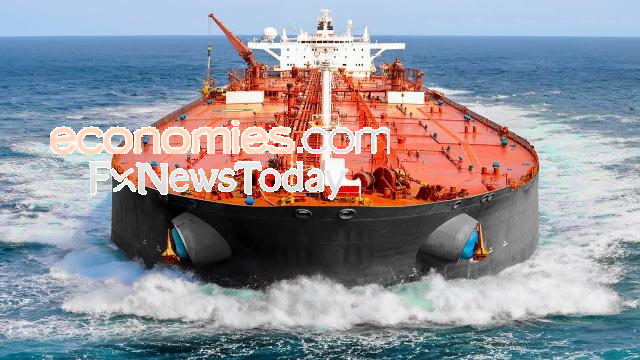
For months, investors have measured geopolitical risk by watching crude oil prices, but this week may have quietly changed that equation. Oil has undoubtedly grabbed the headlines after climbing back toward the $100-a-barrel mark, yet beneath that rally another market is flashing an equally important warning: the global shipping system is beginning to show signs of strain, raising the possibility that the next inflation wave may arrive not because the world lacks products, but because moving them is becoming slower, more expensive and increasingly unpredictable.
That distinction could matter just as much as the oil price itself.
Why shipping matters more than many investors realize
Most inflation discussions begin with commodities, but few begin with logistics, even though every product, whether it is a smartphone, refrigerator, electric vehicle or shipment of coffee beans, depends on one basic requirement: it has to reach its destination.
When shipping routes become dangerous or congested, transportation costs rise long before actual shortages appear. Companies pay more for insurance, freight rates increase, delivery schedules become less reliable and businesses begin carrying larger inventories as a precaution. Each of those costs eventually finds its way into consumer prices, which means disruptions in logistics can spread through almost every sector of the global economy rather than remaining confined to a single commodity.
The world learned this lesson before
Many investors remember the inflation surge that followed the pandemic, but fewer remember how much of it was driven by the breakdown of global transportation networks.
Consumer demand rose sharply, but the problem was not simply that people wanted more goods. Ports became congested, containers were stranded in the wrong locations, shipping capacity tightened dramatically and freight rates exploded. Manufacturers often had products ready for delivery, yet they could not move them efficiently enough to meet demand.
The result was one of the strongest global inflation shocks in decades. Today's circumstances are different, but the underlying mechanism is uncomfortably familiar: the physical ability to transport goods may once again become more important than the amount being produced.
Trade routes are becoming part of the market
This week's developments in the Middle East have reminded investors that geography can become just as important as economics. The Strait of Hormuz handles roughly one-fifth of global oil consumption, while the Bab el-Mandeb Strait links the Red Sea with the Suez Canal and carries not only energy shipments but also thousands of vessels transporting manufactured goods between Asia and Europe.
These routes do not operate in isolation. When uncertainty rises around one corridor, pressure immediately shifts toward the available alternatives, causing insurance premiums to rise, shipping companies to reconsider routes and transit times to grow longer.
None of this requires a complete closure. Markets begin pricing danger well before trade actually stops, and that appears to be the more important development now. The threat is not necessarily that global commerce has been halted, but that the cost of keeping it moving is beginning to rise.
The hidden cost is time
Higher fuel costs receive immediate attention because they are visible, while lost time is harder to measure despite being just as economically significant.
A container ship forced to sail around the Cape of Good Hope instead of using the Suez Canal can add thousands of nautical miles to its journey, increasing fuel consumption and keeping the vessel at sea for much longer. That reduces the number of trips each ship can complete during the year, effectively shrinking global shipping capacity even if no vessels are destroyed and no major ports are closed.
The supply chain becomes less efficient simply because the distance has increased, and that lost efficiency eventually appears in freight rates, inventory costs and consumer prices.
Central banks cannot solve this problem
Interest rates can reduce consumer demand, but they cannot reopen shipping lanes, lower marine insurance costs or shorten a voyage that suddenly requires an additional two weeks.
This creates a particularly uncomfortable challenge for central banks. If transportation costs begin feeding into inflation again, policymakers could face rising prices driven primarily by supply constraints rather than excessive demand, which is precisely the kind of inflation monetary policy struggles to address.
Raising interest rates may weaken spending, investment and economic growth, yet it does nothing to make global trade routes safer. Central banks can suppress the symptoms, but they cannot repair the source of the disruption.
Investors may be watching the wrong chart
Every financial terminal displays the latest oil price, while far fewer investors regularly monitor container freight rates, shipping insurance costs or the number of vessels being rerouted around dangerous waterways.
That may need to change. History shows that transportation disruptions often begin quietly before becoming impossible to ignore, and by the time they dominate headlines, companies have usually started adjusting prices, inventories and supply chains.
Markets frequently react only after the economic damage has begun. Oil may provide the most visible warning, but shipping data could reveal whether the threat is spreading into the wider economy.
The bigger picture
This week's events may ultimately be remembered as more than another geopolitical flare-up. They could mark the moment when investors stopped thinking about inflation solely through the lens of oil and started paying closer attention to the infrastructure that keeps global trade moving.
The modern economy depends on remarkably efficient logistics, and when that system works, consumers rarely notice it. When it begins to fracture, almost every industry feels the consequences through higher costs, delayed deliveries and more fragile supply chains.
Oil remains one of the world's most important prices, but the next inflation story may not be written only by the barrels being produced. It may be written by the ships struggling to deliver them, along with everything else the global economy depends on.
Wall Street fights back as investors weigh booming earnings against a growing inflation threat

US stocks traded with mixed but increasingly resilient performance on Thursday as investors attempted to recover from the previous session's sharp selloff, even as surging oil prices continued to fuel concerns that inflation may remain stubbornly high for longer than markets had expected.
The session highlighted an increasingly important shift in investor psychology. Just weeks ago, geopolitical headlines alone were enough to trigger broad selling across equities. Today, the market appears more selective. Strong corporate earnings are providing support beneath stock prices, while macroeconomic risks continue to cap enthusiasm.
The result is a market that refuses to collapse, yet struggles to launch another sustained rally.
The Market
The Dow Jones Industrial Average outperformed the broader market during Thursday's session, supported by gains in industrial and defensive companies that tend to benefit from higher commodity prices and stronger economic activity.
The S&P 500 traded modestly higher as investors balanced another wave of encouraging corporate earnings against rising Treasury yields and renewed inflation concerns.
The Nasdaq Composite remained more restrained, reflecting continued pressure on technology shares as higher bond yields reduced the appeal of long-duration growth stocks.
The market is becoming more selective
One of the clearest themes emerging this earnings season is that investors are no longer rewarding companies simply for beating expectations.
Instead, markets are scrutinizing guidance, profit margins and management outlooks much more closely.
Companies delivering strong quarterly numbers but cautious forecasts have often struggled to sustain gains, while firms demonstrating confidence about future demand have received a much warmer reception.
This represents a healthier market than the momentum-driven rallies seen earlier in the year.
Investors are becoming increasingly focused on quality rather than simply chasing headlines.
Oil is rewriting the inflation story
The biggest challenge facing Wall Street today is not corporate America.
It is the energy market.
Brent crude's return toward the $100 level threatens to complicate the Federal Reserve's inflation battle just as investors had begun expecting monetary policy to become less restrictive.
Higher oil prices eventually filter through transportation, manufacturing, logistics and consumer spending.
That means today's energy rally may not simply affect oil producers. It could reshape earnings expectations across dozens of industries during the second half of the year.
For equity investors, this creates an uncomfortable balancing act.
A stronger economy supports corporate profits, but expensive energy also raises costs, squeezes margins and delays potential interest rate cuts.
Bond yields are becoming impossible to ignore
Treasury yields continued moving higher as investors reassessed the outlook for Federal Reserve policy.
That matters because higher yields increase the return available from relatively safe government bonds, making richly valued equities less attractive by comparison.
Technology companies remain particularly sensitive to this relationship because much of their valuation depends on future cash flows.
As discount rates rise, investors become less willing to pay premium multiples for expected earnings many years into the future.
This partly explains why the Dow has recently shown greater resilience than the Nasdaq.
The market is quietly rotating
Beneath the surface, another important trend continues to develop.
Money is not necessarily leaving equities.
Instead, investors appear to be rotating toward sectors viewed as better positioned for an environment characterized by higher commodity prices, persistent inflation and elevated interest rates.
Industrials, energy, financials and selected defensive companies have attracted stronger demand, while some of the market's highest-growth names have struggled to maintain leadership.
This kind of rotation often signals that institutional investors remain constructive on the broader market, even if they have become more cautious about where future gains are likely to come from.
The earnings season is passing its first real test
Strong earnings helped fuel much of Wall Street's rally this year.
Now those earnings face a more difficult backdrop.
Higher oil prices, rising financing costs and growing uncertainty surrounding inflation mean investors are asking a tougher question.
Can companies continue expanding profits if operating costs begin climbing again?
So far, many of the largest US companies have answered that question surprisingly well.
The coming weeks will determine whether that resilience extends beyond a handful of market leaders into the wider corporate landscape.
Wall Street outlook
The US stock market now finds itself at an important crossroads.
Corporate earnings remain supportive, consumer demand has not collapsed and economic growth continues to surprise on the upside.
At the same time, oil's sharp rally threatens to reignite inflation, Treasury yields continue climbing and expectations for easier monetary policy have become less certain.
If earnings continue exceeding expectations, stocks may prove capable of absorbing higher interest rates for longer than many investors currently anticipate.
However, if expensive energy begins eroding corporate margins while bond yields continue rising, Wall Street could enter a period of much choppier trading after months of impressive gains.
For now, investors are no longer asking whether the US economy is slowing.
They are asking whether strong corporate America can continue outperforming an increasingly difficult macroeconomic environment.