


 |
|
The AUDUSD price continues to decline - Analysis-26-03-2026
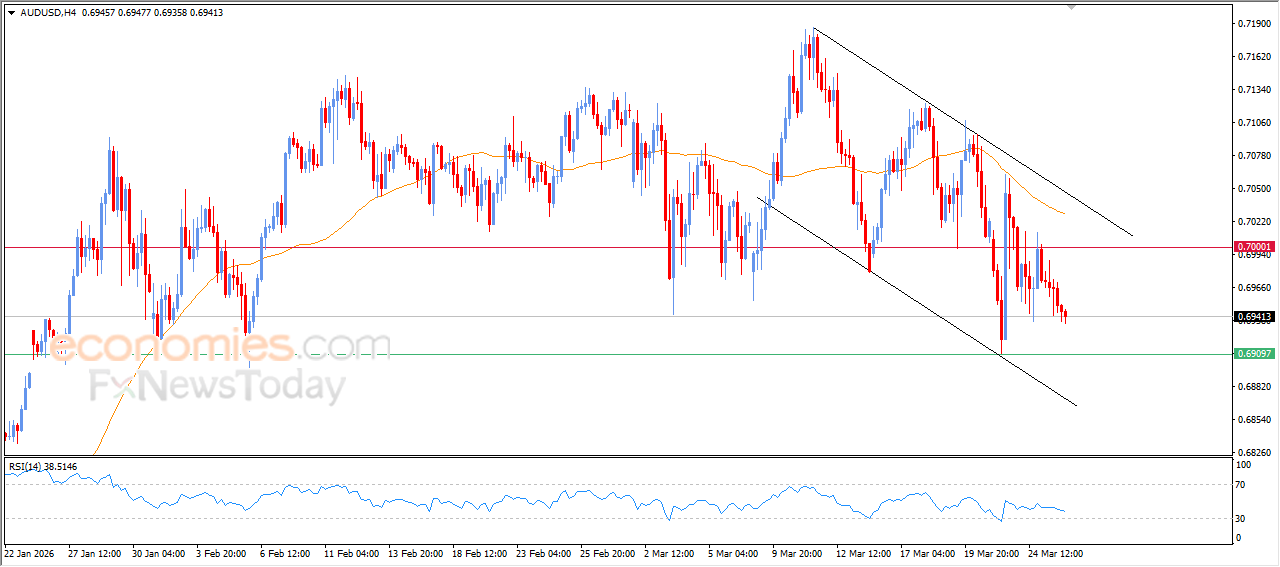
The AUDUSD pair continued its decline during its recent intraday trading, moving within a short-term corrective bearish channel. The pair remains under sustained negative pressure as it trades below EMA50, which reinforces the bearish scenario, especially with ongoing negative signals from the relative strength indicators.
The USDCAD price breaks our target level - Analysis-26-03-2026
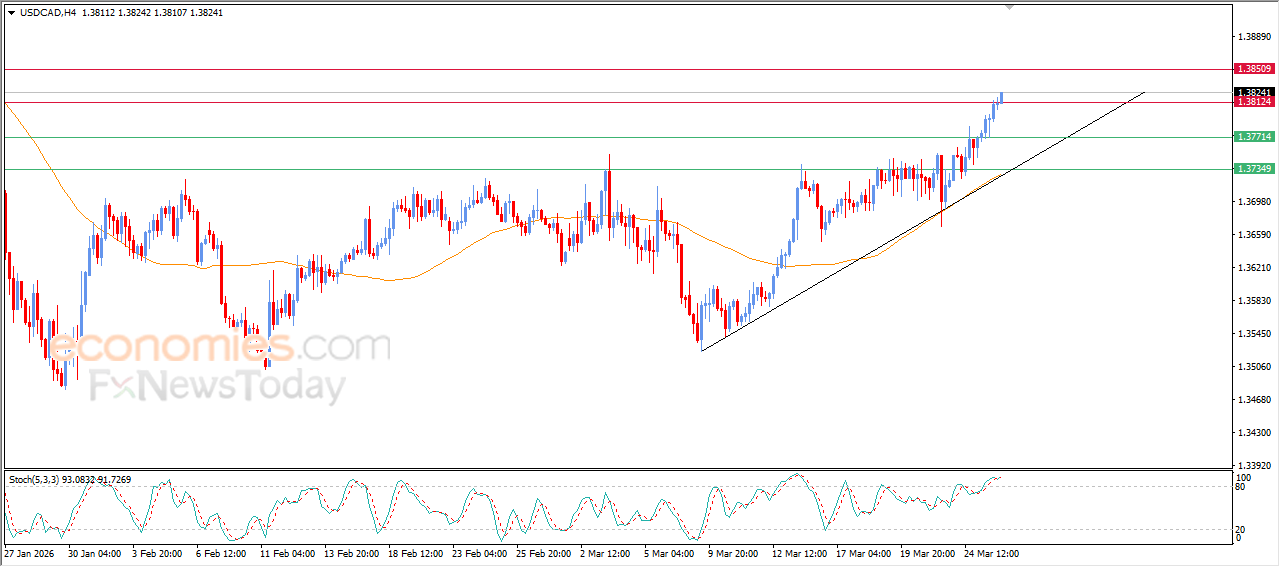
The USDCAD pair continued its upward movement in recent intraday trading, successfully breaking above the 1.3800 resistance level, which had been a target in our previous analysis. The pair remains under the control of a dominant bullish trend, trading along a supportive minor trendline, in addition to ongoing positive pressure as it trades above EMA50.
This recent rise comes despite the early signs of a negative crossover on the relative strength indicators after reaching heavily overbought levels. However, this has not yet impacted the pair’s performance, indicating that buying pressure still dominates for now.
The USDJPY price prepares to test a key resistance -Analysis-26-03-2026
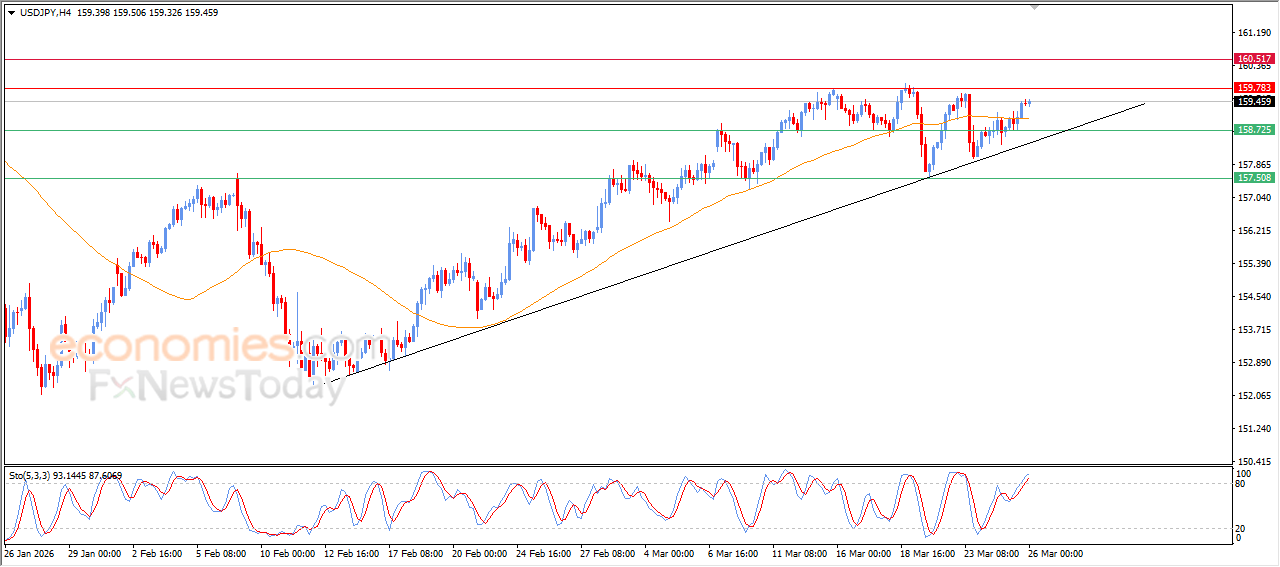
The USDJPY pair continues to stabilize within a series of gains in its recent intraday trading and is now preparing to challenge the key resistance level at 159.75. This bullish momentum is supported by dynamic support from trading above EMA50, reinforcing the stability and dominance of the short-term bullish trend, especially as price moves along an upward trendline.
Additionally, positive signals continue to emerge from the relative strength indicators, despite reaching heavily overbought levels, which could limit the pair’s gains in the near term.
GBPUSD price exhausts its positive opportunities - Analysis- 26-03-2026
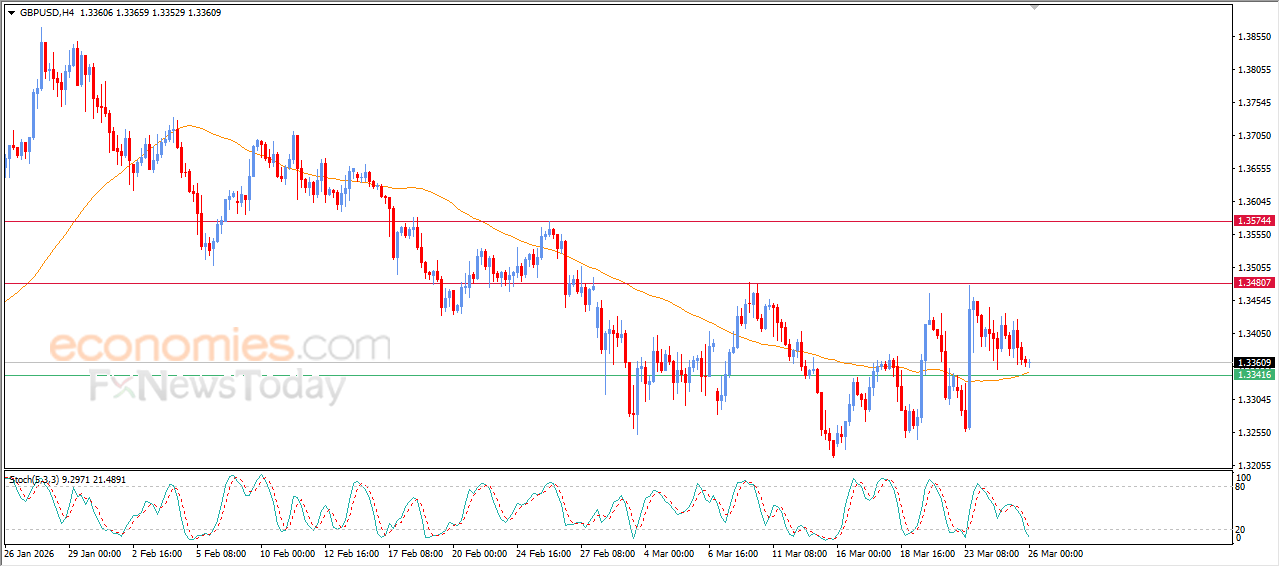
The GBPUSD pair continues to stabilize within a series of consecutive losses in its recent intraday trading, with its latest decline bringing it down to test the support of EMA50. This represents a final attempt for the pair to form a higher low that could serve as a base for regaining recovery and moving upward again, especially as the relative strength indicators have reached deeply oversold levels, exaggerated compared to the price action, and under the control of a short-term corrective upward wave.