


 |
|
U.S. crude below $84 and Brent drops 9% following Iran's announcement to reopen Strait of Hormuz

Oil prices fell sharply on Friday after Iranian Foreign Minister Abbas Araghchi announced that the Strait of Hormuz is now "fully open" during the ceasefire period between Israel and Lebanon, bolstering market hopes that major supply disruptions are receding.
Araghchi's statements on the "X" platform followed remarks by U.S. President Donald Trump late Thursday, in which he stated that the war with Iran, which began on February 28, "must be coming to an end very soon."
U.S. West Texas Intermediate (WTI) crude futures for May delivery plunged by about 12% to close at $83.85 per barrel. Global benchmark Brent crude for June delivery dropped 9% to reach $90.38 per barrel at the close.
In his post, Araghchi noted that vessels transiting the vital waterway must follow a "coordinated route" determined by Iranian maritime authorities.
Trump responded with a post on "Truth Social" thanking Iran for opening the Strait, but stated in a second post that the U.S. naval blockade on Iranian ports will remain "fully in effect" until an agreement is reached with Tehran.
Israel and Lebanon agreed on Thursday to a 10-day ceasefire that began at 5:00 PM ET. Israel's military campaign in Lebanon against the Iranian-backed group Hezbollah had previously hindered U.S. negotiations with Tehran.
In another "Truth Social" post, Trump stated that Israeli Prime Minister Benjamin Netanyahu and Lebanese President Michel Aoun would be invited to the White House for what he described as the first significant talks between the two countries since 1983.
The U.S. State Department added that the parties aim to create conditions for lasting peace, including mutual recognition of sovereignty, alongside enhancing border security and reaffirming Israel's right to defend itself.
It also noted shared concerns regarding non-state armed groups threatening Lebanese sovereignty, while Trump said he expects Lebanon to "deal with Hezbollah." These developments have bolstered hopes for a broader settlement of the Middle East conflict.
ING stated that oil prices began declining amid expectations that the U.S.-Iran ceasefire would be extended for an additional two weeks, with the potential resumption of talks to end the conflict.
However, the firm's analysts warned that the physical market is tightening with every day that oil flows through the Strait of Hormuz do not resume.
They added that even with some supplies rerouted via pipelines and limited tanker movements, the firm estimates that approximately 13 million barrels per day of supplies have been disrupted—a figure that could rise further if the U.S. blockade continues.
The analysts pointed out that "the greatest upside risk in the market is the failure of peace talks between the U.S. and Iran, a scenario that is not ruled out given the wide gap between the demands of both parties."
Why do diesel prices rise faster than gasoline in every energy crisis?
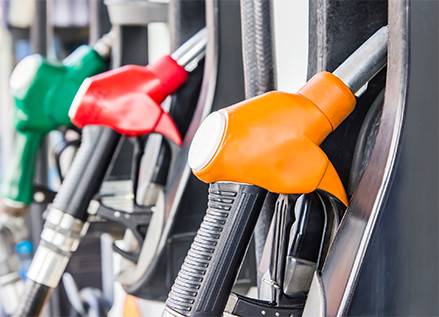
When a geopolitical shock hits energy markets, a recurring pattern emerges: diesel prices surge rapidly, while gasoline lags behind.
According to data from the U.S. Energy Information Administration (EIA), from the beginning of the conflict in Iran until April 6, 2026, the average price of gasoline in the United States increased by $1.11 per gallon, while diesel prices jumped by $1.75 per gallon.
This disparity is particularly significant because diesel forms the backbone of the transportation and logistics sectors, intensifying inflationary pressures across the economy.
This same pattern was observed following Russia’s invasion of Ukraine and is now repeating as oil tanker movements through the Strait of Hormuz are disrupted due to Middle East tensions.
This raises a fundamental question: Why does diesel react so much faster than gasoline?
The answer is structural rather than situational, as diesel occupies a pivotal position in the global economy in a way that gasoline does not.
Diesel starts with a lower supply safety margin
One of the less-noticed factors is that diesel typically operates with narrower safety margins. Distillate fuel inventories—which include diesel and heating oil—are often lower than gasoline stocks. In both 2022 and during recent disruptions, these inventories were already below typical seasonal levels before the geopolitical shock occurred, leaving limited room to absorb any sudden supply shortfall.
In contrast, gasoline benefits from larger storage capacities, broader domestic production, and more defined seasonal demand patterns. Diesel lacks these advantages, so it feels any shortage first and most acutely.
Diesel is a global fuel… gasoline is regional
Gasoline is primarily a regional product, often refined and consumed within the same geographic market.
Diesel, however, is the fuel of global trade, powering the ships, trucks, trains, and heavy equipment that move goods across borders.
Therefore, its prices are closely tied to global trade flows. When a vital corridor like the Strait of Hormuz is disrupted, the repercussions ripple through diesel markets worldwide, even in countries that do not rely heavily on Middle Eastern oil, due to its global trade nature.
Demand for diesel is broader and less elastic
Another fundamental difference lies in the nature of demand.
Gasoline demand is mainly linked to passenger vehicles, and consumers can scale back consumption when prices rise.
Diesel, however, fuels sectors that are difficult to forgo, such as:
* Long-haul trucking
* Railways
* Maritime shipping
* Construction and mining
* Agriculture
* Industrial activity
These sectors do not have easy alternatives; goods transport, agricultural operations, or construction projects cannot be halted because of price hikes. Additionally, the spring planting season is one of the most diesel-intensive periods, adding pressure on demand at a sensitive time.
Refineries cannot simply increase diesel production
In theory, higher prices should lead to increased production, but the reality is different. Diesel and gasoline production rely on different parts of an oil barrel, and switching between them is not easy.
Furthermore, diesel production requires complex technical conditions, such as crude quality, processing capabilities, and ultra-low sulfur requirements. Refineries often operate near maximum capacity, especially during high-demand periods, with routine maintenance further reducing flexibility.
In the United States, for example, refineries are currently focused on increasing gasoline production in preparation for the summer driving season, limiting their ability to boost diesel output quickly.
Cumulative seasonal and structural pressures
Diesel also faces seasonal competition for supplies, particularly in winter when demand for heating oil increases. Even outside this season, demand cycles from agriculture, construction, and transportation overlap, maintaining high consumption levels throughout the year.
Diesel is the transmission channel for inflation
Perhaps the most important difference is diesel’s impact on the economy. It is the fuel used to transport goods; thus, rising prices increase transportation costs, which in turn pass through to the prices of food, construction materials, and consumer goods.
In the United States, trucks move about 70% of goods. When diesel prices rise, this increase spreads through supply chains and is often passed on to consumers.
In contrast, gasoline directly affects individuals, but its systemic impact is far less than that of diesel.
The pattern repeats for an obvious reason
What we are seeing today is not an exception, but a repetition. After Russia’s invasion of Ukraine, diesel prices rose much faster than gasoline due to global supply tightness. Today, Middle East disruptions are reproducing the same scenario.
Diesel prices rise faster than gasoline during global crises because the market is tighter in terms of supply, more globally interconnected, and less elastic in its response.
Diesel is not just a fuel… it is the engine of the global economy. When this economy comes under pressure, diesel is the first to move—and with the strongest momentum.
U.S. stocks surge as Dow Jones jumps over 1000 points

U.S. stocks surged on Friday after Iran announced the "full" reopening of the Strait of Hormuz to commercial navigation, following the ceasefire declaration between Israel and Lebanon.
The Dow Jones Industrial Average jumped by approximately 1005 points, or 2.1%, while the S&P 500 rose 1.3%, surpassing the 7100 level for the first time in history. The Nasdaq also climbed 1.5%, with both indices reaching new record highs during trading. Similarly, the Russell 2000 index hit an all-time high, rising by about 2%.
In a post on the "X" platform, Iranian Foreign Minister Abbas Araghchi announced that "in line with the ceasefire in Lebanon, the passage of all commercial vessels through the Strait of Hormuz has been declared fully open during the truce period, according to the coordinated route previously announced by the Ports and Maritime Organization of the Islamic Republic of Iran."
U.S. President Donald Trump had stated on Thursday that the leaders of Israel and Lebanon agreed to a 10-day truce, which went into effect at 5:00 PM ET.
Following Iran's announcement, oil prices dropped sharply as concerns over supply disruptions receded. U.S. West Texas Intermediate (WTI) crude contracts plunged by about 14% to trade above $80 per barrel, while global benchmark Brent crude contracts fell 13% to trade above $86 per barrel.
In a separate post on "Truth Social," Trump thanked Iran for reopening the Strait, but simultaneously emphasized that the U.S. Navy's naval blockade on Iranian ports "will remain fully in place" until a peace agreement is reached with Tehran, adding: "This process should move very quickly, as most points have already been negotiated."
Hopes for a peace agreement have pushed markets to record levels in recent days, with the three major indices heading toward strong weekly gains; the Dow Jones has risen by about 3%, the S&P 500 by more than 4%, and the Nasdaq has jumped by more than 6%.
Iran reopens Strait of Hormuz for navigation; Washington confirms continuation of naval blockade

Iran announced on Friday the full reopening of the Strait of Hormuz to commercial ship traffic during the ceasefire period between Israel and Lebanon, a move that could ease the intensity of global energy market disruptions.
In a social media post, Iranian Foreign Minister Abbas Araghchi stated: "In line with the ceasefire in Lebanon, the passage of all commercial vessels through the Strait of Hormuz has been declared fully open for the remainder of the truce." He added that ships are required to transit via a "coordinated route" announced by Iranian maritime authorities.
Israel and Lebanon had agreed on Thursday to a 10-day truce that began at 5:00 PM ET. The Israeli military campaign in Lebanon against Hezbollah, a close ally of Iran, had constituted one of the most prominent obstacles in the negotiations between Washington and Tehran.
For his part, U.S. President Donald Trump thanked Iran for reopening the Strait in a social media post, but emphasized simultaneously that the naval blockade imposed by the United States on Iranian ports will remain in place until a deal is reached with Tehran.
Oil prices plummeted by more than 10% to below $90 per barrel as concerns over supply disruptions receded. Approximately one-fifth of global crude oil supplies passed through the Strait before the outbreak of the war; the closure of this maritime corridor, which links the Arabian Gulf to global energy markets, had led to the largest disruption of oil supplies in history.
On April 7, Trump had agreed to a two-week truce in exchange for Iran’s full opening of the Strait. However, the Speaker of the Iranian Parliament, Mohammad Bagher Ghalibaf, accused the United States of violating the agreement by allowing Israel to continue its military operations in Lebanon.
During the ceasefire period between the United States and Iran, the Strait remained almost entirely closed amid disagreements between the two sides over the terms of the agreement, with only a limited number of commercial vessels crossing daily.
In a related context, negotiations held last weekend in Pakistan between U.S. Vice President JD Vance and Ghalibaf did not yield a permanent agreement to end the war between Washington and Tehran. Trump stated that negotiators from both sides might meet again over the weekend in Pakistan for a second round of talks.