


 |
|
The world's biggest inflation threat is no longer oil.. It is shipping
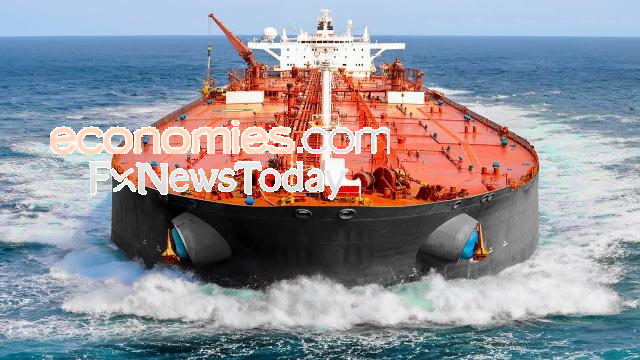
For months, investors have measured geopolitical risk by watching crude oil prices, but this week may have quietly changed that equation. Oil has undoubtedly grabbed the headlines after climbing back toward the $100-a-barrel mark, yet beneath that rally another market is flashing an equally important warning: the global shipping system is beginning to show signs of strain, raising the possibility that the next inflation wave may arrive not because the world lacks products, but because moving them is becoming slower, more expensive and increasingly unpredictable.
That distinction could matter just as much as the oil price itself.
Why shipping matters more than many investors realize
Most inflation discussions begin with commodities, but few begin with logistics, even though every product, whether it is a smartphone, refrigerator, electric vehicle or shipment of coffee beans, depends on one basic requirement: it has to reach its destination.
When shipping routes become dangerous or congested, transportation costs rise long before actual shortages appear. Companies pay more for insurance, freight rates increase, delivery schedules become less reliable and businesses begin carrying larger inventories as a precaution. Each of those costs eventually finds its way into consumer prices, which means disruptions in logistics can spread through almost every sector of the global economy rather than remaining confined to a single commodity.
The world learned this lesson before
Many investors remember the inflation surge that followed the pandemic, but fewer remember how much of it was driven by the breakdown of global transportation networks.
Consumer demand rose sharply, but the problem was not simply that people wanted more goods. Ports became congested, containers were stranded in the wrong locations, shipping capacity tightened dramatically and freight rates exploded. Manufacturers often had products ready for delivery, yet they could not move them efficiently enough to meet demand.
The result was one of the strongest global inflation shocks in decades. Today's circumstances are different, but the underlying mechanism is uncomfortably familiar: the physical ability to transport goods may once again become more important than the amount being produced.
Trade routes are becoming part of the market
This week's developments in the Middle East have reminded investors that geography can become just as important as economics. The Strait of Hormuz handles roughly one-fifth of global oil consumption, while the Bab el-Mandeb Strait links the Red Sea with the Suez Canal and carries not only energy shipments but also thousands of vessels transporting manufactured goods between Asia and Europe.
These routes do not operate in isolation. When uncertainty rises around one corridor, pressure immediately shifts toward the available alternatives, causing insurance premiums to rise, shipping companies to reconsider routes and transit times to grow longer.
None of this requires a complete closure. Markets begin pricing danger well before trade actually stops, and that appears to be the more important development now. The threat is not necessarily that global commerce has been halted, but that the cost of keeping it moving is beginning to rise.
The hidden cost is time
Higher fuel costs receive immediate attention because they are visible, while lost time is harder to measure despite being just as economically significant.
A container ship forced to sail around the Cape of Good Hope instead of using the Suez Canal can add thousands of nautical miles to its journey, increasing fuel consumption and keeping the vessel at sea for much longer. That reduces the number of trips each ship can complete during the year, effectively shrinking global shipping capacity even if no vessels are destroyed and no major ports are closed.
The supply chain becomes less efficient simply because the distance has increased, and that lost efficiency eventually appears in freight rates, inventory costs and consumer prices.
Central banks cannot solve this problem
Interest rates can reduce consumer demand, but they cannot reopen shipping lanes, lower marine insurance costs or shorten a voyage that suddenly requires an additional two weeks.
This creates a particularly uncomfortable challenge for central banks. If transportation costs begin feeding into inflation again, policymakers could face rising prices driven primarily by supply constraints rather than excessive demand, which is precisely the kind of inflation monetary policy struggles to address.
Raising interest rates may weaken spending, investment and economic growth, yet it does nothing to make global trade routes safer. Central banks can suppress the symptoms, but they cannot repair the source of the disruption.
Investors may be watching the wrong chart
Every financial terminal displays the latest oil price, while far fewer investors regularly monitor container freight rates, shipping insurance costs or the number of vessels being rerouted around dangerous waterways.
That may need to change. History shows that transportation disruptions often begin quietly before becoming impossible to ignore, and by the time they dominate headlines, companies have usually started adjusting prices, inventories and supply chains.
Markets frequently react only after the economic damage has begun. Oil may provide the most visible warning, but shipping data could reveal whether the threat is spreading into the wider economy.
The bigger picture
This week's events may ultimately be remembered as more than another geopolitical flare-up. They could mark the moment when investors stopped thinking about inflation solely through the lens of oil and started paying closer attention to the infrastructure that keeps global trade moving.
The modern economy depends on remarkably efficient logistics, and when that system works, consumers rarely notice it. When it begins to fracture, almost every industry feels the consequences through higher costs, delayed deliveries and more fragile supply chains.
Oil remains one of the world's most important prices, but the next inflation story may not be written only by the barrels being produced. It may be written by the ships struggling to deliver them, along with everything else the global economy depends on.
Wall Street fights back as investors weigh booming earnings against a growing inflation threat

US stocks traded with mixed but increasingly resilient performance on Thursday as investors attempted to recover from the previous session's sharp selloff, even as surging oil prices continued to fuel concerns that inflation may remain stubbornly high for longer than markets had expected.
The session highlighted an increasingly important shift in investor psychology. Just weeks ago, geopolitical headlines alone were enough to trigger broad selling across equities. Today, the market appears more selective. Strong corporate earnings are providing support beneath stock prices, while macroeconomic risks continue to cap enthusiasm.
The result is a market that refuses to collapse, yet struggles to launch another sustained rally.
The Market
The Dow Jones Industrial Average outperformed the broader market during Thursday's session, supported by gains in industrial and defensive companies that tend to benefit from higher commodity prices and stronger economic activity.
The S&P 500 traded modestly higher as investors balanced another wave of encouraging corporate earnings against rising Treasury yields and renewed inflation concerns.
The Nasdaq Composite remained more restrained, reflecting continued pressure on technology shares as higher bond yields reduced the appeal of long-duration growth stocks.
The market is becoming more selective
One of the clearest themes emerging this earnings season is that investors are no longer rewarding companies simply for beating expectations.
Instead, markets are scrutinizing guidance, profit margins and management outlooks much more closely.
Companies delivering strong quarterly numbers but cautious forecasts have often struggled to sustain gains, while firms demonstrating confidence about future demand have received a much warmer reception.
This represents a healthier market than the momentum-driven rallies seen earlier in the year.
Investors are becoming increasingly focused on quality rather than simply chasing headlines.
Oil is rewriting the inflation story
The biggest challenge facing Wall Street today is not corporate America.
It is the energy market.
Brent crude's return toward the $100 level threatens to complicate the Federal Reserve's inflation battle just as investors had begun expecting monetary policy to become less restrictive.
Higher oil prices eventually filter through transportation, manufacturing, logistics and consumer spending.
That means today's energy rally may not simply affect oil producers. It could reshape earnings expectations across dozens of industries during the second half of the year.
For equity investors, this creates an uncomfortable balancing act.
A stronger economy supports corporate profits, but expensive energy also raises costs, squeezes margins and delays potential interest rate cuts.
Bond yields are becoming impossible to ignore
Treasury yields continued moving higher as investors reassessed the outlook for Federal Reserve policy.
That matters because higher yields increase the return available from relatively safe government bonds, making richly valued equities less attractive by comparison.
Technology companies remain particularly sensitive to this relationship because much of their valuation depends on future cash flows.
As discount rates rise, investors become less willing to pay premium multiples for expected earnings many years into the future.
This partly explains why the Dow has recently shown greater resilience than the Nasdaq.
The market is quietly rotating
Beneath the surface, another important trend continues to develop.
Money is not necessarily leaving equities.
Instead, investors appear to be rotating toward sectors viewed as better positioned for an environment characterized by higher commodity prices, persistent inflation and elevated interest rates.
Industrials, energy, financials and selected defensive companies have attracted stronger demand, while some of the market's highest-growth names have struggled to maintain leadership.
This kind of rotation often signals that institutional investors remain constructive on the broader market, even if they have become more cautious about where future gains are likely to come from.
The earnings season is passing its first real test
Strong earnings helped fuel much of Wall Street's rally this year.
Now those earnings face a more difficult backdrop.
Higher oil prices, rising financing costs and growing uncertainty surrounding inflation mean investors are asking a tougher question.
Can companies continue expanding profits if operating costs begin climbing again?
So far, many of the largest US companies have answered that question surprisingly well.
The coming weeks will determine whether that resilience extends beyond a handful of market leaders into the wider corporate landscape.
Wall Street outlook
The US stock market now finds itself at an important crossroads.
Corporate earnings remain supportive, consumer demand has not collapsed and economic growth continues to surprise on the upside.
At the same time, oil's sharp rally threatens to reignite inflation, Treasury yields continue climbing and expectations for easier monetary policy have become less certain.
If earnings continue exceeding expectations, stocks may prove capable of absorbing higher interest rates for longer than many investors currently anticipate.
However, if expensive energy begins eroding corporate margins while bond yields continue rising, Wall Street could enter a period of much choppier trading after months of impressive gains.
For now, investors are no longer asking whether the US economy is slowing.
They are asking whether strong corporate America can continue outperforming an increasingly difficult macroeconomic environment.
Bitcoin steadies as the crypto market searches for its next catalyst

Bitcoin traded in a relatively narrow range on Thursday, showing remarkable resilience despite another turbulent session across global financial markets, where soaring oil prices, rising bond yields and renewed inflation concerns pressured risk assets.
While equities struggled under the weight of higher energy prices and expectations for tighter monetary policy, the cryptocurrency market refused to follow the same script. Instead of capitulating, Bitcoin spent most of the session consolidating around the mid-$65,000 area, suggesting that long-term buyers continue to absorb selling pressure even as macroeconomic uncertainty intensifies.
The Price
Bitcoin traded near $65,700 in the latest market update, hovering close to its highest levels of the week after briefly testing the upper end of its recent trading range.
Ethereum remained under pressure near the $1,900 area, while most major altcoins posted mixed performances as investors continued to favor Bitcoin over higher-risk digital assets.
Bitcoin is refusing to panic
Perhaps the most interesting development in today's session is not what Bitcoin didbut what it failed to do.
Oil has surged toward $100 a barrel. Treasury yields have climbed sharply. Expectations for another Federal Reserve rate hike have strengthened. Traditionally, this combination creates a hostile environment for speculative assets.
Yet Bitcoin has largely ignored the deteriorating macro backdrop.
That resilience suggests investors are increasingly treating Bitcoin differently from the rest of the crypto market. Rather than behaving like a high-beta technology stock, the world's largest cryptocurrency is beginning to resemble a more mature macro asset—one capable of weathering periods of financial stress without immediately collapsing.
Institutional demand remains the foundation
One reason behind that resilience continues to be institutional participation.
Demand for spot Bitcoin ETFs has remained relatively healthy despite volatile global markets, helping offset periods of profit-taking from shorter-term traders.
Unlike previous crypto cycles that relied heavily on retail enthusiasm, today's market appears increasingly supported by longer-term capital willing to accumulate during periods of uncertainty rather than chase momentum.
The rest of crypto tells a different story
Bitcoin's stability has not been fully shared across the broader digital-asset market.
Ethereum and several large-cap altcoins have struggled to match Bitcoin's resilience, reflecting a more cautious attitude toward assets with higher volatility and greater dependence on speculative capital.
This divergence is becoming one of the defining themes of the current market.
When investor confidence weakens, money is no longer leaving crypto altogether. Instead, it is rotating toward Bitcoin while flowing out of riskier tokens.
That pattern resembles the traditional financial world, where investors often rotate from smaller growth companies into large defensive names during uncertain periods.
Oil could become crypto's next challenge
Ironically, one of Bitcoin's biggest threats may now come from outside the digital-asset ecosystem.
The rapid rise in crude oil prices has revived fears that inflation could remain elevated for longer than central banks previously expected.
If expensive energy forces the Federal Reserve to maintain restrictive monetary policy—or even tighten further—the cost of capital would continue rising across financial markets.
That environment typically reduces liquidity, making it more difficult for highly valued assets, including cryptocurrencies, to attract aggressive new buying.
In other words, Bitcoin is no longer fighting only crypto-specific risks. It is increasingly trading within the same macroeconomic framework that influences equities, bonds and foreign exchange.
Why consolidation may be bullish
Some traders view Bitcoin's recent sideways movement as a sign of fading momentum.
Another interpretation is equally plausible.
Markets that refuse to decline despite a steady stream of negative news often reveal underlying buying strength.
After absorbing concerns over higher oil prices, stronger Treasury yields and renewed geopolitical tensions without suffering a major breakdown, Bitcoin may simply be building a stronger foundation before attempting its next directional move.
Consolidation is not always a sign of weakness.
Sometimes it reflects a market quietly transferring ownership from impatient traders to longer-term investors.
Bitcoin outlook
The cryptocurrency market remains caught between two powerful forces.
On one side, institutional demand continues to provide support while Bitcoin demonstrates an unusual ability to absorb macroeconomic shocks.
On the other, higher energy prices, persistent inflation risks and expectations for tighter monetary policy threaten to drain liquidity from global financial markets.
If Bitcoin can continue holding above the mid-$65,000 region while global risk sentiment remains fragile, confidence in the current recovery is likely to strengthen.
A decisive break higher could encourage fresh inflows into both Bitcoin and selected large-cap cryptocurrencies.
However, if inflation fears continue to intensify alongside rising oil prices and Treasury yields, the broader crypto market may once again find itself forced to prove that this year's recovery is built on more than abundant liquidity.
For now, Bitcoin is doing something that often matters more than making new highs—it is refusing to make new lows while the rest of the financial world grows increasingly nervous.
Oil breaks through $100 as the world’s energy escape routes begin to close
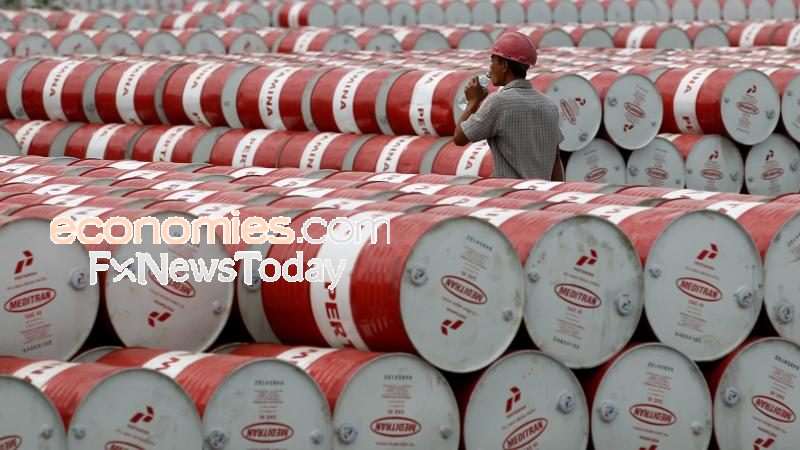
Oil prices surged to their highest levels in nearly two months on Thursday, with Brent crude briefly breaking above $100 a barrel as attacks on Saudi tankers opened a dangerous new front in the Middle East conflict.
The latest rally is not simply another emotional response to geopolitical headlines. It reflects a deeper and more troubling change in the market: traders are no longer worried about disruption at only one vital shipping route. They are now confronting the possibility that threats could simultaneously affect both the Strait of Hormuz and the Bab el-Mandeb Strait, restricting the two main maritime exits used to move Middle Eastern energy toward the rest of the world.
The Price
Brent crude futures climbed by around 6% to trade near $100 a barrel in the latest market update, after touching approximately $100.28 during the session, their highest level since late May.
US West Texas Intermediate crude rose by more than 5% to around $91.40 a barrel, having crossed the $90 threshold for the first time since June 11.
Both benchmarks extended their gains for a fifth consecutive session, but Thursday’s advance was far more aggressive than the previous increases, indicating that the market had begun to price a broader and more immediate threat to physical supplies.
A second chokepoint enters the conflict
The rally accelerated after Yemen’s Houthis said they had attacked two Saudi oil tankers in the Red Sea, with one vessel reportedly catching fire near the Bab el-Mandeb Strait.
The waterway sits at the southern entrance to the Red Sea and provides access to the Suez Canal, making it one of the most important trade routes connecting Middle Eastern and Asian energy supplies with Europe.
Its importance has increased dramatically because the Strait of Hormuz, the main export route for Gulf producers, is already operating under severe disruption amid the escalating conflict involving the US and Iran.
Until now, Saudi Arabia’s ability to redirect some oil exports toward the Red Sea had represented an important release valve for the market. The attacks have challenged that assumption.
The danger is no longer merely that one route may become unreliable. The danger is that the alternative route could also become unsafe.
Why $100 matters
The significance of Brent crossing $100 extends far beyond the psychological importance of a three-digit price.
Below that threshold, governments and central banks can still describe higher energy prices as a manageable geopolitical premium. Above it, the conversation begins to change.
At $100 oil, transport costs rise rapidly, airlines face heavier fuel bills, manufacturers pay more for energy and raw materials, and households are forced to redirect more of their income toward petrol, electricity and food.
The result is a form of inflation that central banks cannot easily control. Higher interest rates cannot reopen shipping lanes or extinguish a burning tanker, yet policymakers may still feel compelled to tighten monetary policy if expensive oil spreads through the wider economy.
This explains why oil’s rally is already affecting currencies, bonds and global equities. The market is no longer treating the conflict as an isolated commodity story. It is beginning to price the possibility of a renewed global inflation shock.
The market is pricing risk, not complete disruption
Despite the dramatic rise, oil prices are not yet reflecting a total shutdown of Middle Eastern exports.
Large quantities of crude are still reaching the market, strategic reserves remain available, and producers outside the region could gradually increase supply. The current price therefore represents a combination of actual disruption and a rapidly expanding insurance premium against what may happen next.
That distinction is crucial.
If shipping conditions stabilise, the geopolitical premium could retreat quickly, especially after such a sharp five-day rally. Oil markets have repeatedly shown that prices can fall almost as rapidly as they rise once fears of immediate shortages begin to fade.
But if tanker traffic becomes increasingly restricted through both Hormuz and Bab el-Mandeb, the market would have to move beyond pricing fear and begin pricing a genuine shortage of available barrels.
That would create an entirely different environment.
The hidden problem is not production
The most immediate threat facing the market is not necessarily whether Saudi Arabia, the UAE, Iran or other regional producers can pump enough oil.
The greater problem is whether that oil can be transported safely, insured at a reasonable cost and delivered on schedule.
A barrel trapped behind an unsafe shipping route has little practical value to a refinery thousands of kilometres away. That means the effective supply available to consumers can decline even if production itself remains relatively stable.
Freight costs, insurance premiums and journey times are therefore becoming almost as important as daily production figures.
Tankers forced to avoid the Red Sea and sail around the Cape of Good Hope face much longer voyages, tying up vessels for additional weeks and reducing the number of ships available to transport oil and fuel products. The market could consequently tighten without a single oilfield being permanently damaged.
Diesel sends an even louder warning
The pressure is already becoming visible in refined fuels.
European diesel margins have climbed to exceptional levels as Middle Eastern disruption combines with Russia’s restrictions on diesel exports and continued attacks on Russian refining infrastructure.
This matters because consumers do not purchase crude oil directly. They purchase petrol, diesel and aviation fuel.
A disruption that affects refining or product shipping can therefore cause fuel prices to rise much faster than crude itself. Even if Brent stabilises near $100, shortages in diesel or jet fuel could continue to increase the economic cost of the conflict.
Can oil reach $120?
The possibility can no longer be dismissed as an extreme scenario.
Brent could move substantially above $100 if the Strait of Hormuz remains severely disrupted and the security threat expands across the Red Sea. Some market projections suggest prices could exceed $120 later this year under a prolonged dual-chokepoint disruption.
Yet reaching and sustaining that level would require more than alarming statements and isolated attacks. The market would need evidence of lasting export losses, repeated tanker incidents or a sharp decline in the willingness of shipping companies to operate in the region.
The distinction between touching $120 and remaining there is also important.
A brief spike could be produced by panic, but a sustained move would require a structural shortage—and would probably begin destroying demand by slowing economic activity across major importing countries.
Oil outlook
The immediate trend remains bullish as long as the market sees no credible path toward safer navigation through the Strait of Hormuz and Bab el-Mandeb.
Brent’s ability to remain above $100 will now serve as an important test of whether buyers believe the supply threat is becoming permanent or whether Thursday’s surge has already absorbed much of the immediate fear.
A sustained move above the $100 area could open the door toward $105 and eventually $110, particularly if more vessels are attacked or major shipping companies suspend operations.
A retreat below the high-$90s, however, could indicate that the initial panic is fading and that traders still believe alternative supplies, strategic reserves and diplomatic pressure can prevent a deeper crisis.
For now, the oil market is sending a clear warning. The world may still have enough crude beneath the ground, but it is becoming much less certain that every barrel can reach the countries that need it.
That uncertainty—not a simple shortage of oil—is what has pushed Brent back into triple digits.