


 |
|
Oil breaks through $100 as the world’s energy escape routes begin to close
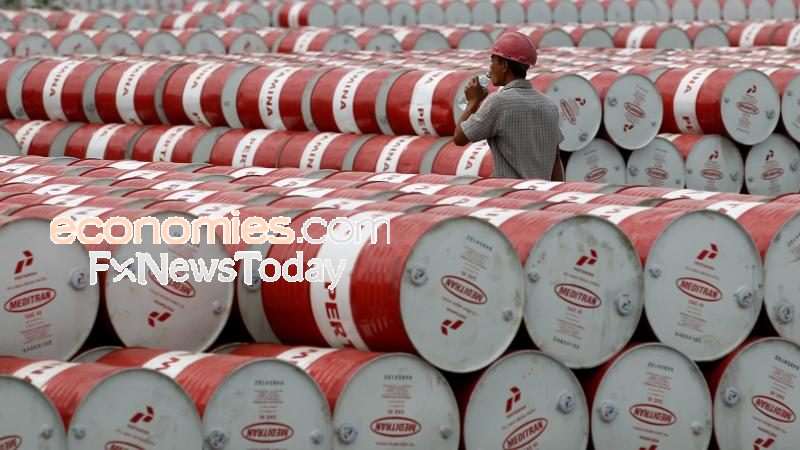
Oil prices surged to their highest levels in nearly two months on Thursday, with Brent crude briefly breaking above $100 a barrel as attacks on Saudi tankers opened a dangerous new front in the Middle East conflict.
The latest rally is not simply another emotional response to geopolitical headlines. It reflects a deeper and more troubling change in the market: traders are no longer worried about disruption at only one vital shipping route. They are now confronting the possibility that threats could simultaneously affect both the Strait of Hormuz and the Bab el-Mandeb Strait, restricting the two main maritime exits used to move Middle Eastern energy toward the rest of the world.
The Price
Brent crude futures climbed by around 6% to trade near $100 a barrel in the latest market update, after touching approximately $100.28 during the session, their highest level since late May.
US West Texas Intermediate crude rose by more than 5% to around $91.40 a barrel, having crossed the $90 threshold for the first time since June 11.
Both benchmarks extended their gains for a fifth consecutive session, but Thursday’s advance was far more aggressive than the previous increases, indicating that the market had begun to price a broader and more immediate threat to physical supplies.
A second chokepoint enters the conflict
The rally accelerated after Yemen’s Houthis said they had attacked two Saudi oil tankers in the Red Sea, with one vessel reportedly catching fire near the Bab el-Mandeb Strait.
The waterway sits at the southern entrance to the Red Sea and provides access to the Suez Canal, making it one of the most important trade routes connecting Middle Eastern and Asian energy supplies with Europe.
Its importance has increased dramatically because the Strait of Hormuz, the main export route for Gulf producers, is already operating under severe disruption amid the escalating conflict involving the US and Iran.
Until now, Saudi Arabia’s ability to redirect some oil exports toward the Red Sea had represented an important release valve for the market. The attacks have challenged that assumption.
The danger is no longer merely that one route may become unreliable. The danger is that the alternative route could also become unsafe.
Why $100 matters
The significance of Brent crossing $100 extends far beyond the psychological importance of a three-digit price.
Below that threshold, governments and central banks can still describe higher energy prices as a manageable geopolitical premium. Above it, the conversation begins to change.
At $100 oil, transport costs rise rapidly, airlines face heavier fuel bills, manufacturers pay more for energy and raw materials, and households are forced to redirect more of their income toward petrol, electricity and food.
The result is a form of inflation that central banks cannot easily control. Higher interest rates cannot reopen shipping lanes or extinguish a burning tanker, yet policymakers may still feel compelled to tighten monetary policy if expensive oil spreads through the wider economy.
This explains why oil’s rally is already affecting currencies, bonds and global equities. The market is no longer treating the conflict as an isolated commodity story. It is beginning to price the possibility of a renewed global inflation shock.
The market is pricing risk, not complete disruption
Despite the dramatic rise, oil prices are not yet reflecting a total shutdown of Middle Eastern exports.
Large quantities of crude are still reaching the market, strategic reserves remain available, and producers outside the region could gradually increase supply. The current price therefore represents a combination of actual disruption and a rapidly expanding insurance premium against what may happen next.
That distinction is crucial.
If shipping conditions stabilise, the geopolitical premium could retreat quickly, especially after such a sharp five-day rally. Oil markets have repeatedly shown that prices can fall almost as rapidly as they rise once fears of immediate shortages begin to fade.
But if tanker traffic becomes increasingly restricted through both Hormuz and Bab el-Mandeb, the market would have to move beyond pricing fear and begin pricing a genuine shortage of available barrels.
That would create an entirely different environment.
The hidden problem is not production
The most immediate threat facing the market is not necessarily whether Saudi Arabia, the UAE, Iran or other regional producers can pump enough oil.
The greater problem is whether that oil can be transported safely, insured at a reasonable cost and delivered on schedule.
A barrel trapped behind an unsafe shipping route has little practical value to a refinery thousands of kilometres away. That means the effective supply available to consumers can decline even if production itself remains relatively stable.
Freight costs, insurance premiums and journey times are therefore becoming almost as important as daily production figures.
Tankers forced to avoid the Red Sea and sail around the Cape of Good Hope face much longer voyages, tying up vessels for additional weeks and reducing the number of ships available to transport oil and fuel products. The market could consequently tighten without a single oilfield being permanently damaged.
Diesel sends an even louder warning
The pressure is already becoming visible in refined fuels.
European diesel margins have climbed to exceptional levels as Middle Eastern disruption combines with Russia’s restrictions on diesel exports and continued attacks on Russian refining infrastructure.
This matters because consumers do not purchase crude oil directly. They purchase petrol, diesel and aviation fuel.
A disruption that affects refining or product shipping can therefore cause fuel prices to rise much faster than crude itself. Even if Brent stabilises near $100, shortages in diesel or jet fuel could continue to increase the economic cost of the conflict.
Can oil reach $120?
The possibility can no longer be dismissed as an extreme scenario.
Brent could move substantially above $100 if the Strait of Hormuz remains severely disrupted and the security threat expands across the Red Sea. Some market projections suggest prices could exceed $120 later this year under a prolonged dual-chokepoint disruption.
Yet reaching and sustaining that level would require more than alarming statements and isolated attacks. The market would need evidence of lasting export losses, repeated tanker incidents or a sharp decline in the willingness of shipping companies to operate in the region.
The distinction between touching $120 and remaining there is also important.
A brief spike could be produced by panic, but a sustained move would require a structural shortage—and would probably begin destroying demand by slowing economic activity across major importing countries.
Oil outlook
The immediate trend remains bullish as long as the market sees no credible path toward safer navigation through the Strait of Hormuz and Bab el-Mandeb.
Brent’s ability to remain above $100 will now serve as an important test of whether buyers believe the supply threat is becoming permanent or whether Thursday’s surge has already absorbed much of the immediate fear.
A sustained move above the $100 area could open the door toward $105 and eventually $110, particularly if more vessels are attacked or major shipping companies suspend operations.
A retreat below the high-$90s, however, could indicate that the initial panic is fading and that traders still believe alternative supplies, strategic reserves and diplomatic pressure can prevent a deeper crisis.
For now, the oil market is sending a clear warning. The world may still have enough crude beneath the ground, but it is becoming much less certain that every barrel can reach the countries that need it.
That uncertainty—not a simple shortage of oil—is what has pushed Brent back into triple digits.
Euro holds its ground after ECB pauses rates, but September remains wide open

The euro traded in positive territory on Thursday after the European Central Bank left interest rates unchanged, delivering the widely expected pause while keeping investors focused on whether another increase could follow as soon as September.
The decision brought no immediate shock to currency markets. Instead, the euro’s next direction now depends on how strongly ECB President Christine Lagarde warns about the inflationary threat from surging energy prices during her press conference.
The Price
The euro traded around $1.14 against the US dollar following the announcement, holding close to a one-week high after showing only a limited initial reaction to the decision.
That muted movement reflected how thoroughly the pause had already been priced into the market. Traders had placed only a small probability on another immediate increase after the ECB raised borrowing costs by 25 basis points at its previous meeting in June.
ECB keeps rates unchanged
The European Central Bank maintained the deposit facility rate at 2.25%, the main refinancing rate at 2.40% and the marginal lending facility rate at 2.65%.
The decision temporarily interrupts the renewed tightening cycle that began in June, when policymakers raised rates for the first time after a prolonged period of monetary easing.
Yet this pause should not be mistaken for the end of the ECB’s inflation fight.
The central bank continues to face an uncomfortable combination of weakening economic momentum and renewed price pressures, leaving policymakers with little room for a decisive commitment in either direction.
Oil has transformed the debate
The most important change since the ECB’s previous meeting has not come from wages, consumer demand or domestic economic activity. It has come from the energy market.
Oil prices have surged toward $100 a barrel as the renewed conflict in the Middle East threatens shipments through some of the world’s most important maritime routes.
That creates a dangerous dilemma for the ECB. Higher energy costs can push headline inflation upward and spread through transport, manufacturing and food prices, but raising interest rates again could place additional pressure on an already fragile European economy.
The ECB is therefore attempting to buy time without appearing complacent.
Why the euro did not jump
An unchanged rate decision offered little reason for traders to chase the euro higher immediately. The outcome was almost entirely expected, meaning the currency market is now searching for signals about what comes next.
The crucial question is whether the ECB sees the recent energy shock as temporary—or as the beginning of a more persistent inflation problem.
A strongly hawkish message from Lagarde could encourage traders to increase expectations of a September rate increase, offering fresh support to the euro.
A more cautious tone, particularly one focused on slowing growth and weak demand, could suggest that the ECB remains reluctant to tighten policy again and leave the single currency vulnerable to renewed pressure.
September becomes the real decision
Today’s announcement may ultimately prove to be a pause between two rate increases rather than the beginning of a prolonged hold.
Eurozone inflation slowed to 2.8% in June but remains above the ECB’s 2% target, while the latest surge in oil prices threatens to reverse some of that progress over the coming months.
Financial markets are therefore increasingly treating the September meeting as the next genuine decision point. By then, policymakers will have more evidence about whether expensive energy is feeding into broader prices, wages and inflation expectations.
The central bank’s challenge is that waiting carries risks, but acting too quickly may deepen Europe’s economic slowdown.
Euro outlook
The euro’s immediate direction now rests less on the rates that were announced and more on the language used to explain them.
If Lagarde leaves the door clearly open to a September increase, EUR/USD could extend its recovery and attempt to move beyond its recent highs.
If she pushes back against aggressive market expectations and stresses the weakness of the European economy, the euro could surrender its early gains and retreat below the $1.14 area.
The ECB has paused, but the battle over European interest rates is far from over. For the euro, the most important announcement may not be today’s decision—it may be the warning hidden inside Lagarde’s next sentence.
Gold retreats as soaring oil prices revive interest-rate fears

Gold prices fell in European trading on Thursday, retreating from a two-week high as a renewed surge in oil prices intensified inflation concerns and strengthened expectations that the US Federal Reserve could raise interest rates later this year.
The precious metal initially benefited from escalating tensions in the Middle East, but the traditional safe-haven reaction was quickly overshadowed by the potential economic consequences of prolonged disruptions to global energy supplies. Higher oil prices threaten to keep inflation elevated, forcing central banks to maintain restrictive monetary policies for longer and reducing the appeal of non-yielding assets such as gold.
The Price
Spot gold dropped by 0.9% to $4,091.24 an ounce in the latest market update, after touching $4,165.87 in the previous session, its highest level since July 7.
US gold futures for August delivery declined by 1.4% to $4,093.80 an ounce. Despite the latest pullback, gold continues to defend the psychologically important $4,000 level, which has repeatedly attracted buyers during recent declines.
Oil changes the market equation
The latest pressure on gold followed a fifth consecutive rise in oil prices as instability surrounding key Middle Eastern shipping routes raised fears of a broader disruption to global supplies.
The Houthis said they had attacked two Saudi oil tankers as part of what they described as a naval blockade, potentially creating another major threat to energy shipments alongside existing concerns surrounding the Strait of Hormuz.
While geopolitical escalation would normally support gold, the sharp rise in crude prices has created a more complicated environment. Investors are increasingly focused on the possibility that expensive energy will fuel another inflationary wave, leaving the Federal Reserve with little room to ease monetary policy.
Markets are now pricing in roughly a 78% probability of a US interest-rate increase in September, up from 68% during the previous session. The Federal Reserve is widely expected to leave rates unchanged at next week’s meeting, but traders will closely examine its statement for signs that policymakers are preparing for further tightening.
Gold caught between fear and yields
Gold is currently being pulled in opposite directions. Military escalation and uncertainty over energy supplies are supporting demand for defensive assets, but rising Treasury yields and expectations of higher interest rates are increasing the opportunity cost of holding bullion.
This tension explains why gold has struggled to sustain gains despite an increasingly unstable geopolitical backdrop. A further surge in oil prices could initially generate safe-haven buying, but it may ultimately weigh on bullion if investors conclude that inflation will force central banks to remain aggressive.
The $4,000 level remains the key short-term line of defence. Holding above it could allow gold to stabilise and make another attempt to reclaim the $4,165 area, followed by the $4,200 barrier. A decisive break below $4,000, however, could expose the metal to a deeper correction toward $3,900.
Silver, platinum and palladium decline
Selling pressure extended across the wider precious-metals complex. Spot silver fell by 1.4% to $58.85 an ounce, surrendering part of its recent gains as higher bond yields weighed on investment demand.
Platinum declined by 0.9% to $1,629.63 an ounce, while palladium dropped by 1.5% to $1,272.03. Both metals remain sensitive not only to movements in gold and the US dollar, but also to expectations surrounding industrial activity and demand from the global automotive sector.
Gold outlook
The next major move in precious metals is likely to depend on developments in the Middle East, the direction of oil prices and incoming US economic data.
A weaker-than-expected labour-market reading could ease concerns about further monetary tightening and provide gold with fresh support. Strong employment data, combined with persistently elevated oil prices, would reinforce expectations of a higher-for-longer interest-rate environment and leave bullion vulnerable to renewed selling.
For now, gold remains above its most important psychological support, but its ability to recover will depend on whether safe-haven demand can once again outweigh the pressure from rising yields and increasingly hawkish interest-rate expectations.
Euro trades in positive territory ahead of ECB policy decision

The euro advanced against a basket of major currencies in European trading on Thursday, extending gains against the US dollar for a second consecutive session ahead of the European Central Bank's monetary policy decision later today.
The ECB is widely expected to leave interest rates unchanged after raising them by 25 basis points at its previous meeting. Markets will closely watch for signals that policymakers remain open to additional tightening at the September meeting if inflationary pressures continue to build amid the recent rise in global oil prices.
The Price
• The euro rose more than 0.2% against the US dollar to $1.1436, up from the day's opening level of $1.1411, after touching an intraday low of $1.1405.
• The euro closed 0.1% higher against the US dollar on Wednesday, marking its first daily gain in five sessions as it recovered from a one-week low of $1.1395.
European Central Bank
The European Central Bank will conclude its fifth monetary policy meeting of 2026 later today, with markets expecting interest rates to remain unchanged. Investors will focus on the accompanying policy statement for fresh guidance on the outlook for interest rates over the remainder of the year.
Current expectations point to the ECB keeping its key interest rate unchanged at 2.40%, the highest level since April 2025, following the 25-basis-point increase delivered at the previous meeting.
The ECB's interest rate decision and monetary policy statement are due at 12:15 GMT, followed by ECB President Christine Lagarde's press conference at 12:45 GMT.
According to some forecasts, the ECB is expected to keep the door open for another interest rate hike in September, as the latest surge in energy prices threatens to reignite inflationary pressures across Europe.
Analysts believe that with oil prices climbing back above $90 per barrel due to the renewed conflict in the Middle East, the ECB could be forced to tighten policy again this autumn to prevent higher energy costs from triggering a broader inflationary spiral.
Euro outlook
We expect the euro to extend its gains against a basket of major currencies if the European Central Bank delivers a more hawkish message than markets currently anticipate, boosting expectations for a September interest rate hike.