


 |
|
Gold hits a week high as dollar drops

Gold prices rose in European trading on Tuesday, reaching their highest level in nearly a week, supported by a weaker US dollar in the foreign exchange market and growing hopes for de-escalation in the US–Israeli war on Iran.
Rising energy costs have fueled concerns about another acceleration in global inflation, reducing the likelihood of near-term interest rate cuts by the Federal Reserve.
Price Overview
Gold prices today: gold rose 1.1% to $5,195.27, the highest level in about a week, up from the session opening level of $5,138.85, after touching a low of $5,117.81.
At Monday’s settlement, gold prices fell 0.65%, marking the second loss in the past three sessions due to weaker demand for the metal as a safe haven.
US Dollar
The dollar index fell about 0.25% on Tuesday, extending losses for a third consecutive session and moving further away from its four-month high, reflecting continued weakness in the US currency against a basket of global currencies.
As is well known, a weaker US dollar makes gold bullion priced in the currency more attractive to buyers holding other currencies.
Beyond profit-taking, the dollar has been declining amid rising hopes for de-escalation in the US–Israeli war on Iran, especially following recent remarks by Donald Trump.
Trump said the war could end earlier than initially expected, though he warned of escalating attacks if Tehran blocks oil shipments through the Strait of Hormuz.
US interest rates
According to the CME FedWatch tool from CME Group, markets are pricing a 97% probability that US interest rates will remain unchanged at the March meeting, while the probability of a 25-basis-point rate cut stands at 3%.
Markets are also pricing an 87% probability that rates will remain unchanged at the April meeting, while the probability of a 25-basis-point rate cut stands at 13%.
To reassess these expectations, investors are closely watching the release of key US inflation data for February scheduled for Wednesday.
Gold outlook
Jim Wyckoff, senior analyst at Kitco Metals, said inflation concerns and expectations of higher interest rates, driven by uncertainty surrounding the war, have weighed on gold, though the ongoing conflict is also expected to support safe-haven demand and provide a floor for prices.
Wyckoff added that if higher inflation figures are reported this week, it could place the Federal Reserve in a difficult position and potentially lead to further downside pressure on gold prices.
SPDR fund
Holdings of the SPDR Gold Trust, the world’s largest gold-backed exchange-traded fund, fell by 2.62 metric tons on Monday, marking a fifth consecutive daily decline and bringing total holdings down to 1,070.70 metric tons, the lowest level since January 9.
Euro under pressure on global energy prices
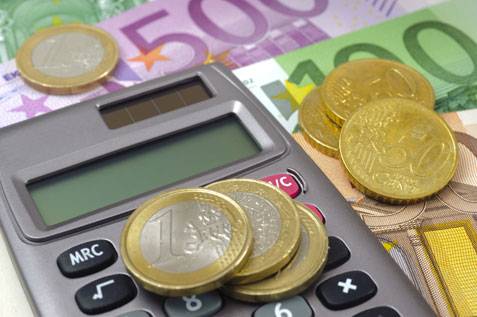
The euro declined in European trading on Tuesday against a basket of global currencies, resuming losses that had paused for two sessions against the US dollar and moving toward a four-month low as renewed demand for the US currency as a preferred alternative investment returned amid fading hopes for a near-term end to the Iran war.
The single European currency is also under pressure from rising oil and natural gas prices, which are likely to push prices higher and accelerate inflation in the eurozone, placing policymakers at the European Central Bank under increasing inflationary pressure.
Price Overview
Euro exchange rate today: the euro fell about 0.25% against the dollar to $1.1607, down from the opening level of $1.1635, after touching a session high of $1.1646.
The euro ended Monday’s trading up 0.15% against the dollar, marking a second consecutive daily gain during a recovery from a four-month low of $1.1507.
US Dollar
The dollar index rose about 0.2% on Tuesday, resuming gains that had paused over the previous two sessions during corrective trading and profit-taking from a four-month high, reflecting renewed strength of the US currency against a basket of major and secondary currencies.
US President Donald Trump said Monday that the war will continue until Iran is decisively defeated, though it could end soon. Iran’s Revolutionary Guard dismissed the remarks as nonsense and vowed to halt oil exports from the Middle East.
Juan Perez, director of trading at Monex USA, said: “Ultimately, the US dollar is always a good safe-haven option in a troubled world.” He added: “It also tends to gain whenever the United States demonstrates any kind of military strength.”
Global energy prices
Oil and natural gas prices rose again on Tuesday in global markets after Iran announced that the oil blockade would continue until US and Israeli attacks against the country stop.
Analysts at Wells Fargo said in a note that the euro faces a difficult situation. Europe’s natural gas storage refill season is approaching, and the European Union is entering it with record-low gas levels in storage, meaning it will need to purchase large amounts of energy at a time when prices could rise significantly.
European interest rates
Following higher-than-expected inflation data released last week in Europe, money markets sharply reduced pricing for a 25-basis-point interest rate cut by the European Central Bank in March from 25% to 5%.
Investors are now awaiting additional economic data from the eurozone on inflation, unemployment, and wages to reassess these expectations.
Yen resumes losses on hopes of quick end to Iranian war

The Japanese yen declined in Asian trading on Tuesday against a basket of major and minor currencies, resuming losses that had paused temporarily yesterday against the US dollar and moving closer once again to two-month lows, as renewed demand for the US currency as a preferred alternative investment emerged amid fading hopes for a near-term end to the Iran war.
Despite speculation that inflationary pressures on policymakers at the Bank of Japan could accelerate, expectations for a Japanese interest rate hike before September remain weak, as investors await additional data on developments in the world’s fourth-largest economy.
Price Overview
Japanese yen exchange rate today: the US dollar rose 0.2% against the yen to ¥157.96, up from the opening level of ¥157.655, after touching a session low of ¥157.52.
The yen ended Monday’s trading up 0.1% against the dollar, its first gain in the past three days, supported by buying from lower levels after earlier hitting a two-month low of ¥158.90 during the session.
US Dollar
The dollar index rose about 0.15% on Tuesday, resuming gains that had paused over the previous two sessions during corrective trading and profit-taking from a four-month high, reflecting renewed strength of the US currency against a basket of global peers.
US President Donald Trump said Monday that the war will continue until Iran is decisively defeated, though it could end soon. Iran’s Revolutionary Guard dismissed the remarks as nonsense and vowed to halt oil exports from the Middle East.
Juan Perez, director of trading at Monex USA, said: “Ultimately, the US dollar is always a good safe-haven option in a troubled world.” He added: “It also tends to gain whenever the United States demonstrates any kind of military strength.”
Japanese interest rates
Pricing for a quarter-point interest rate hike by the Bank of Japan at the March meeting remains steady at 5%, while the probability of a quarter-point increase at the April meeting stands at 35%.
In the latest Reuters poll, the Bank of Japan is expected to raise interest rates to 1% by September.
Analysts at Morgan Stanley and MUFG wrote in a joint research report that they had already considered the probability of rate hikes in March or April to be low, but the growing uncertainty surrounding developments in the Middle East may prompt the Bank of Japan to adopt an even more cautious stance, further reducing the likelihood of near-term tightening.
Investors are awaiting additional data on inflation, unemployment, and wages in Japan to reassess these expectations.
Wall Street erases losses and ends higher, with NASDAQ marking over 1% profits

US stock indices rose during Monday’s trading, erasing the sharp losses recorded earlier in the session, as the war in the Middle East and the resulting surge in oil prices revived concerns about inflationary pressures.
Observers believe that the sharp rise in oil prices caused by the war in the Middle East between the United States and Iran is bringing back memories of the stagflation crisis that occurred in the 1970s.
Stagflation refers to a situation in which the US economy falls into contraction and noticeably slower growth while inflation continues to rise, a scenario considered among the worst possible outcomes for any economy.
Several Federal Reserve officials have also begun sounding the alarm about monetary policy and the difficult position facing the central bank amid rising energy-driven inflation.
However, US President Donald Trump poured water on the fire today in remarks to a CBS News correspondent, saying the war against Iran may be nearing its end.
He stated: “I think the war is largely complete.” He added: “They have no navy, no communications, and no air force.”
Following these comments, along with calls from the International Energy Agency to release emergency oil reserves to address the crisis, oil prices declined broadly below the $90 level after approaching $120 earlier in Monday’s trading.
By the close of the session, the Dow Jones Industrial Average rose 0.5% (239 points) to 47,741 points, recording a session high of 47,876 and a low of 46,615.
The broader S&P 500 index climbed 0.7% (56 points) to 6,796 points, reaching a high of 6,810 and a low of 6,636.
The Nasdaq index advanced 1.4% (308 points) to 22,696 points, with a session high of 22,741 and a low of 22,062.