


 |
|
Gold and silver rebound as weaker dollar offsets easing Middle East tensions

Gold and silver traded higher on Monday morning as investors returned to precious metals after last week's volatility, with a weaker U.S. dollar and falling Treasury yields providing support despite signs of easing tensions between the United States and Iran.
Spot gold climbed about 0.9% to around $4,088 an ounce during early trading, while spot silver outperformed with a gain of roughly 1.5% to around $59.1 an ounce. Platinum and palladium also moved higher as investors broadly returned to the precious metals complex.
Why are gold and silver rising?
At first glance, today's gains may seem surprising.
The apparent pause in hostilities between Washington and Tehran has sent oil prices sharply lower, reducing immediate inflation concerns and easing demand for traditional safe-haven assets. Under normal circumstances, that would weigh on gold.
Instead, the decline in oil has pushed the U.S. dollar lower and helped pull Treasury yields down, improving the appeal of non-yielding assets such as gold and silver. Investors are increasingly focusing on those financial conditions rather than the immediate geopolitical headlines.
Silver continues to outperform
Silver once again posted stronger gains than gold, reflecting its dual role as both a precious and industrial metal.
Alongside support from lower yields, silver continues to benefit from expectations that long-term demand from artificial intelligence infrastructure, data centers, solar panels and electronics manufacturing will remain robust. That combination often allows silver to outperform gold when broader market sentiment improves, although it also tends to experience larger price swings.
What traders are watching next
The focus is now shifting toward one of the busiest weeks of the summer for financial markets.
The Federal Reserve is widely expected to leave interest rates unchanged, but investors will closely analyze Chair Jerome Powell's comments for clues on the timing of future policy moves. Markets will also monitor upcoming U.S. inflation and growth data, both of which could influence Treasury yields and the U.S. dollar.
For the next few sessions, precious metals are likely to remain caught between two opposing forces: easing geopolitical risks that reduce safe-haven demand, and expectations for a softer interest-rate outlook that continue to support bullion prices. Unless a fresh geopolitical surprise emerges, the Federal Reserve is likely to be the dominant driver of both gold and silver through the rest of the week.
CXMT stuns the world with a half-trillion-dollar IPO as investors bet on China's chip independence
For years, China's semiconductor ambitions were measured in promises, but today, investors are beginning to value them in hundreds of billions of dollars.
ChangXin Memory Technologies, better known as CXMT, delivered one of the most extraordinary stock market debuts in recent history on Monday. Shares surged more than 500% in early trading after the company raised $8.6 billion in Asia's largest IPO of the year, briefly lifting its market value above half a trillion dollars and making it China's most valuable listed company.
At first glance, the enthusiasm appears difficult to justify.
CXMT is neither the world's largest chipmaker nor its most profitable. It still trails industry leaders Samsung, SK Hynix and Micron in both technology and global market share.
Yet investors are valuing the company as though it represents something much larger than a manufacturer of memory chips.
In many ways, that is exactly what they are buying.
A company at the center of China's technological ambitions
The semiconductor industry has changed dramatically over the past few years.
Memory chips were once viewed as one of the industry's most cyclical businesses. Prices rose and fell with consumer electronics demand, and investors largely judged companies by production costs, market share and pricing power.
Artificial intelligence has fundamentally altered that equation.
Every large language model, AI server and advanced data center requires enormous amounts of high-performance memory. Faster processors alone are no longer enough. Without vast quantities of DRAM, even the world's most advanced AI chips cannot reach their full potential.
That has transformed memory from a commodity into one of the critical foundations of the AI economy.
For China, the stakes are even higher.
Years of U.S. export restrictions have made semiconductor self-sufficiency one of Beijing's highest industrial priorities. Rather than relying indefinitely on foreign suppliers, China has spent years building domestic champions capable of competing across every major segment of the chip industry.
CXMT has become one of the clearest symbols of that strategy.
Investors are buying a national strategy
This helps explain why traditional valuation metrics alone struggle to capture today's enthusiasm.
Investors are not simply estimating how many memory chips CXMT might sell next year.
They are trying to estimate what China's determination to secure its own semiconductor supply chain could ultimately be worth.
Few industries enjoy this combination of powerful tailwinds.
Artificial intelligence is expanding demand for memory at an exceptional pace. At the same time, geopolitical tensions are encouraging governments and technology companies to diversify supply chains and reduce dependence on overseas manufacturers.
For many investors, those two forces reinforce one another.
The result is a company that sits at the intersection of two of the world's most powerful investment themes: AI infrastructure and technological sovereignty.
That combination rarely comes cheaply.
Why the valuation is making investors nervous
The excitement, however, has been matched by growing skepticism.
Even after accounting for strong earnings growth and expectations of rapidly expanding production, CXMT's valuation now assumes years of extraordinary execution. That leaves little room for setbacks.
The company's public float also remains relatively small, meaning heavy demand can have an outsized impact on the share price, particularly during the first days of trading. Analysts have warned that such conditions often amplify volatility, especially following blockbuster IPOs.
There is another concern.
Memory has always been one of the semiconductor industry's most cyclical businesses.
Periods of soaring profitability often encourage aggressive capacity expansion. Eventually, additional supply catches up with demand, prices weaken and margins come under pressure.
Some investors are already questioning whether today's optimism adequately reflects that historical pattern.
A new challenge for the global chip industry
Whether CXMT ultimately justifies its valuation may prove less important than what its emergence signals for the broader industry.
Until recently, the global DRAM market was effectively dominated by Samsung, SK Hynix and Micron.
China's rapid progress introduces a credible fourth major competitor with significant financial backing and clear strategic importance to Beijing.
That could reshape competitive dynamics over the coming years.
Greater capacity may eventually place downward pressure on memory prices, benefiting AI developers and cloud computing companies while increasing pressure on established manufacturers to maintain profitability.
At the same time, continued technological competition between China and the United States is likely to accelerate investment across the entire semiconductor ecosystem rather than slow it.
More than an IPO
The remarkable thing about CXMT's debut is not simply that investors pushed its valuation into the hundreds of billions of dollars.
It is what that enthusiasm represents.
Markets increasingly believe that semiconductors are no longer just another industry. They have become strategic infrastructure, as important to economic and technological leadership as railroads, electricity or the internet were in previous generations.
That is why investors are willing to place extraordinary valuations on companies positioned at the center of this transformation.
Whether CXMT ultimately grows into its enormous valuation remains an open question.
What seems increasingly clear, however, is that the company is no longer being judged solely by the memory chips it manufactures.
It is being valued for the role investors believe it could play in determining who leads the next era of global technology.
SpaceX: How Wall Street's newest favorite became its biggest target
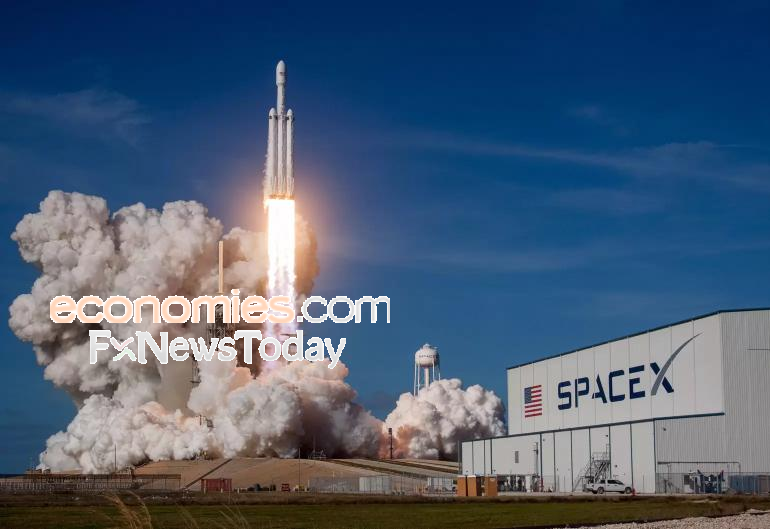
Only a few weeks ago, SpaceX seemed untouchable.
Its blockbuster public debut briefly propelled the company above some of the world's largest technology firms by market value, turning Elon Musk into the first trillionaire and reinforcing the belief that investors were witnessing the birth of the market's next great growth story.
Today, the mood could hardly be more different.
SpaceX shares have surrendered nearly half their value from their post-IPO peak, fallen below their offering price and become one of Wall Street's most heavily scrutinized stocks. At the same time, short sellers have accumulated an estimated $15.5 billion in paper profits since the company's June listing, transforming what was once the market's hottest trade into one of its most profitable bearish bets.
A great company can still be a difficult stock
The remarkable part of SpaceX's decline is that the company itself has not suddenly become a weaker business.
Falcon launches continue at an industry-leading pace. Starlink remains one of the fastest-growing satellite internet businesses in the world. NASA and commercial customers still rely heavily on the company's launch capabilities.
What changed was not the business, but the expectations surrounding it.
When SpaceX came to market, investors were willing to pay almost any price for exposure to one of the world's most ambitious technology companies. The stock quickly became a symbol of optimism surrounding reusable rockets, artificial intelligence infrastructure, satellite communications and the future of space exploration.
Those expectations left very little room for disappointment.
Why the bears suddenly found an opportunity
That is precisely where short sellers entered the picture.
Contrary to popular belief, short sellers rarely target weak companies alone. More often, they target companies whose valuations leave almost no margin for error.
SpaceX offered exactly that setup.
Starship, arguably the company's most important long-term project, has suffered repeated launch delays, pushing back another key milestone investors were eagerly awaiting. Meanwhile, Wall Street is beginning to focus on issues that barely mattered during the IPO euphoria, including lock-up expirations that could release a significant number of additional shares into the market and an earnings report that will provide the first real test of whether the company's financial performance can justify its extraordinary valuation.
None of these developments necessarily threaten SpaceX's future.
Collectively, however, they have changed the conversation from limitless potential to measurable execution.
The battle is really over expectations
The surge in bearish positioning says less about SpaceX's technology than it does about Wall Street's willingness to challenge expensive narratives.
Only weeks ago, betting against SpaceX looked almost reckless. Today, those same bearish positions are among the market's biggest winners.
That shift illustrates how quickly sentiment can reverse once investors begin asking different questions.
Instead of wondering how large SpaceX could eventually become, the market is asking whether today's valuation already assumes too much success too soon.
That is a far more difficult question to answer.
Pressure is becoming part of the investment story
Going public has changed the company in another important way.
For years, SpaceX largely operated outside the relentless scrutiny faced by publicly traded giants. Delays were engineering challenges rather than market-moving events. Ambitious timelines inspired excitement instead of quarterly debates.
That luxury no longer exists.
Every postponed Starship launch now affects investor confidence. Every earnings report becomes a referendum on growth. Every analyst downgrade or insider selling headline can influence billions of dollars in market value.
The company is no longer judged solely by the scale of its ambitions. It is increasingly judged by its ability to meet them on Wall Street's timetable.
The next chapter will determine who was right
The current selloff does not necessarily prove the bulls were wrong or the bears were right.
Instead, it reflects a market moving from excitement to evaluation.
SpaceX remains one of the world's most innovative companies, but innovation alone is rarely enough to support a premium valuation indefinitely. Investors eventually demand evidence that ambitious visions can translate into financial results.
That is why the coming months may matter more than the spectacular IPO that captured global attention.
For short sellers, the recent collapse suggests the market has finally begun questioning expectations that once seemed unquestionable.
For long-term investors, the decline raises a different possibility.
Sometimes Wall Street's biggest target is simply yesterday's biggest favorite, and the companies that survive that transition often emerge stronger than before. Whether SpaceX joins that list will depend less on the brilliance of its vision than on its ability to convince investors that the vision can be delivered on schedule.
Oil's rally is telling a bigger story than rising prices

Oil prices have spent much of the past week doing what they do best during periods of geopolitical uncertainty: commanding the attention of every financial market. Brent crude briefly climbed back above the psychologically important $100-a-barrel mark for the first time in two months before retreating on Friday, leaving traders debating whether the move reflected genuine supply concerns or a market that had simply become too anxious too quickly.
The easy explanation is that oil rallied because the Middle East became more dangerous.
The more interesting explanation is that investors are beginning to question something much larger than today's disruptions. They are questioning how resilient the global energy system really is when several risks begin to overlap.
That distinction matters because markets have learned to live with geopolitical headlines. Wars, sanctions and isolated supply interruptions rarely keep oil elevated indefinitely. Production adjusts, shipping routes evolve and governments often step in to stabilize markets.
This time, however, the calculation appears less straightforward.
When disruption becomes cumulative
The latest catalyst came from renewed attacks on Saudi oil tankers in the Red Sea, adding to persistent concerns surrounding the Strait of Hormuz while Kazakhstan continues to deal with disruptions to key export infrastructure. None of these developments alone would necessarily justify a dramatic repricing of crude.
Together, however, they force traders to confront a more uncomfortable possibility: what happens if today's disruptions stop being isolated events and begin reinforcing one another?
That question explains why Brent's move above $100 carried significance beyond the number itself.
Round numbers always attract headlines, but markets rarely pay premiums simply because prices cross a psychological threshold. They pay premiums when confidence begins to erode.
For months, investors took comfort in the belief that OPEC+ still possessed sufficient spare production capacity to offset temporary supply losses. That assumption has not disappeared, but it is now competing with another reality: replacing oil on paper is far easier than replacing it in practice.
Every barrel has a destination, a shipping route, a specific quality and a customer waiting at the other end.
When logistics become uncertain, the market starts paying not only for crude itself, but also for the confidence that it will actually arrive.
The physical market is sending a stronger signal
That changing psychology is becoming increasingly visible in physical crude markets.
While financial headlines focused on Brent futures, physical crude grades strengthened even more aggressively. North Sea cargoes traded at higher premiums, Middle Eastern benchmark prices surged and several physical grades approached $110 as refiners competed for immediately available supplies rather than simply buying futures contracts.
This divergence matters because physical markets often reveal what financial markets are only beginning to price.
Speculators can buy futures contracts within seconds. Refineries cannot wait weeks if deliveries become uncertain. When physical buyers start paying increasingly large premiums, it usually reflects genuine concern about securing supply rather than short-term speculation.
Why Friday's decline wasn't necessarily bearish
Friday's pullback initially appeared to suggest that the market had already concluded Thursday's rally was excessive.
It may simply suggest something else.
Markets experiencing genuine uncertainty rarely move in straight lines because investors are constantly reassessing probabilities rather than changing convictions.
One scenario assumes tensions gradually ease and shipping flows normalize.
The other assumes disruptions continue spreading across multiple regions.
Neither outcome can yet be ruled out.
Against that backdrop, Friday's decline looks less like a rejection of higher oil prices and more like a pause after an exceptionally rapid advance. Even after retreating, Brent remains on track for one of its strongest weekly performances this year, highlighting just how dramatically market expectations shifted within only a few trading sessions.
Oil's influence now extends far beyond energy
Perhaps the most important consequence of this rally is that it reaches well beyond the oil market itself.
Higher crude prices influence transportation costs, manufacturing margins, airline profitability and, ultimately, inflation expectations.
Only days ago, investors were debating whether major central banks had reached the end of their tightening cycles.
Now they are once again asking whether another energy-driven inflation shock could delay future interest-rate cuts.
That is why bond markets, currencies and equities have all become increasingly sensitive to developments in the energy market. Oil is no longer just another commodity. It has once again become a macroeconomic variable capable of reshaping expectations across nearly every asset class.
The real question facing investors
Ironically, the debate surrounding oil has shifted.
For much of the past two years, investors worried primarily about demand, particularly the strength of China's recovery and the health of the global economy.
Today, demand has temporarily taken a back seat.
The bigger concern is logistics.
The world is not asking whether enough oil exists beneath the ground. It is asking whether enough of it can continue reaching customers safely and efficiently if geopolitical tensions continue to intensify.
That subtle shift may ultimately define the next phase of the market.
If tensions ease, part of today's geopolitical premium could disappear surprisingly quickly.
But if disruptions continue accumulating across multiple regions, this week's rally may be remembered as the moment investors stopped worrying primarily about how much oil the world produces and started worrying about how reliably that oil can move around the world.
That is a very different market. And it may prove to be a much more expensive one.