


 |
|
USDCHF Attacks Our Price Target – Analysis – 22-06-2026
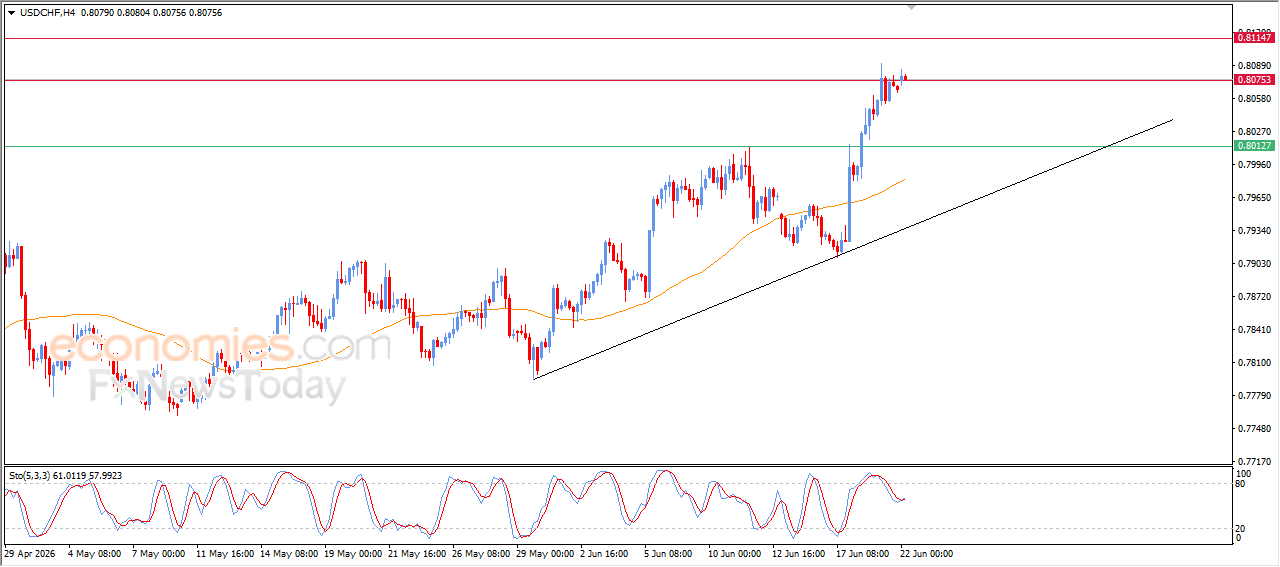
The (USDCHF) maintains its gains during its recent intraday trading, attempting to breach 0.8075 resistance, which was our previous expected target. This comes as the pair is supported by the dominance of the main bullish trend in the short term, along with continuous dynamic support resulting from trading above its EMA50. Meanwhile, the relative strength indicators are showing the beginning of a positive crossover after the pair succeeded in easing its overbought conditions, giving it greater ability to extend these gains in the near term.
NZDUSD Surrounded by Negative Pressures – Analysis – 22-06-2026
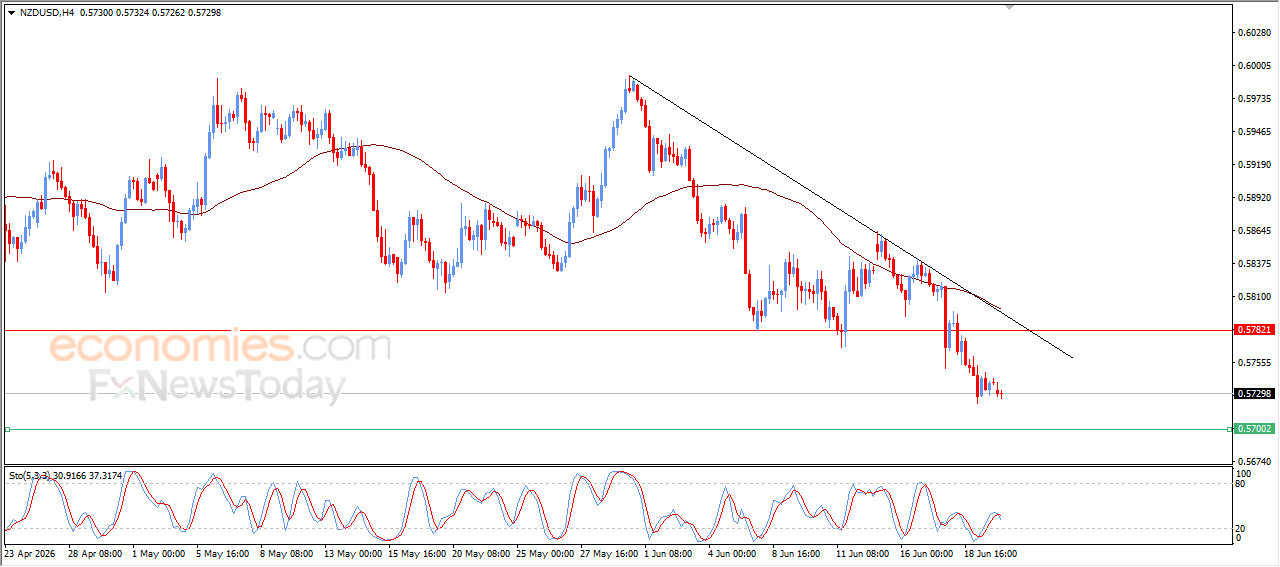
The (NZDUSD) declined in its recent intraday trading, with a negative crossover beginning to appear on the Relative Strength Indicators after the pair succeeded in easing its oversold conditions. This opens the way for the price to deepen its losses in the near term, amid continued negative pressure resulting from trading below EMA50, which reinforces the stability and dominance of the main bearish trend in the short term. The pair is also moving along a trend line that strengthens this bearish path.
AUDUSD Under Bearish Pressure – Analysis – 22-06-2026
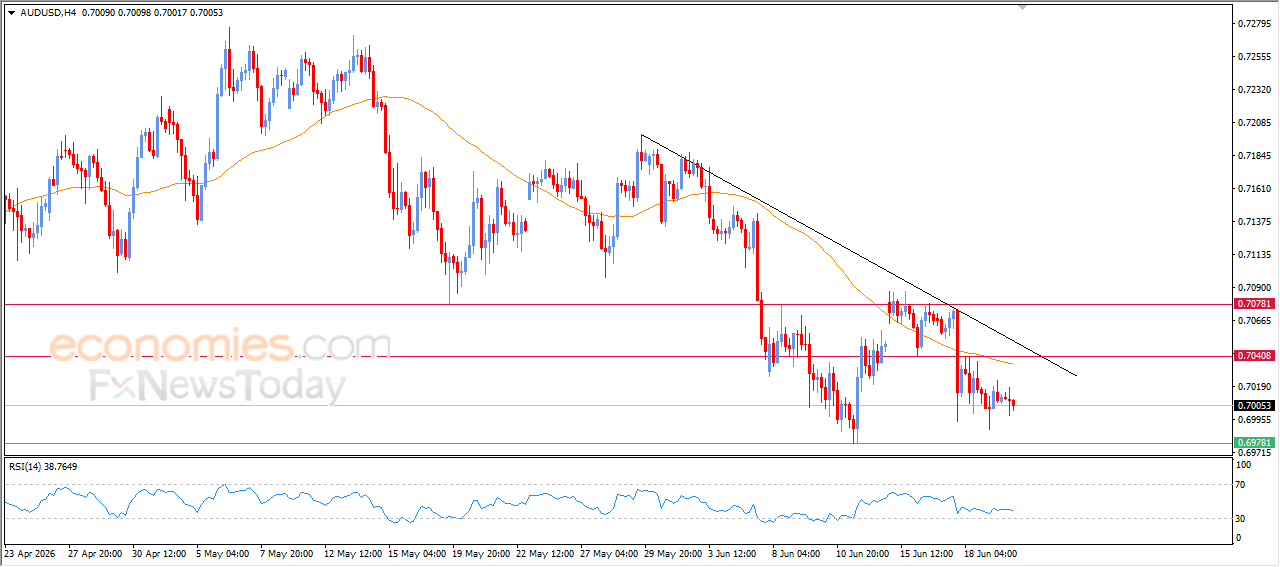
(AUDUSD) declined in its recent intraday trading, amid continued negative pressure resulting from trading below its 50-period simple moving average, which represents dynamic resistance that limits the pair’s chances of recovery in the near term. This comes especially with the dominance of the main bearish trend in the short term, as the price moves along a minor trend line supporting this path. Meanwhile, the Relative Strength Indicators are showing negative signals.
USDCAD Price Soars Higher – Analysis – 22-06-2026
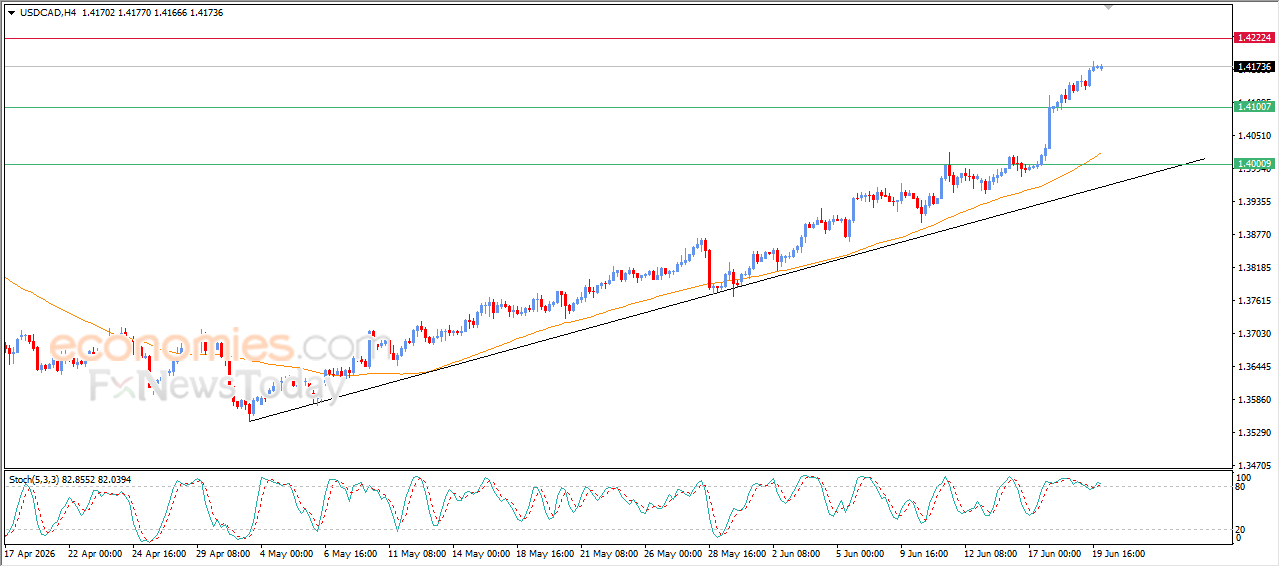
USDCAD continued its rise during recent intraday trading, with the short-term bullish trend remaining firmly in control. The pair is moving along an ascending trend line that supports this direction, while continued positive pressure comes from trading above its EMA50. Meanwhile, relative strength indicators are showing positive signals after the pair managed to ease some of its overbought conditions, giving it greater potential to extend its gains in the near term.