


 |
|
NZDUSD Faces Negative Pressure – Analysis – 22-05-2026
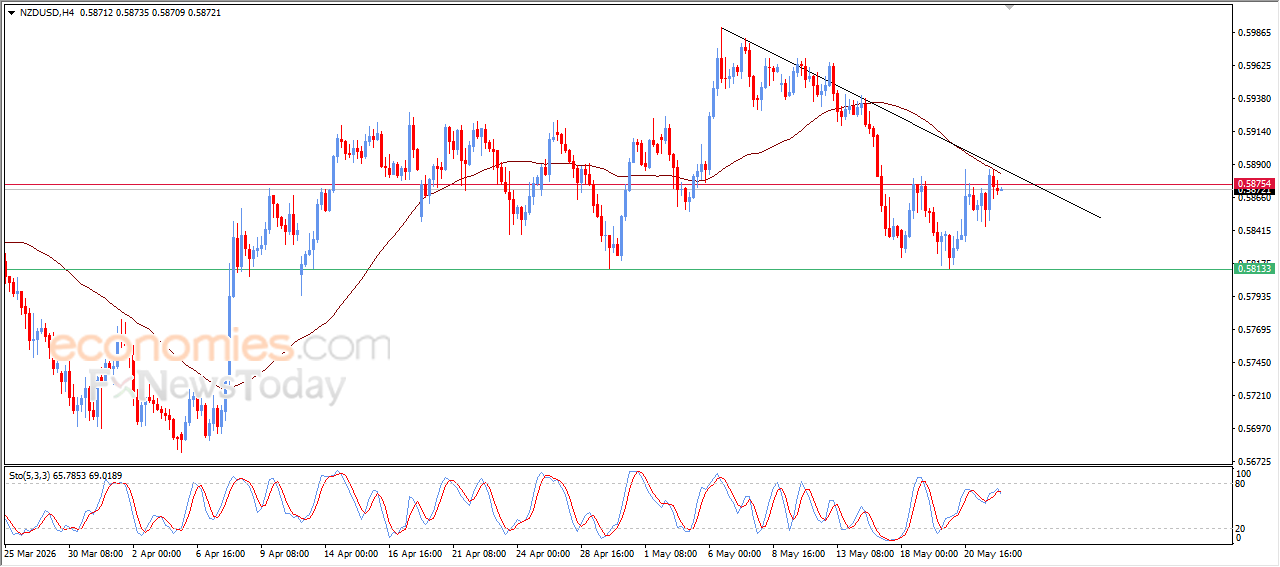
The (NZDUSD) declined during its latest intraday trading after testing a short-term descending corrective trendline resistance, which coincided with resistance from EMA50. This combination placed the pair under stronger bearish pressure, forcing it to pull back lower, especially as negative crossover signals have started to appear on the relative strength indicators after reaching overbought territory, increasing the likelihood of further downside pressure in the near term.
AUDUSD Declines Under the Pressure of Key Resistance – Analysis – 22-05-2026
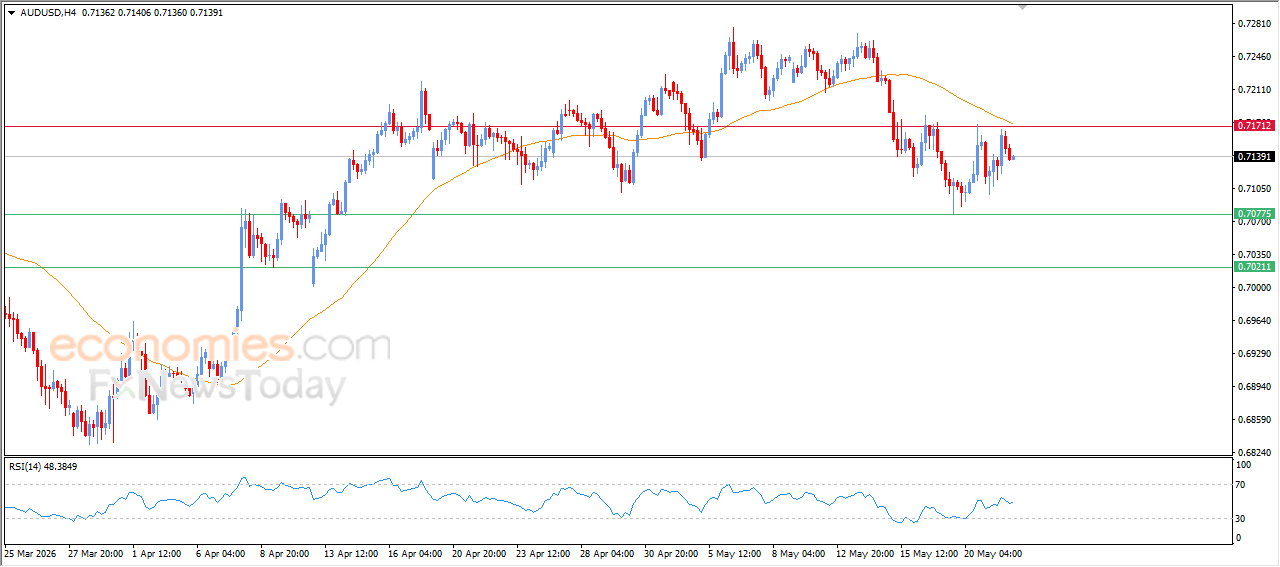
The (AUDUSD) declined during its recent intraday trading following the resilience of the resistance level at 0.7170. This comes amid the dominance of a short-term corrective bearish wave, along with continued negative pressure caused by trading below EMA50, which limits the chances of a sustainable recovery for the pair in the near term, with the emergence of negative signals from the relative strength indicators, which increases the bearish pressure surrounding the pair.
USDCAD Attacks our Target Resistance – Analysis – 22-05-2026
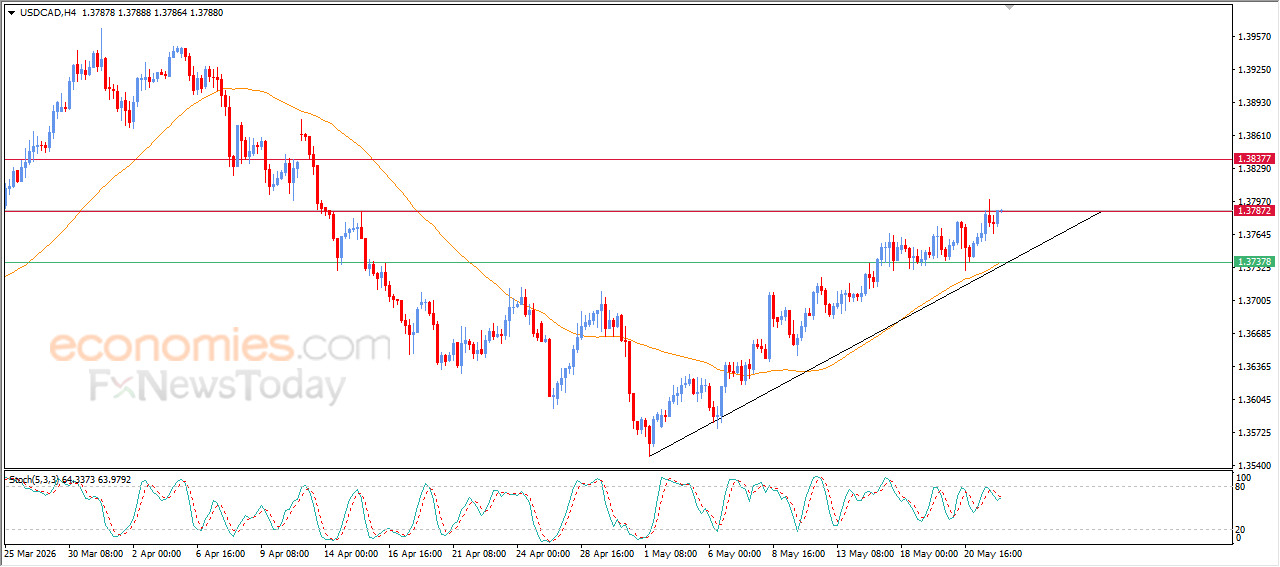
The USDCAD rose during its latest intraday trading, with the pair attacking the resistance level at 1.3785, which was one of our projected price targets in previous analysis. The pair benefited from positive dynamic support generated by trading above EMA50, which reinforces the stability and dominance of the short-term corrective bullish trend, especially as price movements continue alongside a supportive trendline for this upward path.
We notice the beginning of a positive crossover on the relative strength indicators after the pair successfully eased its previous overbought conditions, opening the way to extend its gains in the near term.
USDJPY Circles Around a Pivotal Resistance – Analysis – 22-05-2026
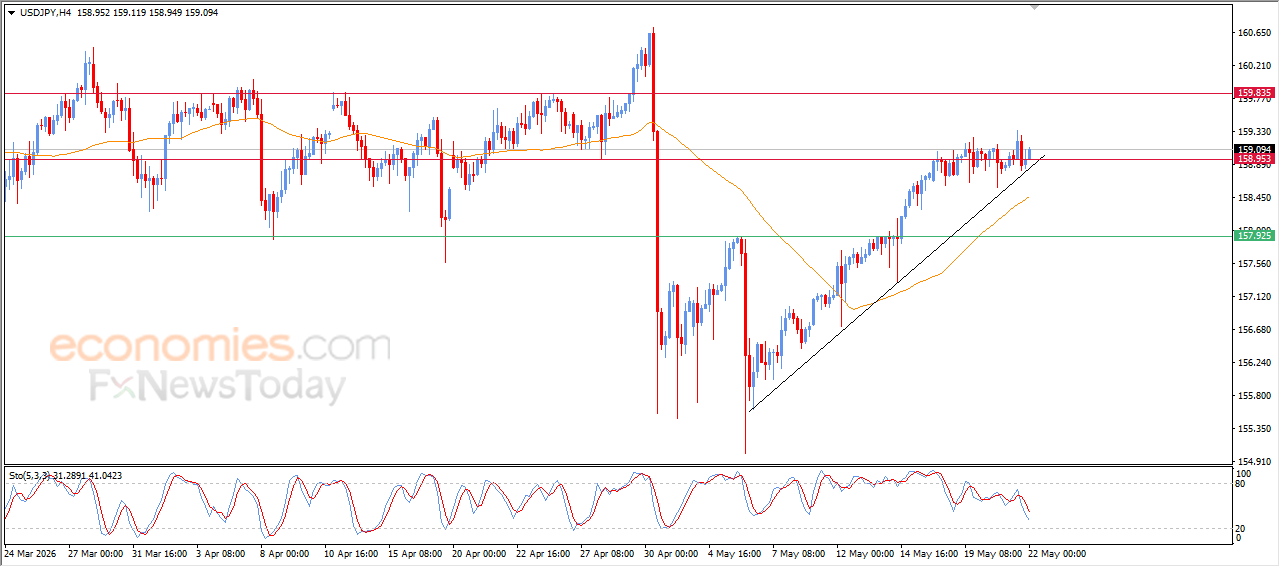
The (USDJPY) rose during its latest intraday trading amid volatile movements, as the pair attempts to gain the positive momentum needed to break above the key and stubborn resistance level at 159.00. This comes amid the dominance of a short-term corrective bullish wave, with price movements aligned alongside a supportive trendline for this path, in addition to dynamic support represented by trading above EMA50.
Meanwhile, the relative strength indicators have reached heavily oversold levels compared to the price movement, suggesting the beginning of a positive divergence formation that could strengthen the chances of further gains for the pair in the near term.