


 |
|
AUDUSD Records Limited Gains After Reaching Our Price Target – Analysis – 20-05-2026
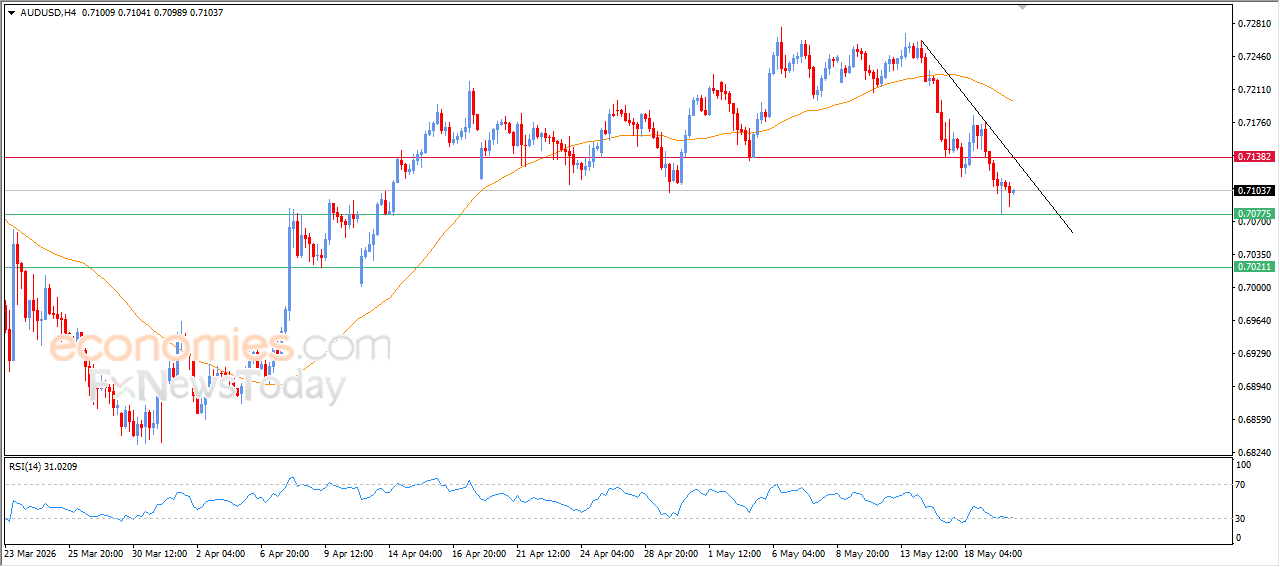
AUDUSD settled into a decline during recent intraday trading after rebounding from support at 0.7075, a level previously identified as a price target in our earlier analysis. This rebound provided some positive momentum, allowing the pair to attempt recovering part of its earlier losses, despite the continuation of a sharp short-term corrective bearish trend. The pair also remains under pressure from trading below its EMA50, which continues to act as a negative dynamic factor.
Meanwhile, relative strength indicators are still sending negative signals, despite hovering in oversold territory, which reflects persistent weakness in bullish momentum.
USDCAD Holds onto Its Corrective Bullish Trend – Analysis – 20-05-2026
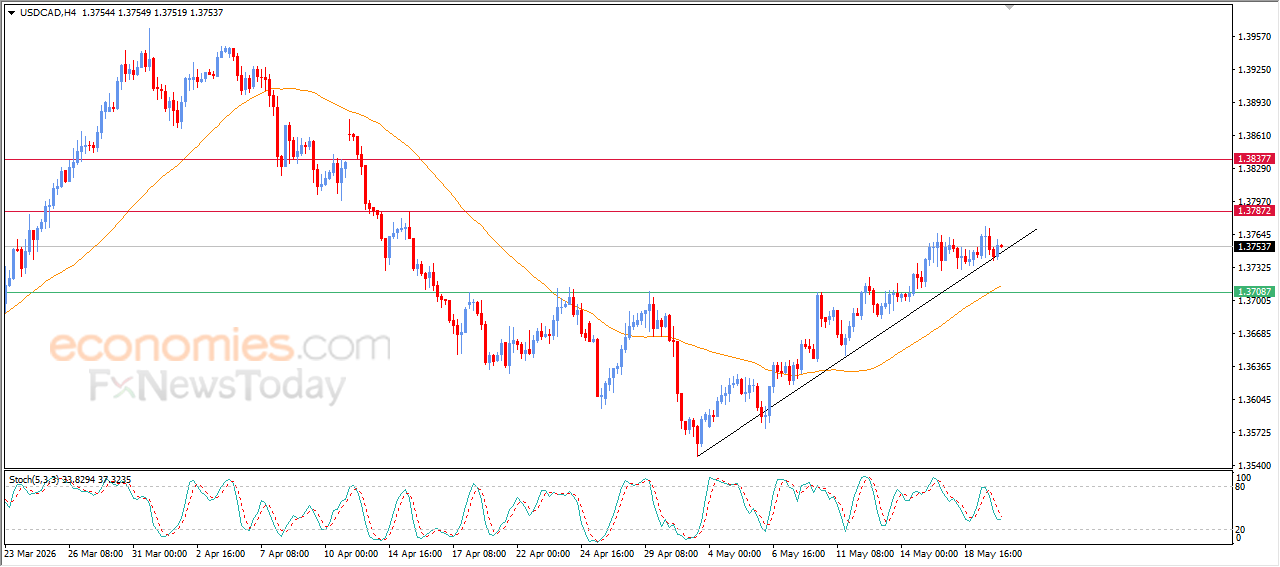
USDCAD recorded limited gains during recent intraday trading, benefiting from support at a short-term corrective ascending trendline, receiving positive dynamic support from trading above its EMA50, which strengthens the chances of extending gains in the near term.
However, negative signals continue to emerge from relative strength indicators after previously reaching heavily overbought levels, limiting the pair’s recent upward attempts.
USDJPY Shows Fresh Positive Signals – Analysis – 20-05-2026
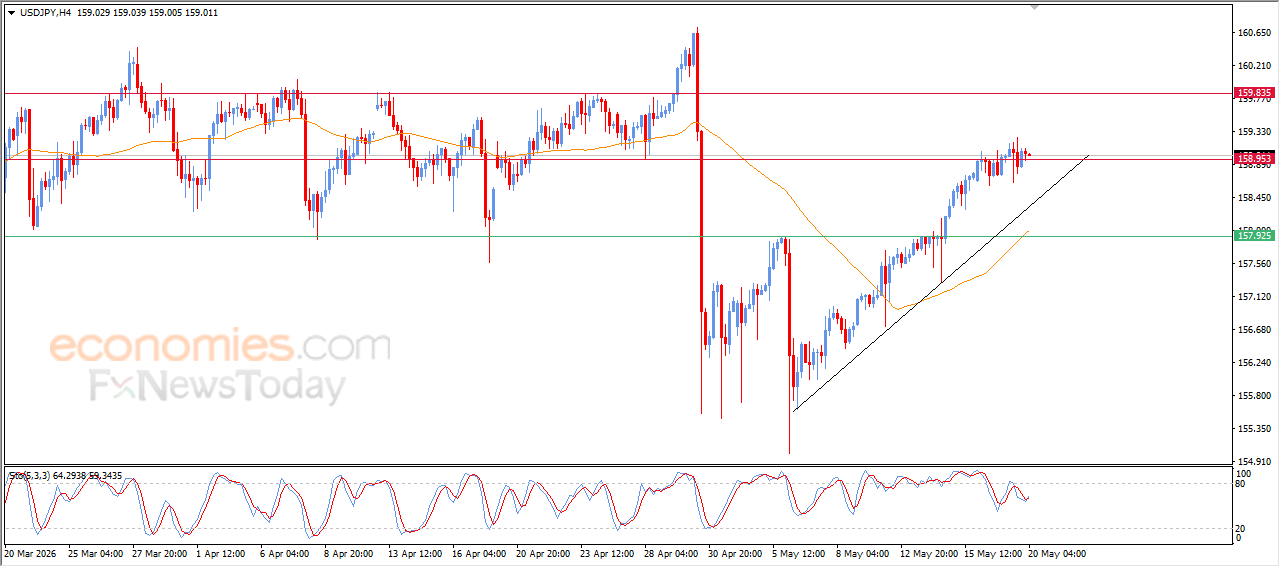
USDJPY continues to trade in a volatile manner around recent intraday levels while attempting to confirm a breakout above the current resistance at 158.95. The pair remains supported by trading above its EMA50, which provides dynamic support and strengthens the short-term corrective bullish trend, especially as price moves alongside a relatively steep upward trendline reflecting the strength of the current move.
Meanwhile, relative strength indicators are starting to show a positive crossover after the pair successfully eased its previous overbought conditions, increasing the chances of further gains in the near term.
GBPUSD Remains Under Negative Pressure – Analysis – 20-05-2026
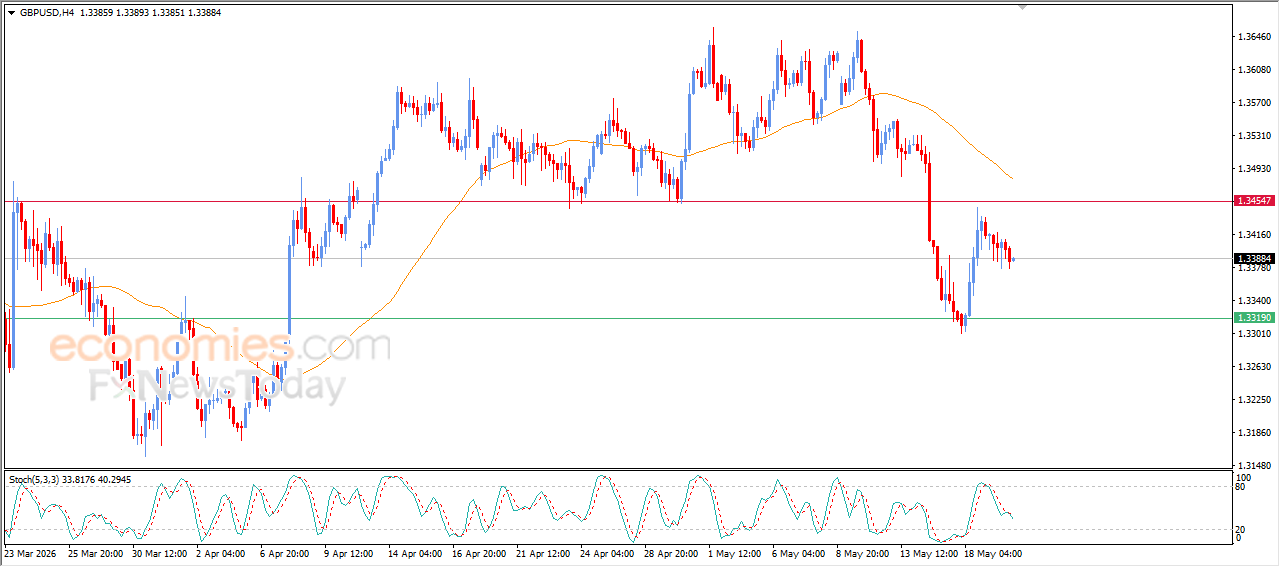
GBPUSD declined during recent intraday trading amid the dominance of a short-term corrective bearish trend. The pair continues to face negative dynamic pressure from trading below its EMA50, reducing the chances of a near-term recovery. Negative signals from relative strength indicators are also adding pressure after previously forming a bearish divergence, increasing the likelihood of extending losses.